Hydrochloric Acid → 6-Bromoimidazo[1,2-a]pyridin-8-amine
Reaction equation

[NH2:1][C:2]1[CH:7]=[CH:6][C:5]([Br:8])=[CH:4][N:3]=1.[N+]([O-])(O)=O.S(=O)(=O)(O)O.Cl[Sn]Cl.BrC1C([N+]([O-])=O)=CC(N)=[N:26]C=1.BrCC(O[CH2:39][CH3:40])OCC.Cl.C(=O)(O)[O-].[Na+]>>[Br:8][C:5]1[CH:6]=[C:7]([NH2:26])[C:2]2[N:3]([CH:39]=[CH:40][N:1]=2)[CH:4]=1Participants








Procedure
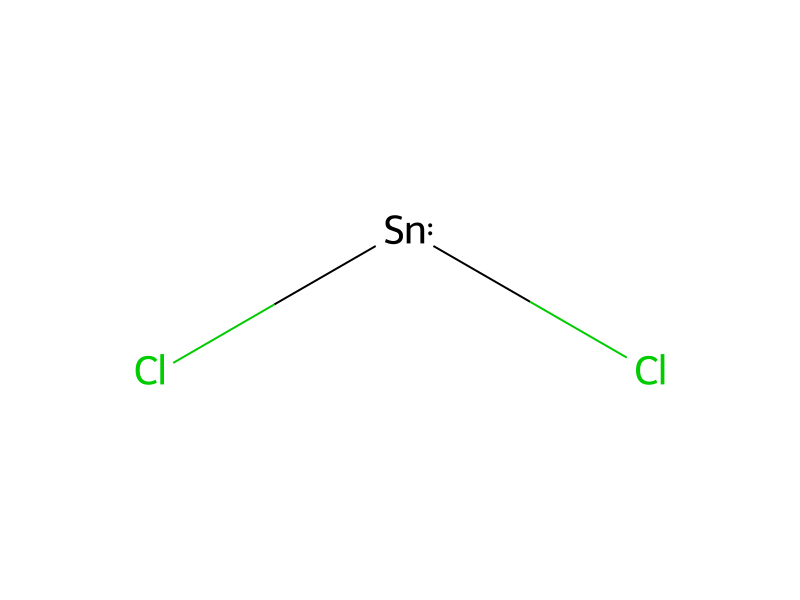
Treatment of the starting 2-amino-5-bromopyridine 86 with nitric acid and sulfuric acid introduces a nitro group, which is converted to an amine by a reaction with SnCl2. Treatment of this 5-Bromo-4-nitro-pyridin-2-ylamine 90 with 2-Bromo-1,1-diethoxy-ethane 89 in the presence of hydrochloric acid followed by sodium bicarbonate yields 6-Bromo-imidazo[1,2-a]pyridin-8-ylamine 91. The amino group is acetylated by treating it with acetyl chloride in the presence of pyridine, which upon addition of the aromatic boronic acid 93 in Pd(PPh3)3, K3PO4, and dimethylether-water furnishes intermediate N-[6-(2-Chloro-phenyl)-imidazo[1,2-a]pyridin-8-yl]-acetamide 94. Treatment of compound 94 with NBS gives rise to intermediate N-[3-Bromo-6-(2-chloro-phenyl)-imidazo[1,2-a]pyridin-8-yl]-acetamide 95, which in the presence of ethanolic hydrochloric acid forms intermediate 3-Bromo-6-(2-chloro-phenyl)-imidazo[1,2-a]pyridin-8-ylamine 96, which reacts with the appropriate aldehyde in zinc chloride and sodium cyanoborohydride to give the desired intermediate amine 97. Treatment with bromine and acetic acid yields the desired 3,5-Dibromo-6-(2-chloro-phenyl)-imidazo[1,2-a]pyridin-8-ylamine derivative 98, which is converted to the target compound 8-Amino-3-bromo-6-(2-chloro-phenyl)-imidazo[1,2-a]pyridine-5-carbonitrile derivative 99.
Sources & evidence
- ORD record
- ord-ec75a8c72fca44ffb001d10b42f20785
- Source dataset
- uspto-grants-2010_04
- Patent number
- US07700773B2
Reaction notes
Loading…