Hydrochloric Acid → HCID 86612771, compound
Reaction equation

Cl.[C:2]1([CH:9]=[CH:8][CH:7]=[C:5]([OH:6])[CH:4]=1)[OH:3].C(=O)CCCC=O>CN1CCCC1=O>[CH:5](=[O:6])[CH2:7][CH2:8][CH2:9][CH:2]=[O:3].[C:2]1([CH:9]=[CH:8][CH:7]=[C:5]([OH:6])[CH:4]=1)[OH:3]Participants
5
Reactant 3


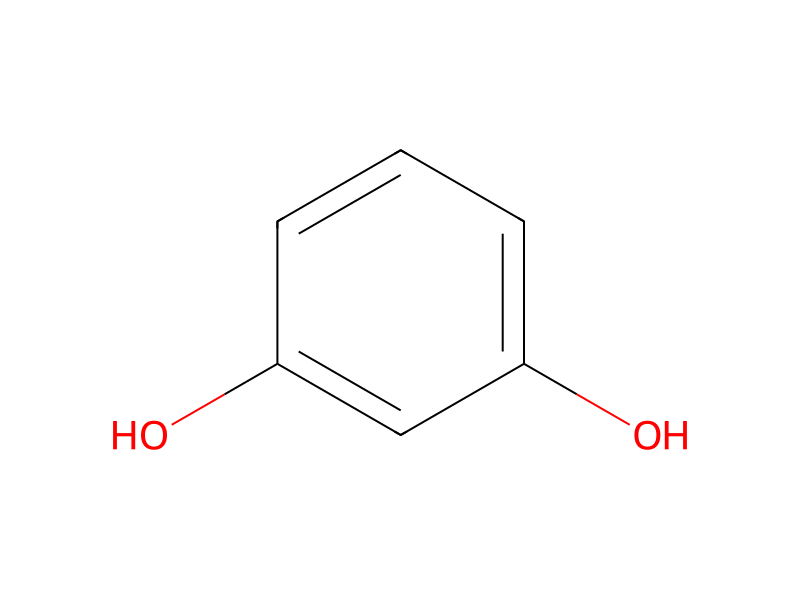
Product 1

Reagents, catalysts & solvents 1

Procedure
A cyclic CRA compound was synthesized in the same manner as in Example 1 except that 9 ml of N-methylpyrrolidone (NMP) was used as a solvent, 3.0 ml of hydrochloric acid was added, 20 mmol of resorcinol was used, and various amounts of glutaraldehyde (GA) was used. The results are shown in FIG. 2. The yield of the cyclic compound was confirmed to increase as the amount of GA decreases. The yield was maximum (73%) when the charge ratio was 0.2 (GA:resorcinol=1:5). When the charge ratio was 1.0 (GA:resorcinol=1:1), the product was gelatinized 10 minutes after the start of reaction.
Workup
- customafter the start of reaction
Sources & evidence
- ORD record
- ord-c231e22b945d46a992e39e6817244d74
- Source dataset
- uspto-grants-2010_04
- Patent number
- US07705189B2
Reaction notes
Loading…