Triethylamine → 1-Benzyloxycarbonyl-3-piperidone
Reaction equation

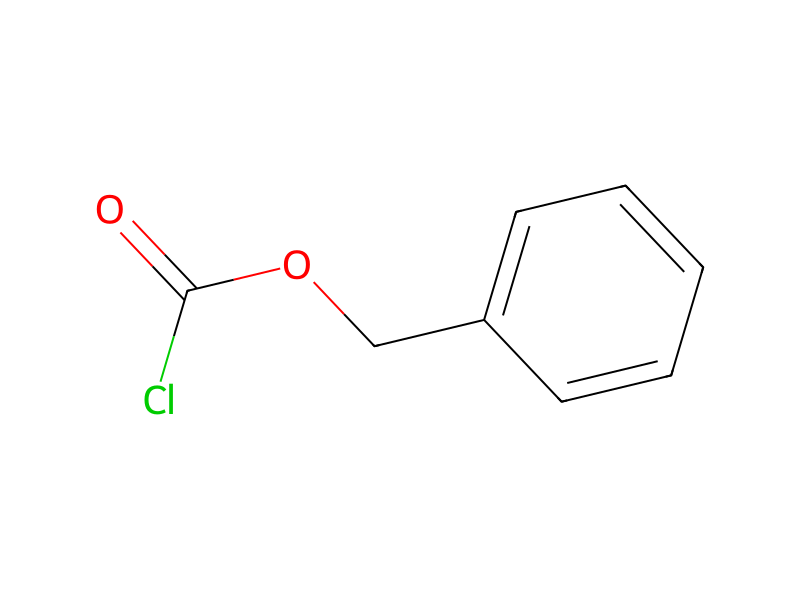
[NH:1]1[CH2:6][CH2:5][CH2:4][C:3](=[O:7])[CH2:2]1.C(N(CC)CC)C.Cl[C:16]([O:18][CH2:19][C:20]1[CH:25]=[CH:24][CH:23]=[CH:22][CH:21]=1)=[O:17]>C(Cl)Cl.C(OCC)(=O)C>[CH2:19]([O:18][C:16]([N:1]1[CH2:6][CH2:5][CH2:4][C:3](=[O:7])[CH2:2]1)=[O:17])[C:20]1[CH:25]=[CH:24][CH:23]=[CH:22][CH:21]=1Participants
6
Reactant 3


Product 1

Reagents, catalysts & solvents 2


Conditions
- Temperature
- 0 °C
Procedure
To a solution of 3-piperidone (12 mmol) in 200 mL of methylene chloride. is added triethylamine (18 mmol) in a single portion at room temperature and the reaction mixture cooled to 0° C. Benzyl chloroformate (12 mmol) is added dropwise via addition funnel and the reaction mixture allowed to warm to room temperature. Stirring is continued for 2 hours at room temperature. The reaction mixture is diluted with ethyl acetate (200 mL) and washed with 1N hydrochloric acid (3×100 mL), water and brine. The organic layer is worked up to provide N-Benzyloxycarbonyl-3-piperidone.
Workup
- temperatureto warm to room temperature
- washwashed with 1N hydrochloric acid (3×100 mL), water and brine
Sources & evidence
- ORD record
- ord-b80596e8795847d2a8083ccfffd02bdf
- Source dataset
- uspto-grants-2001_08
- Patent number
- US06277865B1
Reaction notes
Loading…