Dimethylformamide → 4-Chloro-6-iodoquinazoline
Reaction equation

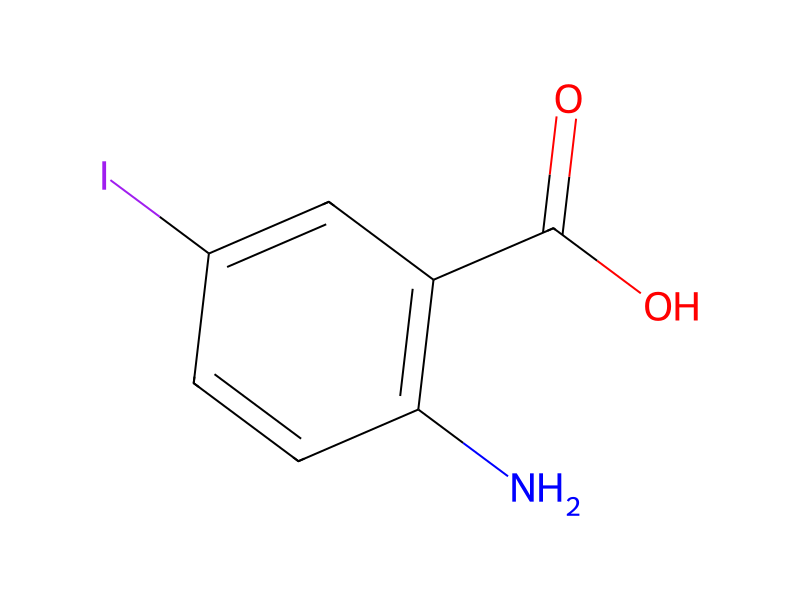
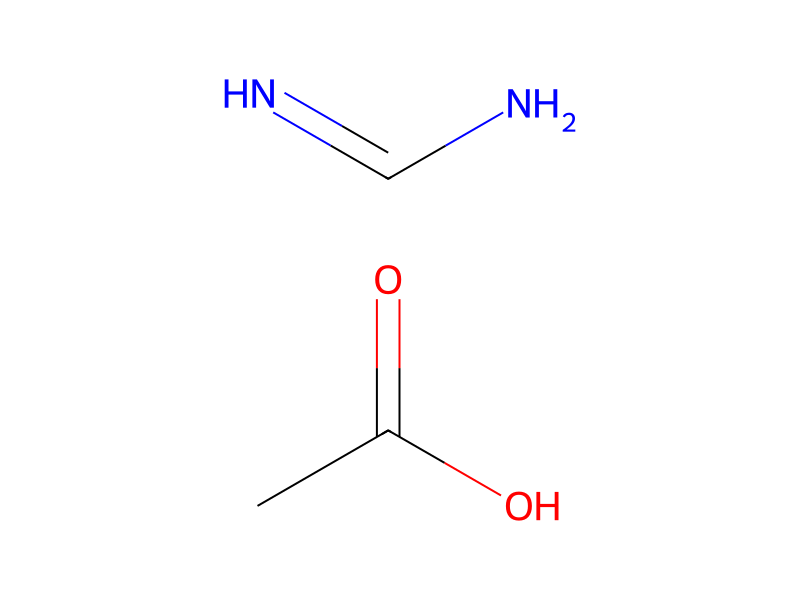
[I:1][C:2]1[CH:10]=[C:6]([C:7](O)=O)[C:5]([NH2:11])=[CH:4][CH:3]=1.C(O)(=O)C.[CH:16]([NH2:18])=N.C(Cl)(=O)C([Cl:22])=O.CN(C=O)C>CCO.ClCCCl>[Cl:22][C:7]1[C:6]2[C:5](=[CH:4][CH:3]=[C:2]([I:1])[CH:10]=2)[N:11]=[CH:16][N:18]=1Participants





Procedure
A mixture of 5-iodoanthranilic acid (9.96 g, 37.9 mmol) and formamidine acetate (4.20 g, 40.3 mmol) (adapted from J. Org. Chem. 51:616, 1986) in absolute EtOH (80 mL) was refluxed under air for 2 h. The smoky amber solution with heavy white precipitate was then concentrated under reduced pressure at 90° C., and residual protic solvent was removed with toluene rotary evaporation (2×100 mL) at 90° C. The resulting sticky tan solid was treated with a thick white slurry of Vilsmeier-Haack reagent in one portion under air at rt. [The Vilsmeier-Haack reagent was prepared by the addition of a solution of oxalyl chloride (10.9 mL, 125 mmol) in DCE (44 mL) to a solution of DMF (6.7 mL, 87 mmol) in DCE (21 mL) dropwise over 10 min at 0° C. with vigorous stirring. The ice bath was removed immediately following completion of oxalyl chloride addition, and the white slurry was stirred at “rt” for 5 min before transfer to the crude 4-hydroxy-6-iodo-quinazoline intermediate.] The reaction was then refluxed under air (oil bath 110° C.) for 1 h 15 min, and the resulting homogeneous brown solution was allowed to cool to rt, at which point a heavy precipitate formed. The reaction was poured into ice water (300 mL) and extracted with DCM (3×250 mL). The opaque organic layers were combined, dried (Na2SO4), and filtered to provide a clear red amber filtrate. Concentration under reduced pressure, followed by toluene rotary evaporation at 90° C. to remove potentially reactive volatiles, afforded the title compound as a tan powder (8.41 g, 94% from iodoanthranilic acid) suitable for treatment with LiHMDS in the next step. 1H-NMR (300 MHz, CDCl3) δ 9.07 (s, 1H), 8.67 (dd, 1H), 8.22 (dd, 1H), 7.81 (d, 1H).
Workup
- temperaturewas refluxed under air for 2 h
- concentrationThe smoky amber solution with heavy white precipitate was then concentrated under reduced pressure at 90° C.
- customresidual protic solvent was removed with toluene rotary evaporation (2×100 mL) at 90° C
- additionThe resulting sticky tan solid was treated with a thick white slurry of Vilsmeier-Haack reagent in one portion under air at rt
- customThe ice bath was removed immediately
- additioncompletion of oxalyl chloride addition
- temperature] The reaction was then refluxed under air (oil bath 110° C.) for 1 h 15 min
- temperatureto cool to rt, at which point a heavy precipitate
- customformed
- extractionextracted with DCM (3×250 mL)
- dry with materialdried (Na2SO4)
- filtrationfiltered
- customto provide a clear red amber filtrate
- concentrationConcentration under reduced pressure
- customfollowed by toluene rotary evaporation at 90° C.
- customto remove potentially reactive volatiles
Sources & evidence
- ORD record
- ord-c5a75f3627664bfe886fd8151d298617
- Source dataset
- uspto-grants-2011_12
- Patent number
- US08071768B2
Reaction notes
Loading…