Water → 4-Nitrophenyl thiomorpholine-4-carboxylate 1,1-dioxide
Reaction equation

Cl.[NH:2]1[CH2:7][CH2:6][S:5](=[O:9])(=[O:8])[CH2:4][CH2:3]1.C(N(CC)CC)C.Cl[C:18]([O:20][C:21]1[CH:26]=[CH:25][C:24]([N+:27]([O-:29])=[O:28])=[CH:23][CH:22]=1)=[O:19].O>ClCCl.C(OCC)(=O)C>[N:2]1([C:18]([O:20][C:21]2[CH:22]=[CH:23][C:24]([N+:27]([O-:29])=[O:28])=[CH:25][CH:26]=2)=[O:19])[CH2:7][CH2:6][S:5](=[O:9])(=[O:8])[CH2:4][CH2:3]1Participants
7
Reactant 4


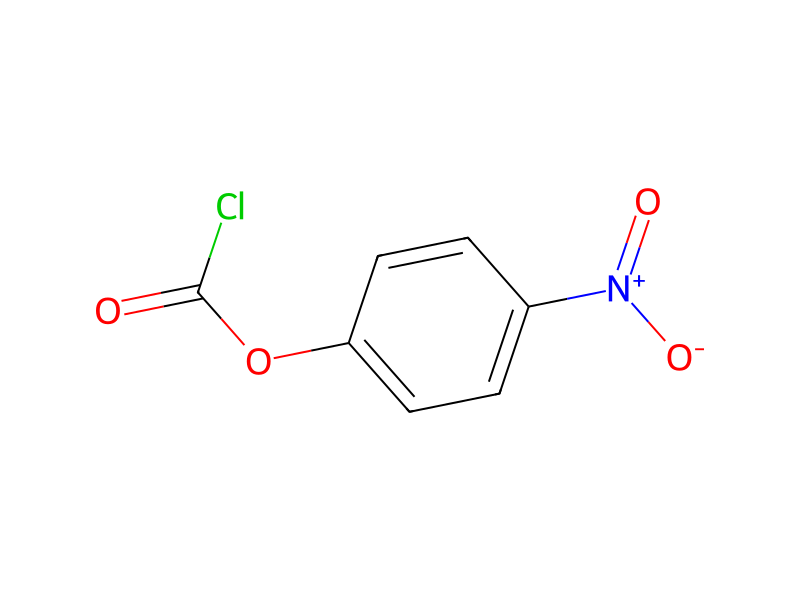

Product 1

Reagents, catalysts & solvents 2


Procedure
17.0 g (99.2 mmol) of thiomorpholine 1,1-dioxide hydrochloride were initially charged in 100 ml of dichloromethane and, while cooling with an ice bath, admixed with 20.7 ml (15.1 g, 148.8 mmol) of triethylamine. 10.0 g (49.6 mmol) of 4-nitrophenyl chloroformate were added in portions. The reaction mixture was stirred at RT for 30 minutes, admixed with water and ethyl acetate and then filtered. The residue was dried under high vacuum. Yield: 12.4 g (83% of theory)
Workup
- temperaturewhile cooling with an ice bath
- filtrationfiltered
- customThe residue was dried under high vacuum
Sources & evidence
- ORD record
- ord-edfb7684095f41238879b4e88c772304
- Source dataset
- uspto-grants-2011_12
- Patent number
- US08084469B2
Reaction notes
Loading…