1-Bromooctane → 5,10,15-tris-(4-Hydroxy-phenyl)-20-(4-octyloxy-phenyl)-porphyrin
Reaction equation

[OH:1][C:2]1[CH:7]=[CH:6][C:5]([C:8]2[C:9]3[NH:13][C:12]([C:14]([C:46]4[CH:51]=[CH:50][C:49]([OH:52])=[CH:48][CH:47]=4)=[C:15]4[N:45]=[C:18]([C:19]([C:38]5[CH:43]=[CH:42][C:41]([OH:44])=[CH:40][CH:39]=5)=[C:20]5[NH:37][C:23](=[C:24]([C:30]6[CH:35]=[CH:34][C:33]([OH:36])=[CH:32][CH:31]=6)[C:25]6[CH:26]=[CH:27][C:28]=2[N:29]=6)[CH:22]=[CH:21]5)[CH:17]=[CH:16]4)=[CH:11][CH:10]=3)=[CH:4][CH:3]=1.C(=O)([O-])[O-].[K+].[K+].[CH2:59](Br)[CH2:60][CH2:61][CH2:62][CH2:63][CH2:64][CH2:65][CH3:66]>CN(C=O)C>[OH:52][C:49]1[CH:48]=[CH:47][C:46]([C:14]2[C:12]3[NH:13][C:9]([C:8]([C:5]4[CH:6]=[CH:7][C:2]([O:1][CH2:59][CH2:60][CH2:61][CH2:62][CH2:63][CH2:64][CH2:65][CH3:66])=[CH:3][CH:4]=4)=[C:28]4[N:29]=[C:25]([C:24]([C:30]5[CH:31]=[CH:32][C:33]([OH:36])=[CH:34][CH:35]=5)=[C:23]5[NH:37][C:20](=[C:19]([C:38]6[CH:43]=[CH:42][C:41]([OH:44])=[CH:40][CH:39]=6)[C:18]6[CH:17]=[CH:16][C:15]=2[N:45]=6)[CH:21]=[CH:22]5)[CH:26]=[CH:27]4)=[CH:10][CH:11]=3)=[CH:51][CH:50]=1Participants
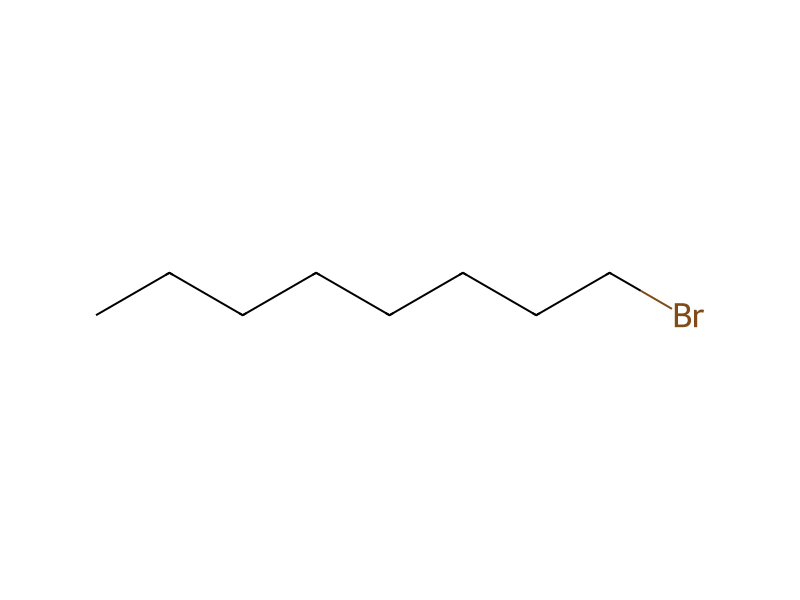




Conditions
- Temperature
- 55 °C
Procedure
5,10,15,20-tetrakis-(4-Hydroxy-phenyl)-porphyrin (200 mg, 0.294 mmol) is dissolved and potassium carbonate (487 mg, 3.53 mmol, 12 eqv.) is suspended under argon in absolute DMF (50 mL) and the mixture is heated to 55° C. A solution of octyl bromide (35.8 μl, 0.206 mmol, 0.7 eqv.) in absolute DMF (10 mL) is added dropwise during 30 min. and the mixture is stirred at 55° C. for 2 h. The solvent is removed in vacuo at 50° C., water (80 mL) is added and the mixture is extracted with ethyl acetate (3×40 mL). The combined organic fraction is dried (Na2SO4) and the solvent evaporated. The residue is purified by chromatography on a column (300 g) of silica gel. Tetra-alkylated and tri-alkylated compounds are eluted with toluene:ethyl acetate (30:1 by vol.). The third fraction (di-substituted compound, trans-isomer) is eluted with toluene:ethyl acetate (15:1 by vol.). The fourth fraction (di-substituted compound, cis-isomer) is eluted with toluene:ethyl acetate (10:1 by vol.) and the desired product (mono-alkylated compound) is eluted with toluene:ethylacetate (5:1 by vol.). The solvent is removed under reduced pressure and the residue dried under high vacuum to give the product as a violet solid.
Workup
- customThe solvent is removed in vacuo at 50° C.
- additionwater (80 mL) is added
- extractionthe mixture is extracted with ethyl acetate (3×40 mL)
- dry with materialThe combined organic fraction is dried (Na2SO4)
- customthe solvent evaporated
- customThe residue is purified by chromatography on a column (300 g) of silica gel
- washTetra-alkylated and tri-alkylated compounds are eluted with toluene:ethyl acetate (30:1 by vol.)
- washThe third fraction (di-substituted compound, trans-isomer) is eluted with toluene:ethyl acetate (15:1 by vol.)
- washThe fourth fraction (di-substituted compound, cis-isomer) is eluted with toluene:ethyl acetate (10:1 by vol.)
- washthe desired product (mono-alkylated compound) is eluted with toluene:ethylacetate (5:1 by vol.)
- customThe solvent is removed under reduced pressure
- customthe residue dried under high vacuum
Sources & evidence
- ORD record
- ord-120b0077c75d485b889193affd00d979
- Source dataset
- uspto-grants-2011_12
- Patent number
- US08084602B2
Reaction notes
Loading…