Potassium Carbonate → HCID 14881545, compound
Reaction equation

[NH2:1][C:2]1[S:3][C:4]([SH:7])=[N:5][N:6]=1.Br[CH2:9][CH2:10][CH2:11][CH2:12][C:13]1[CH:18]=[CH:17][CH:16]=[CH:15][CH:14]=1.C(=O)([O-])[O-].[K+].[K+]>CN(C)C=O>[NH2:1][C:2]1[S:3][C:4]([S:7][CH2:9][CH2:10][CH2:11][CH2:12][C:13]2[CH:18]=[CH:17][CH:16]=[CH:15][CH:14]=2)=[N:5][N:6]=1Participants
5
Reactant 3

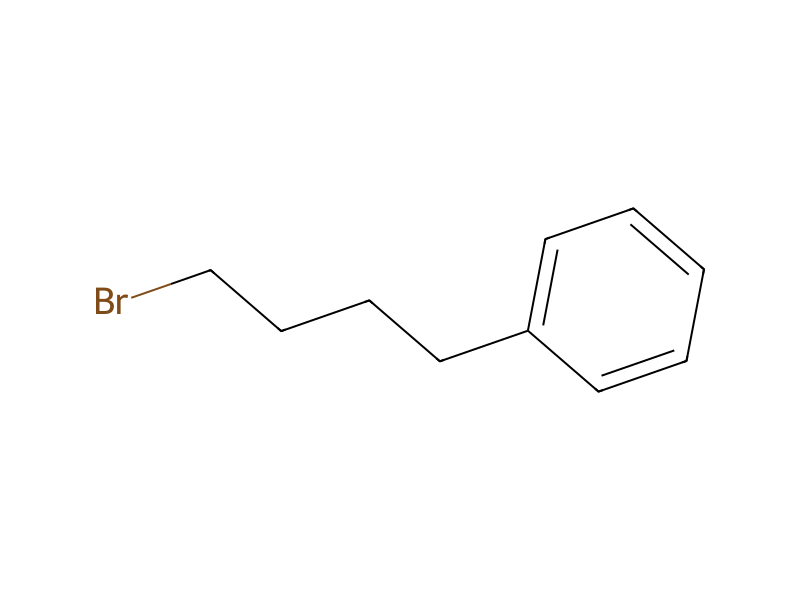

Product 1

Reagents, catalysts & solvents 1

Procedure
A solution of 320 mg of 2-amino-5-mercapto-1,3,4-thiadiazole, 430 mg of 1-bromo-4-phenylbutane and 350 mg of potassium carbonate in 5 ml of N,N-dimethylformamide was stirred overnight at room temperature. After dilution with ethyl acetate, the reaction mixture was washed in sequence with water, 1N sodium hydroxide, water and saturated aqueous solution of sodium chloride, then dried over anhydrous sodium sulfate and concentrated under reduced pressure. The residue obtained was recrystallized from ethyl acetate to give 300 mg of 2-amino-5-[(4-phenylbutyl)thio]-1,3,4-thiadiazole. Melting point 111° C.
Workup
- washAfter dilution with ethyl acetate, the reaction mixture was washed in sequence with water, 1N sodium hydroxide, water and saturated aqueous solution of sodium chloride
- dry with materialdried over anhydrous sodium sulfate
- concentrationconcentrated under reduced pressure
- customThe residue obtained
- customwas recrystallized from ethyl acetate
Sources & evidence
- ORD record
- ord-079c3451b3b34f52996b502b39c551db
- Source dataset
- uspto-grants-1991_01
- Patent number
- US04987132
Reaction notes
Loading…