Water → 2-(4-Bromophenyl)-1,3-dioxolane
Reaction equation

[Br:1][C:2]1[CH:9]=[CH:8][C:5]([CH:6]=[O:7])=[CH:4][CH:3]=1.[C:10]1([CH3:20])C=CC(S(O)(=O)=O)=CC=1.O.C([O-])([O-])=[O:23].[K+].[K+]>C1C=CC=CC=1.C(O)CO>[Br:1][C:2]1[CH:9]=[CH:8][C:5]([CH:6]2[O:23][CH2:10][CH2:20][O:7]2)=[CH:4][CH:3]=1Participants
7





Procedure
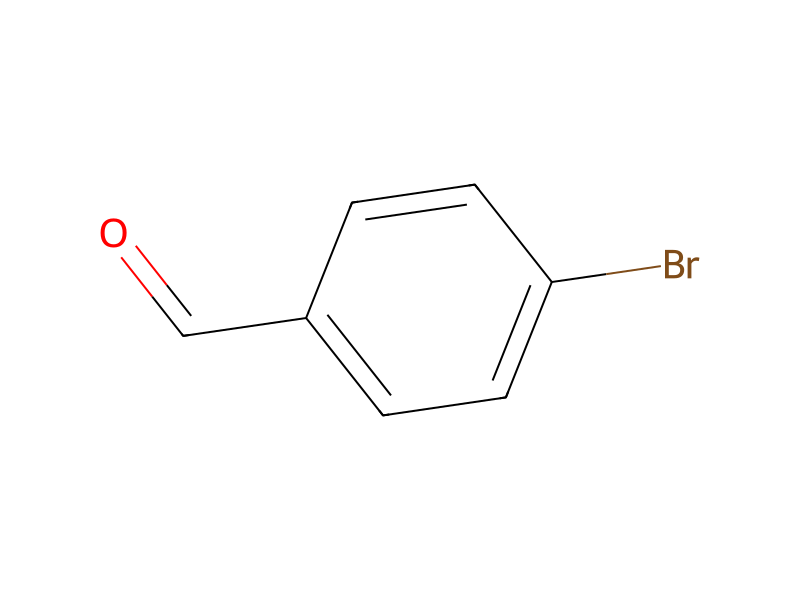
4-Bromobenzaldehyde (56 g, 0.3 mole) was dissolved in 500 mls of benzene containing 80 mls (excess) of ethylene glycol. This mixture was stirred rapidly via motor. p-Toluenesulfonic acid (5 g) was added and the mixture was refluxed with a water separator overnight (24 hours). The cooled mixture was poured into 1 liter of 5% K2CO3 and extracted with ethyl acetate. The organic phase was washed with H2O and then brine. The extract was dried over sodium sulfate and filtered. After solvent removal, the residue was chromatographed on silica gel using 10% ethyl acetate/hexane to give 50 g (70% yield.) of the title compound (m.p.=56°-57° C.).
Workup
- extractionextracted with ethyl acetate
- washThe organic phase was washed with H2O
- dry with materialThe extract was dried over sodium sulfate
- filtrationfiltered
- customAfter solvent removal
- customthe residue was chromatographed on silica gel using 10% ethyl acetate/hexane
Sources & evidence
- ORD record
- ord-3f3c6b6ae0c947efbe9eefea2f5fa835
- Source dataset
- uspto-grants-1991_01
- Patent number
- US04988707
Reaction notes
Loading…