Ethyl Acrylate → 4-Pyridin-3-yl-but-3-enoic acid
Reaction equation

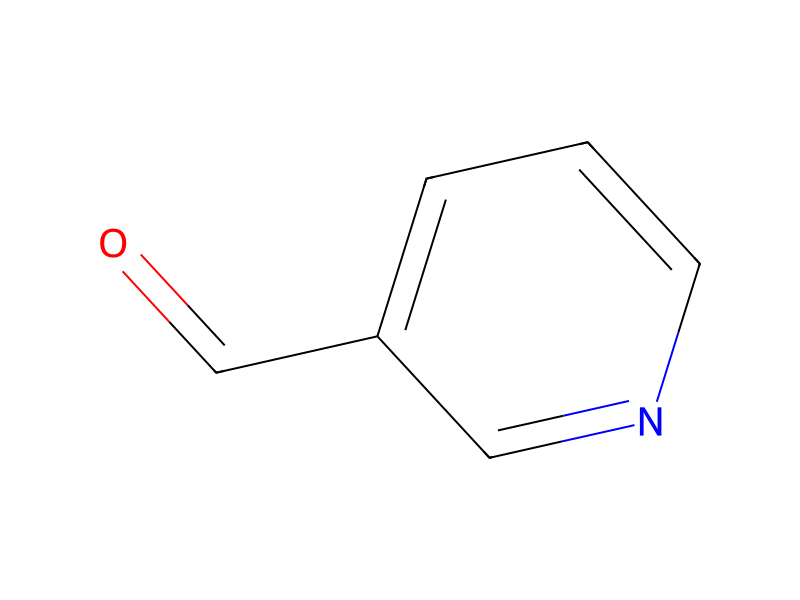
[N:1]1[CH:6]=[CH:5][CH:4]=[C:3]([CH:7]=O)[CH:2]=1.[C:9]([O:13][CH2:14][CH3:15])(=[O:12])[CH:10]=[CH2:11].C1(P(C2C=CC=CC=2)C2C=CC=CC=2)C=CC=CC=1>>[N:1]1[CH:6]=[CH:5][CH:4]=[C:3]([CH:7]=[CH:11][CH2:10][C:9]([OH:13])=[O:12])[CH:2]=1.[N:1]1[CH:6]=[CH:5][CH:4]=[C:3]([CH:7]=[CH:11][CH2:10][C:9]([O:13][CH2:14][CH3:15])=[O:12])[CH:2]=1Participants




Procedure
The target compound 4-pyridin-3-yl-but-3-enoic acid (Compound 2035) was prepared by two steps starting from the commercial available 3-Pyridinecarboxaldehyde. Reaction of this aldehyde with ethyl acrylate and triphenylphosphine in a sealed tube for 4 hr at 140° C. gave ethyl 4-pyridin-3-yl-3-butenoate in a 55% yield. Kirby, Anthony J.; Walwyn, David R. Effective molarities for intramolecular hydride transfer. Reduction by 1,4-dihydropyridines of the neighboring α-ketoester group. Gazzetta Chimica Italiana (1987), 117(11), 667-80. This reaction is a self-priming Wittig reaction and the yield was not optimized. Gilbert Stork, R. A. Kretchmer, R. H. Schlessinger. The Stereospecific Total Synthesis of dl-Lycopodine. J. Am. Chem. Soc. (1968), 90, 1647. Hydrolysis of the ester using the routine condition and the subsequent purification with preparative HPLC afforded the target compound 2035 with almost quantitative yield.
Sources & evidence
- ORD record
- ord-a654e96160784c419793ae9476b2b0e3
- Source dataset
- uspto-grants-2015_11
- Patent number
- US09193708B2
Reaction notes
Loading…