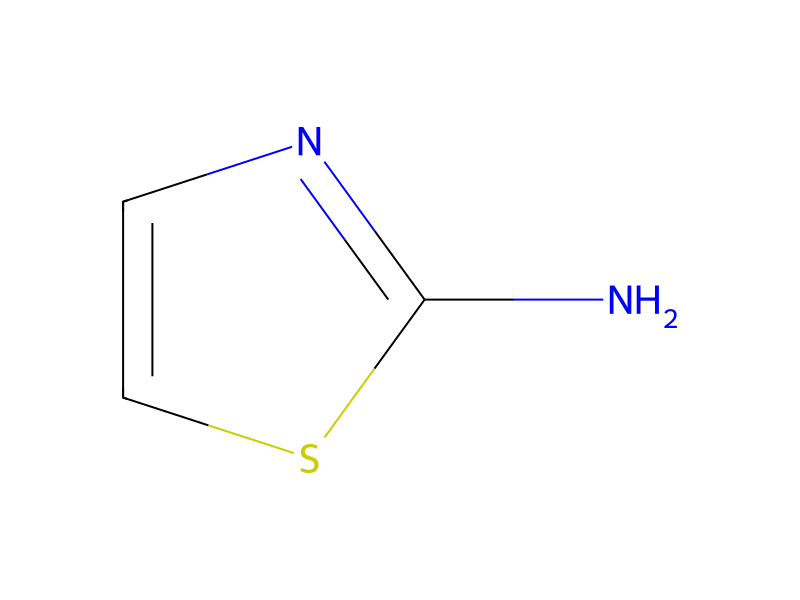
2-Aminothiazole → N,N-Dicyclopentyl-N'-1,3-thiazol-2-ylurea
Reaction equation

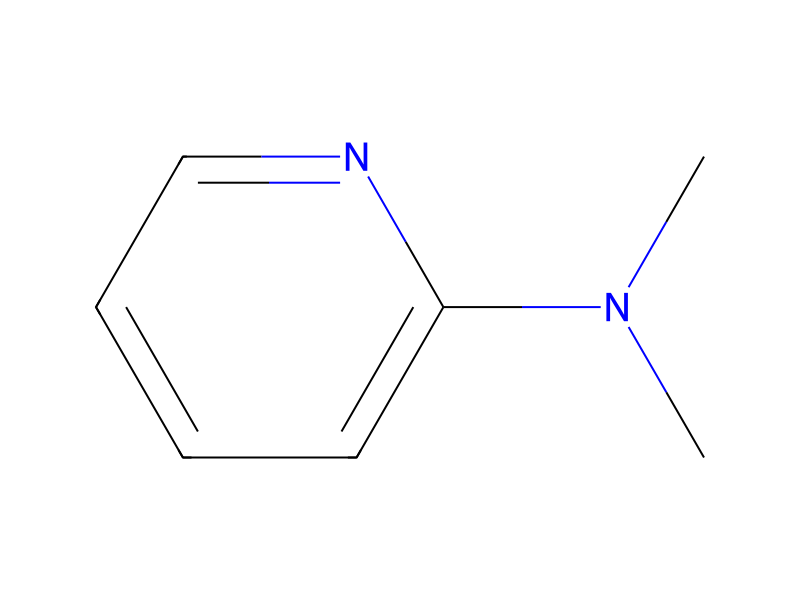
[NH2:1][C:2]1[S:3][CH:4]=[CH:5][N:6]=1.[C:7](N1C=CN=C1)(N1C=CN=C1)=[O:8].CN(C1C=CC=CN=1)C.[CH:28]1([NH:33][CH:34]2[CH2:38][CH2:37][CH2:36][CH2:35]2)[CH2:32][CH2:31][CH2:30][CH2:29]1>ClCCl.C(OCC)(=O)C>[CH:34]1([N:33]([CH:28]2[CH2:29][CH2:30][CH2:31][CH2:32]2)[C:7]([NH:1][C:2]2[S:3][CH:4]=[CH:5][N:6]=2)=[O:8])[CH2:35][CH2:36][CH2:37][CH2:38]1Participants
7




Procedure
To a solution of 2-aminothiazole (50 mg, 0.5 mmol) in dichloromethane was added carbonyldiimidazole (81 mg, 0.5 mmol) and dimethylaminopyridine (3 mg) and the solution stirred 1 h at room temperature. Dicyclopentylamine (77 mg) was then added and the reaction stirred overnight at room temperature. The reaction mixture is then diluted with ethyl acetate (8 mL), washed successively with 10% sodiumhydrogensulphate (3 mL), water (3 mL), dried over magnesium sulphate, concentrated in vacuo, and the residue purified by flash chlomatography (eluant 7 ethyl acetate:3 heptane)
Workup
- stirringthe reaction stirred overnight at room temperature
- washwashed successively with 10% sodiumhydrogensulphate (3 mL), water (3 mL)
- dry with materialdried over magnesium sulphate
- concentrationconcentrated in vacuo
- customthe residue purified by flash chlomatography (eluant 7 ethyl acetate:3 heptane)
Sources & evidence
- ORD record
- ord-a25127cea0ca4f5ab6f9881ba3e33f5d
- Source dataset
- uspto-grants-2009_09
- Patent number
- US07582769B2
Reaction notes
Loading…