Acetonitrile → 4-((5-Chloropentyl)oxy)benzonitrile
Reaction equation

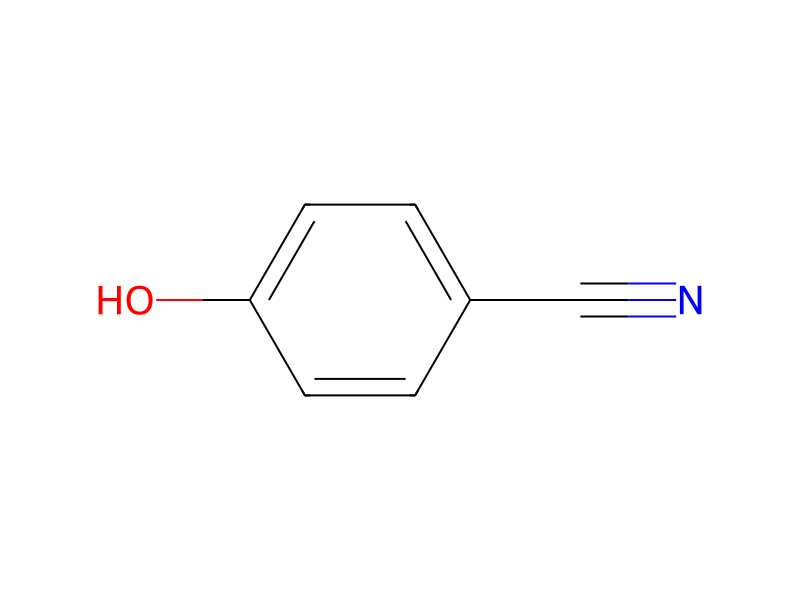
[OH:1][C:2]1[CH:9]=[CH:8][C:5]([C:6]#[N:7])=[CH:4][CH:3]=1.C(#N)C.C(=O)([O-])[O-].[K+].[K+].Br[CH2:20][CH2:21][CH2:22][CH2:23][CH2:24][Cl:25]>C(OC(=O)C)C>[Cl:25][CH2:24][CH2:23][CH2:22][CH2:21][CH2:20][O:1][C:2]1[CH:9]=[CH:8][C:5]([C:6]#[N:7])=[CH:4][CH:3]=1Participants
Reactant 4



Product 1

Reagents, catalysts & solvents 1

Procedure
While 70 g of 4-hydroxybenzonitrile (7) were added to 500 ml of acetonitrile and stirred, 85.3 g of potassium carbonate and 77.4 ml of 1-bromo-5-chloropentane were added. Subsequently, the temperature was gradually increased and stirring under reflux was continued for 8 hr, and then stirring was further continued at room temperature for 18 hr. After the reaction was completed, the resultant reaction mixture was added with 500 ml of ethylacetate and then washed with water. Thereafter, the ethylacetate layer was dried over anhydrous magnesium sulfate, and then concentrated under reduced pressure. The concentrated compound was dissolved in 280 ml of methanol, stirred at 0° C. for 2 hr, and then filtered, thus obtaining 118 g (yield: 90%) of a title compound as a white solid.
Workup
- temperatureSubsequently, the temperature was gradually increased
- stirringstirring
- temperatureunder reflux
- stirringstirring
- waitwas further continued at room temperature for 18 hr
- customthe resultant reaction mixture
- washwashed with water
- dry with materialThereafter, the ethylacetate layer was dried over anhydrous magnesium sulfate
- concentrationconcentrated under reduced pressure
- dissolutionThe concentrated compound was dissolved in 280 ml of methanol
- stirringstirred at 0° C. for 2 hr
- filtrationfiltered
Sources & evidence
- ORD record
- ord-225054464824456abd76b61186e45866
- Source dataset
- uspto-grants-2009_09
- Patent number
- US07585979B2
Reaction notes
Loading…