Hydrochloric Acid → Ethyl 4-(3-cyanophenoxy)-2-butenoate
Reaction equation

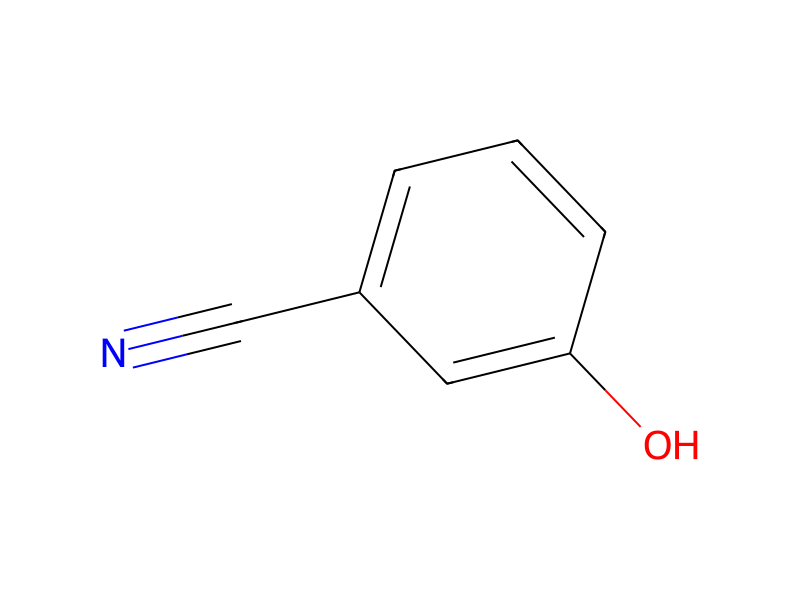
Br[CH2:2]/[CH:3]=[CH:4]/[C:5]([O:7][CH2:8][CH3:9])=[O:6].[OH:10][C:11]1[CH:12]=[C:13]([CH:16]=[CH:17][CH:18]=1)[C:14]#[N:15].C(=O)([O-])[O-].[K+].[K+].[I-].[K+].Cl>CN(C)C=O>[C:14]([C:13]1[CH:12]=[C:11]([CH:18]=[CH:17][CH:16]=1)[O:10][CH2:2][CH:3]=[CH:4][C:5]([O:7][CH2:8][CH3:9])=[O:6])#[N:15]Participants
7






Procedure
1 g (3.9 mmol) of ethyl 4-bromocrotonate, 465 mg (3.9 mmol) of 3-hydroxybenzonitrile, 539 mg (3.9 mmol) of potassium carbonate and 647 mg (3.9 mmol)) of potassium iodide were stirred in N,N-dimethylformamide at room temperature for 3 days. 1 N hydrochloric acid was added to the reaction liquid. After the extraction with ethyl acetate, the extract was washed with 1 N aqueous sodium hydroxide solution and saturated aqueous common salt solution, and dried over anhydrous magnesium sulfate. The solvent was evaporated to obtain the title compound.
Workup
- extractionAfter the extraction with ethyl acetate
- washthe extract was washed with 1 N aqueous sodium hydroxide solution and saturated aqueous common salt solution
- dry with materialdried over anhydrous magnesium sulfate
- customThe solvent was evaporated
Sources & evidence
- ORD record
- ord-1e09a9720de24a10a2518ff677d1b241
- Source dataset
- uspto-grants-2008_07
- Patent number
- US07396844B1
Reaction notes
Loading…