Sodium Iodide → 5-Iodopyrazolo[1,5-a]pyrimidine
Reaction equation

Cl[C:2]1[CH:7]=[CH:6][N:5]2[N:8]=[CH:9][CH:10]=[C:4]2[N:3]=1.[I-:11].[Na+].C(Cl)(=O)C.C(=O)([O-])[O-].[K+].[K+].S([O-])([O-])=O.[Na+].[Na+]>C(#N)C.C(OCC)C>[I:11][C:2]1[CH:7]=[CH:6][N:5]2[N:8]=[CH:9][CH:10]=[C:4]2[N:3]=1Participants
Reactant 5




Product 1

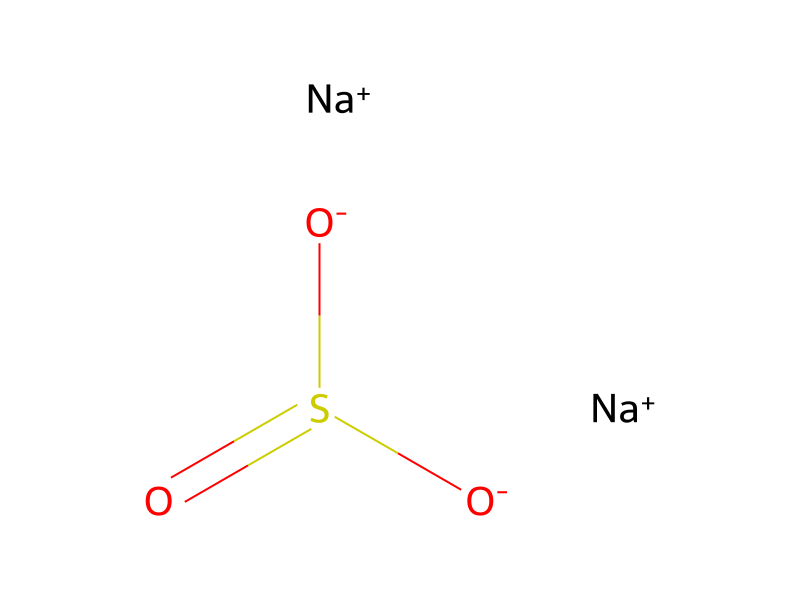
Reagents, catalysts & solvents 2


Procedure
Dissolve 5-chloro-pyrazolo[1,5-a]pyrimidine (Hans Reimlinger et al., Chem. Ber. 1970, 103, 3252-3265; 1.15 g, 7.5 mmol) and sodium iodide (5.6-g, 37.4 mmol) in anhydrous acetonitrile (50 mL). Add acetyl chloride (2.7 ml, 37.9 mmol). Stir and reflux under nitrogen for 20 h. Pour the reaction mixture into a stirring mixture of 0.5M aqueous potassium carbonate (200 mL), 1.0M aqueous sodium sulfite (50 mL), and diethyl ether (350 mL). Separate the organic layer, dry over anhydrous magnesium sulfate, filter and concentrate under reduced pressure. Chromatograph the crude product on flash silica using neat dichloromethane to obtain 950 mg (51%) of the title compound as a yellow solid. TOF MS ES+ exact mass calculated for C6H4N310): m/z=245.9528; Found: 245.9517. 1H NMR (400 MHz, DMSO-d6) δ 8.82 (d, J=7 Hz, 1H), 8.18 (d, J=2 Hz, 1H), 7.32 (d, J=7 Hz, 1H), 6.69 (d, J=2 Hz, 1H).
Workup
- temperaturereflux under nitrogen for 20 h
- additionPour the reaction mixture
- customSeparate the organic layer
- dry with materialdry over anhydrous magnesium sulfate
- filtrationfilter
- concentrationconcentrate under reduced pressure
Sources & evidence
- ORD record
- ord-7d5e51ceb5694f19a478045568068a57
- Source dataset
- uspto-grants-2008_07
- Patent number
- US07405299B2
Reaction notes
Loading…