Sodium Hydroxide → 6-methoxy-3-methyl-1H-indole-5-carboxylic acid hydrazide
Reaction equation

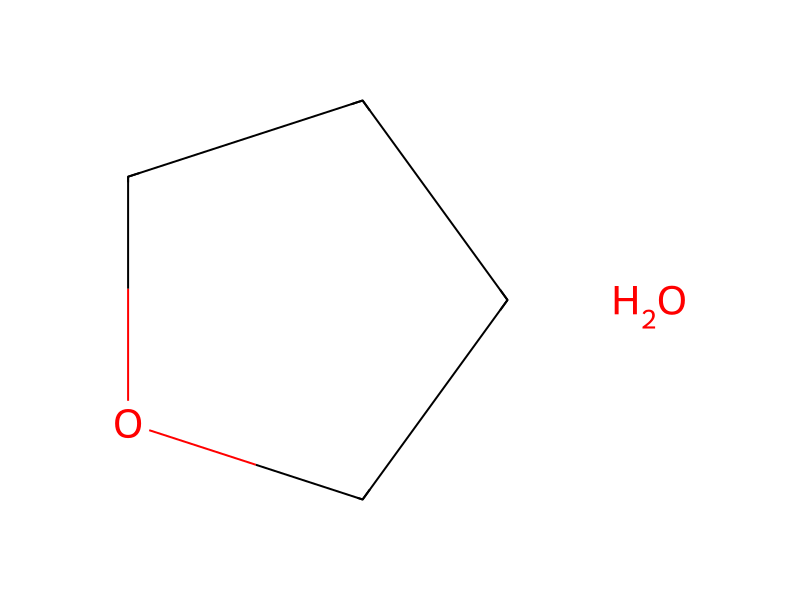
C[O:2][C:3]([C:5]1[CH:6]=[C:7]2[C:11](=[CH:12][C:13]=1[O:14][CH3:15])[NH:10][CH:9]=[C:8]2[CH3:16])=O.[OH-].[Na+].C(Cl)(=O)C(Cl)=O.O.[NH2:26][NH2:27]>ClCCl.CN(C=O)C.C1COCC1.O>[CH3:15][O:14][C:13]1[CH:12]=[C:11]2[C:7]([C:8]([CH3:16])=[CH:9][NH:10]2)=[CH:6][C:5]=1[C:3]([NH:26][NH2:27])=[O:2]Participants
Reactant 4




Product 1

Reagents, catalysts & solvents 3


Procedure
An indole hydrazide can also be prepared by treating a solution of 2-methoxy-4-amino-benzoic acid methyl ester (xvii) in ethanol with N-bromosuccinamide to form 2-methoxy-4-amino-5-bromo-benzoic acid methyl ester (xviii) (see Scheme VIII). A solution of 2-methoxy-4-amino-5-bromo-benzoic acid methyl ester (xviii) in DMF is then reacted with trimethyl-prop-1-ynyl silane (xix) in the presence of with palladium acetate, Na2CO3, triphenylphosphine and tetrabutylaminium iodide to form 6-methoxy-3-methyl-2-trimethylsilanyl-1H-indole-5-carboxylic acid methyl ester (xx). Compound (xx) is then treated with an aqueous HCl solution to remove the trimethylsilanyl group and form 6-methoxy-3-methyl-1H-indole-5-carboxylic acid methyl ester (xxi). Compound (xxi) is treated with NaOH in a THF/H2O solution to convert the ester to a carboxylic acid. The carboxylic acid is then activated by treating it with oxalyl chloride in dichloromethane and a catalytic amount of DMF, then the activated carboxylic acid is converted to a hydrazide by treating it with hydrazine hydrate in dichloromethane to form 6-methoxy-3-methyl-1H-indole-5-carboxylic acid hydrazide (xxii). Hydrazide (xxii) can be used in the method of Scheme Vor VI to form a compound of the invention
Sources & evidence
- ORD record
- ord-f72592e05b1a4728a0860e1f54e3fc97
- Source dataset
- uspto-grants-2014_09
- Patent number
- US08835464B2
Reaction notes
Loading…