Hydrochloric Acid → 2-(3,4-Dichlorophenyl)pent-4-enenitrile
Reaction equation

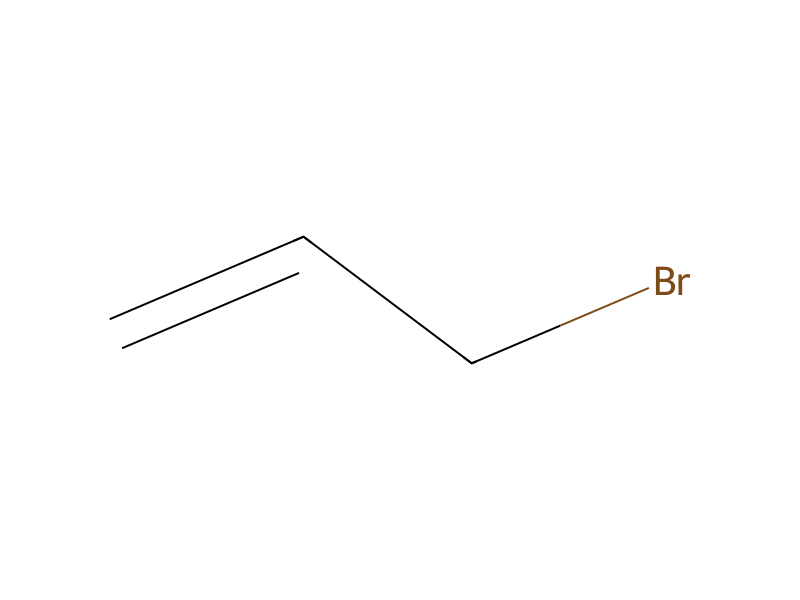
[Cl:1][C:2]1[CH:3]=[C:4]([CH2:9][C:10]#[N:11])[CH:5]=[CH:6][C:7]=1[Cl:8].[CH:12]([N-]C(C)C)([CH3:14])[CH3:13].[Li+].C(Br)C=C.Cl>O1CCCC1.C1CCCCC1>[C:10]([CH:9]([C:4]1[CH:5]=[CH:6][C:7]([Cl:8])=[C:2]([Cl:1])[CH:3]=1)[CH2:14][CH:12]=[CH2:13])#[N:11]Participants





Conditions
- Temperature
- -70 °C
Procedure
3,4-Dichlorophenylacetonitrile (80 g) was dissolved in anhydrous tetrahydrofuran (800 ml) under a nitrogen atmosphere, cooled to −70° C., and lithium di-isopropylamide (320 ml of a 1.5M solution in cyclohexane) added. The mixture was stirred at −70° C. for 30 minutes, allyl bromide (63 g) added over 15 minutes and the mixture stirred for a further 30 minutes. 2N Aqueous hydrochloric acid solution (600 ml) was then added and the mixture extracted twice with diethyl ether. The organic extracts were combined and the solvent removed under reduced pressure. The resulting residue was dissolved in dichloromethane, dried over anhydrous sodium sulphate and the solvent removed under reduced pressure to give a red mobile oil. This was chromatographed on silica gel eluting with 4:1, by volume, hexane:dichloromethane to give 4-cyano-4-(3,4-dichlorophenyl)but-1-ene (94.8 g) as an oil.
Workup
- stirringthe mixture stirred for a further 30 minutes
- extractionthe mixture extracted twice with diethyl ether
- customthe solvent removed under reduced pressure
- dissolutionThe resulting residue was dissolved in dichloromethane
- dry with materialdried over anhydrous sodium sulphate
- customthe solvent removed under reduced pressure
- customto give a red mobile oil
- customThis was chromatographed on silica gel eluting with 4:1, by volume, hexane
Sources & evidence
- ORD record
- ord-a62a6a95c43648f2b8c9a45c27e6dbfb
- Source dataset
- uspto-grants-2002_04
- Patent number
- US06380396B1
Reaction notes
Loading…