Water → 2-Bromo-4-(2-oxoazepan-3-ylamino)benzonitrile
Reaction equation

[Br:1][C:2]1[CH:9]=[C:8](F)[CH:7]=[CH:6][C:3]=1[C:4]#[N:5].[CH2:11]1[CH2:18][CH:17]([NH2:19])[C:15](=[O:16])[NH:14][CH2:13][CH2:12]1.Cl.CCN(C(C)C)C(C)C.O>CS(C)=O.CCOC(C)=O>[Br:1][C:2]1[CH:9]=[C:8]([NH:19][CH:17]2[CH2:18][CH2:11][CH2:12][CH2:13][NH:14][C:15]2=[O:16])[CH:7]=[CH:6][C:3]=1[C:4]#[N:5]Participants
7
Reactant 4


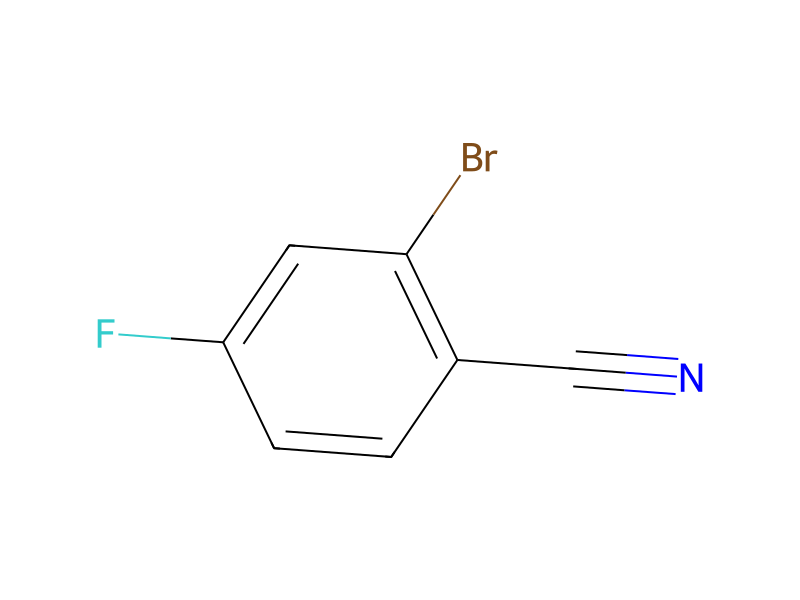

Product 1

Reagents, catalysts & solvents 2


Procedure
A solution of 2-bromo-4-fluorobenzonitrile (200 mg, 1.00 mmol), DL-α-amino-ε-caprolactam hydrochloride (173 mg, 1.05 mmol) and DIEA (0.620 mL, 3.56 mmol) in DMSO (3 mL) was stirred at 120 C for 18 h. Water and EtOAc were added. The solid found between the bi-layer was collected by filtration to give 2-bromo-4-(2-oxoazepan-3-ylamino)benzonitrile (155 mg)
Workup
- filtrationwas collected by filtration
Sources & evidence
- ORD record
- ord-8a3fb6acbf704e6aab0ed9ba2530ced2
- Source dataset
- uspto-grants-2014_09
- Patent number
- US08846928B2
Reaction notes
Loading…