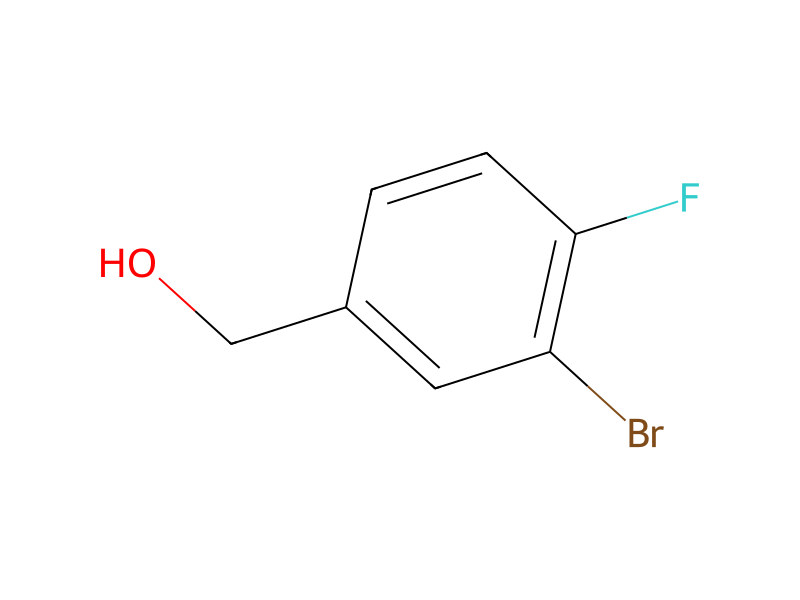
Hydrochloric Acid → 3-Bromo-4-fluorobenzyl Alcohol
Reaction equation

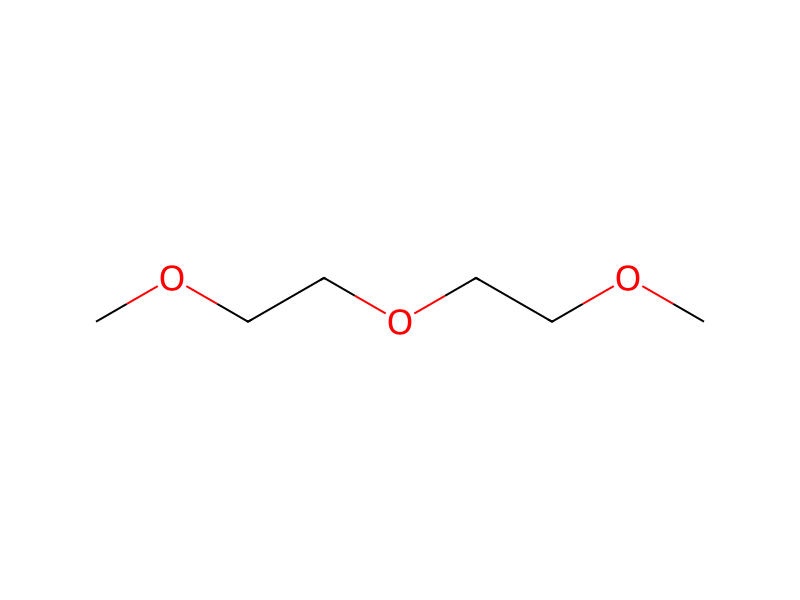
[Cl-].[Al+3].[Cl-].[Cl-].[Br:5][C:6]1[CH:7]=[C:8]([CH:12]=[CH:13][C:14]=1[F:15])[C:9](O)=[O:10].[BH4-].[Na+].Cl>COCCOCCOC.COC(C)(C)C.O>[F:15][C:14]1[CH:13]=[CH:12][C:8]([CH2:9][OH:10])=[CH:7][C:6]=1[Br:5]Participants
8
Reactant 4




Product 1
Reagents, catalysts & solvents 3


Conditions
- Temperature
- 20 °C
Procedure
6.7 g of aluminum chloride were added to a solution of 10.9 g of 95% pure 3-bromo-4-fluorobenzoic acid in 150 ml of diglyme at 20° C. The reaction mixture was subsequently stirred at 20° C. for 10 minutes and 5.7 g of sodium borohydride were then added in portions at 20° to 25° C. After 12 hours, about 100 ml of water (vigorous foaming) and then about 1 ml of 10% strength hydrochloric acid were added dropwise. About 100 ml of tert.-butyl methyl ether were added and the organic phase was separated off. It was washed once with about 30 ml of saturated sodium bicarbonate solution. The ether phase was then concentrated. 6.7 g (76% of theory) of 4-fluoro-3-bromo-benzyl alcohol were obtained.
Workup
- waitAfter 12 hours
- customthe organic phase was separated off
- washIt was washed once with about 30 ml of saturated sodium bicarbonate solution
- concentrationThe ether phase was then concentrated
Sources & evidence
- ORD record
- ord-3b3d4e5013d84e15b53eef3f7290b64f
- Source dataset
- uspto-grants-1983_05
- Patent number
- US04386035
Reaction notes
Loading…