Triphenylphosphine → HCID 68552474, compound
Reaction equation

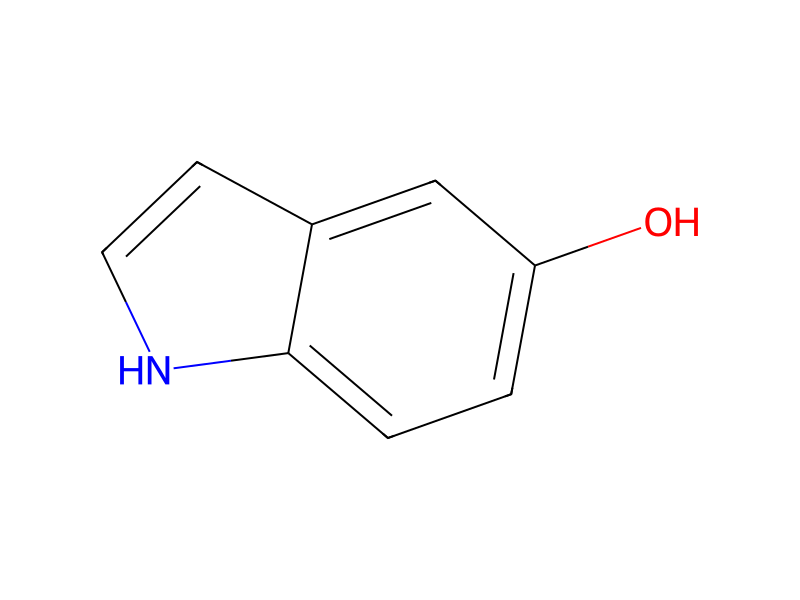
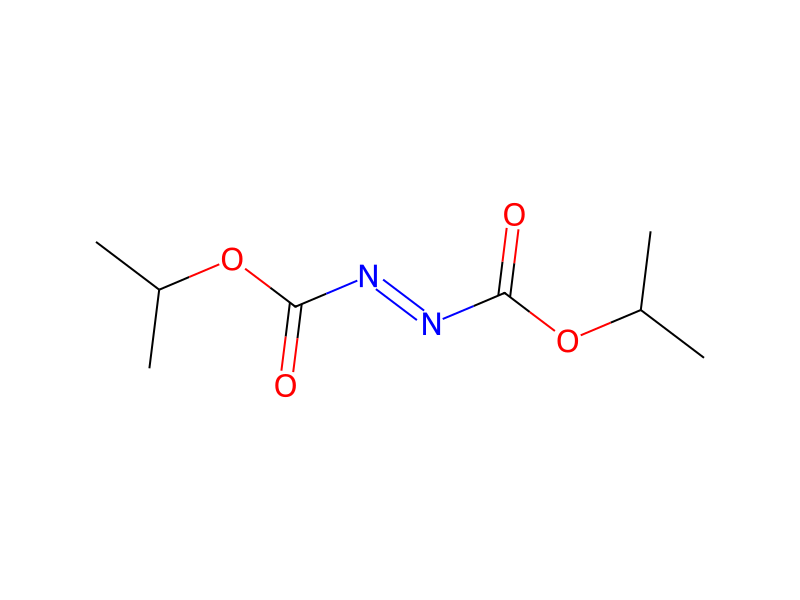
[OH:1][C:2]1[CH:3]=[C:4]2[C:8](=[CH:9][CH:10]=1)[NH:7][CH:6]=[CH:5]2.C1(P(C2C=CC=CC=2)C2C=CC=CC=2)C=CC=CC=1.[F:30][C:31]1[CH:39]=[CH:38][C:34]([CH2:35][CH2:36]O)=[CH:33][CH:32]=1.CC(OC(/N=N/C(OC(C)C)=O)=O)C>C1COCC1>[F:30][C:31]1[CH:39]=[CH:38][C:34]([CH2:35][CH2:36][O:1][C:2]2[CH:3]=[C:4]3[C:8](=[CH:9][CH:10]=2)[NH:7][CH:6]=[CH:5]3)=[CH:33][CH:32]=1Participants
6




Procedure
To a solution of 1.06 g (8 mmol) 5-hydroxyindole and 2.09 g (8 mmol) triphenylphosphine in 40 ml anhydrous THF, cooled to 0° C. in ice, was added 1.0 mL (8 mmol) 4-fluorophenethylalcohol and 1.6 ml (8 mmol) diisopropylazodicarboxylate. The solution was allowed to gradually come to room temperature overnight. The solution was concentrated and the residue was chromatographed on silica using 20–25% EtOAc-hexane to afford 0.525 g 5-[2-(4-fluoro-phenyl)-ethoxy]-1H-indole as a white solid.
Workup
- concentrationThe solution was concentrated
- customthe residue was chromatographed on silica using 20–25% EtOAc-hexane
Sources & evidence
- ORD record
- ord-c7d7590e6dde4291b16935f100700ac7
- Source dataset
- uspto-grants-2007_08
- Patent number
- US07259182B2
Reaction notes
Loading…