Hexamethyldisilazane → HCID 21051854, compound
Reaction equation

C[Si](C)(C)N[Si](C)(C)C.C([Li])CCC.[Cl:15][C:16]1[CH:17]=[C:18]([CH2:24][C:25]([N:27]([C@H:29]([CH3:38])[C@H:30]([OH:37])[C:31]2[CH:36]=[CH:35][CH:34]=[CH:33][CH:32]=2)[CH3:28])=[O:26])[CH:19]=[CH:20][C:21]=1[S:22][CH3:23].I[CH2:40][C@@H:41]1[CH2:61][CH2:60][C:43]2([O:47][C@@H:46]([C:48]3[CH:53]=[CH:52][CH:51]=[CH:50][CH:49]=3)[C@H:45]([C:54]3[CH:59]=[CH:58][CH:57]=[CH:56][CH:55]=3)[O:44]2)[CH2:42]1.CN1CCCN(C)C1=O.[Cl-].[NH4+]>O1CCCC1.C1(C)C=CC=CC=1>[Cl:15][C:16]1[CH:17]=[C:18]([C@@H:24]([CH2:40][C@@H:41]2[CH2:61][CH2:60][C:43]3([O:47][C@@H:46]([C:48]4[CH:53]=[CH:52][CH:51]=[CH:50][CH:49]=4)[C@H:45]([C:54]4[CH:59]=[CH:58][CH:57]=[CH:56][CH:55]=4)[O:44]3)[CH2:42]2)[C:25]([N:27]([C@H:29]([CH3:38])[C@H:30]([OH:37])[C:31]2[CH:32]=[CH:33][CH:34]=[CH:35][CH:36]=2)[CH3:28])=[O:26])[CH:19]=[CH:20][C:21]=1[S:22][CH3:23]Participants
Reactant 6





Product 1

Reagents, catalysts & solvents 2


Conditions
- Temperature
- -7 °C
Procedure
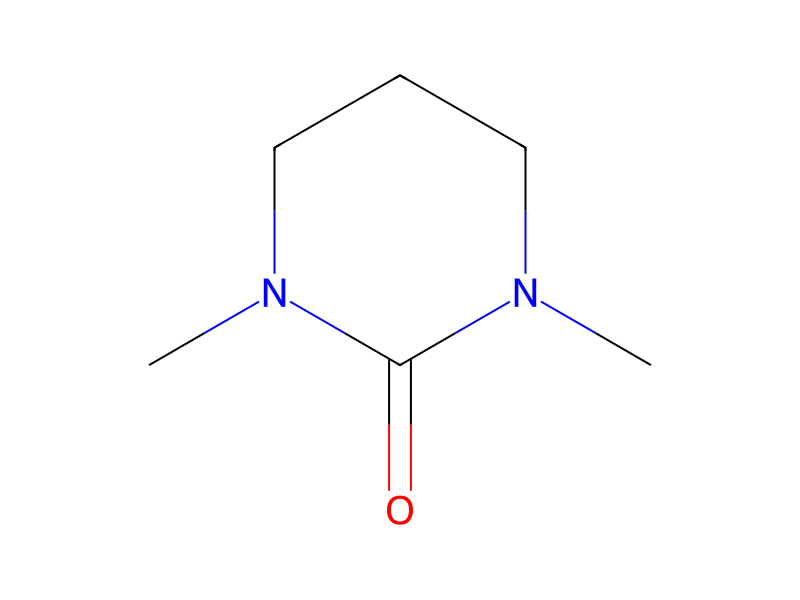
A solution of 1,1,1,3,3,3-hexamethyldisilazane (3.18 mL, 15.05 mmol) in tetrahydrofuran (20 mL) cooled to −20° C. was treated with a 2.5M solution of n-butyllithium in hexanes (5.8 mL, 14.5 meq) over 10 min at such a rate as to keep the temperature below −15° C. The mixture was stirred for an additional 5 min. The cold reaction mixture was then treated with a solution of 2-(3-chloro-4-methylsulfanyl-phenyl)-N-(2(R)-hydroxy-1 (R)-methyl-2-phenyl-ethyl)-N-methylacetamide (prepared as in Example 30, 2.77 g, 7.61 mmol) in tetrahydrofliran (22 mL) via syringe over 8 min, at such a rate as to keep the temperature below -15° C. The reaction was then slowly allowed to warm to −7° C. over 20 min and then a solution of 7(R)-iodomethyl-2(S),3(S)-diphenyl-1,4-dioxa-spiro[4.4]nonane (2.42 g, 5.76 mmol) and 1,3-dimethyl-3,4,5,6-tetrahydro-2(1H)-pyrimidinone (1.7 mL, 14.1 mmol) in tetrahydrofuran (10 mL) was added over 6 min. An exotherm increased the temperature to −4° C. during the addition. The reaction was allowed to warm to 0° C., where it was stirred for an additional 3 h. At this time, the reaction was poured into a mixture of toluene (70 mL) and a 20% aqueous ammonium chloride solution (50 mL, 187 mmol) and was then stirred vigorously. The organic layer was separated and re-washed with a 20% aqueous ammonium chloride solution (50 mL, 187 mmol). The organic layer was dried over anhydrous sodium sulfate, and concentrated in vacuo to give 2(R)-(3-chloro-4-methylsulfanyl-phenyl)-3-(2(S),3 (S)-diphenyl-1,4-dioxa-spiro [4.4]non-7(S)-yl)-N-(2(R)-hydroxy-1(R)-methyl-2-phenyl-ethyl)-N-methyl-propionamide (3.86 g) as an overweight brown semi-solid. Flash chromatography (Merck Silica gel 60, 230-400 mesh, 1/1 hexanes/ethyl acetate) afforded 2(R)-(3-chloro-4-methylsulfanyl-phenyl)-3-(2(S),3(S)-diphenyl-1,4-dioxa-spiro[4.4]non-7(S)-yl)-N-(2(R)-hydroxy-1(R)-methyl-2-phenyl-ethyl)-N-methylpropionamide as a yellow foam (2.28 g, 60.4%).
Workup
- customthe temperature below −15° C
- customThe cold reaction mixture
- customthe temperature below -15° C
- temperatureAn exotherm increased the temperature to −4° C.
- additionduring the addition
- temperatureto warm to 0° C.
- stirringwhere it was stirred for an additional 3 h
- customThe organic layer was separated
- dry with materialThe organic layer was dried over anhydrous sodium sulfate
- concentrationconcentrated in vacuo
Sources & evidence
- ORD record
- ord-4483f2629890468182ad619678e3aa22
- Source dataset
- uspto-grants-2007_08
- Patent number
- US07259166B2
Reaction notes
Loading…