Ethyl Acetate → HCID 23233793, compound
Reaction equation

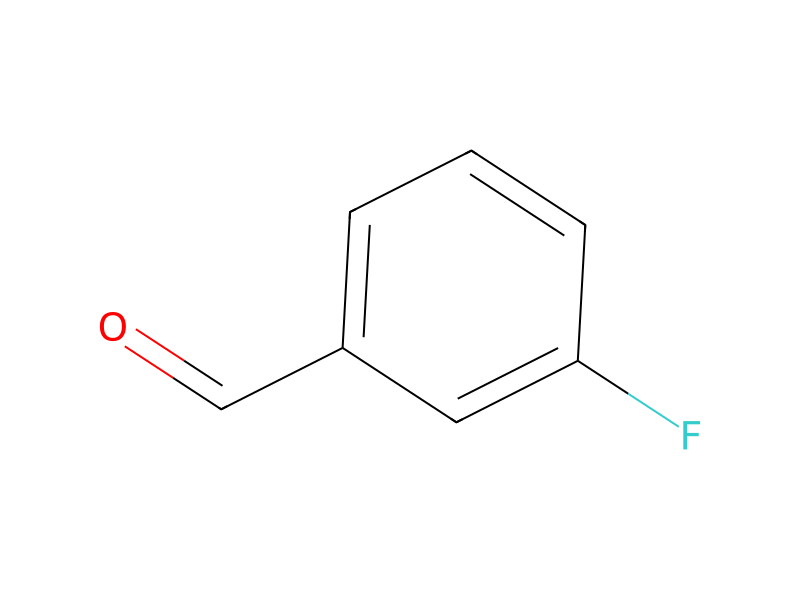
[H-].[Na+].[N+:3]([C:6]1[CH:20]=[CH:19][C:9]([CH2:10]P(=O)(OCC)OCC)=[CH:8][CH:7]=1)([O-:5])=[O:4].[F:21][C:22]1[CH:23]=[C:24]([CH:27]=[CH:28][CH:29]=1)[CH:25]=O.C(OCC)(=O)C>CN(C)C=O>[F:21][C:22]1[CH:29]=[CH:28][CH:27]=[C:24](/[CH:25]=[CH:10]/[C:9]2[CH:8]=[CH:7][C:6]([N+:3]([O-:5])=[O:4])=[CH:20][CH:19]=2)[CH:23]=1Participants
Reactant 4



Product 1

Reagents, catalysts & solvents 1

Conditions
- Temperature
- 0 °C
Procedure
A suspension of 677 mg of sodium hydride (55% dispersion in oil) in 10 ml of N,N-dimethylformamide is cooled to 0° C. Thereupon, 5.61 g (20.5 mmol) of diethyl (4-nitrobenzyl)phosphonate are added portionwise. The reaction mixture is left to warm to RT and stirred for 1.5 hours. Thereafter, the mixture is cooled to −10° C. and a solution of 1.5 g (12.1 mmol) of 3-fluorobenzaldehyde in 5 ml N,N-dimethylformamide is added dropwise. Stirring is continued for 30 min at 0° C., then at RT. For the working-up, ice and ethyl acetate are added to the reaction mixture. The organic layer is separated, dried over magnesium sulfate and evaporated under reduced pressure to yield the crude crystalline product, which after recrystallisation from a mixture of ether and heptane gives 2.41 g (82% of theory) of (E)-1-fluoro-3-[2-(4-nitrophenyl)ethenyl]-benzene as a yellow solid; MS: m/e=243(M)+.
Workup
- waitThe reaction mixture is left
- temperatureto warm to RT
- temperatureThereafter, the mixture is cooled to −10° C.
- stirringStirring
- waitis continued for 30 min at 0° C.
- customat RT
- customThe organic layer is separated
- dry with materialdried over magnesium sulfate
- customevaporated under reduced pressure
- customto yield the crude crystalline product, which
- customafter recrystallisation
- additionfrom a mixture of ether and heptane
Sources & evidence
- ORD record
- ord-22618b49f2804870a7698040acb34723
- Source dataset
- uspto-grants-2006_12
- Patent number
- US07151111B2
Reaction notes
Loading…