Pyridine → 4-Nitrophenyl 2-(tert-butyldimethylsilyloxy)benzyl carbonate
Reaction equation

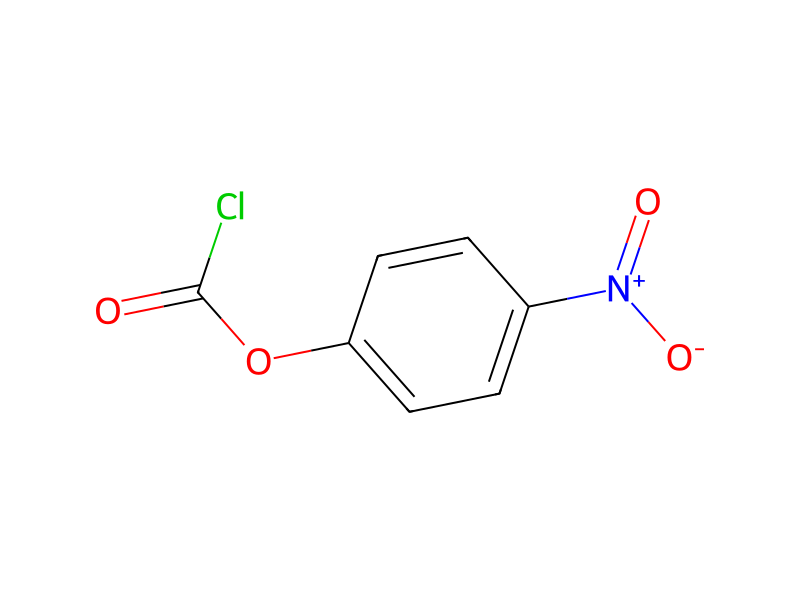
[Si:1]([O:8][C:9]1[CH:16]=[CH:15][CH:14]=[CH:13][C:10]=1[CH2:11][OH:12])([C:4]([CH3:7])([CH3:6])[CH3:5])([CH3:3])[CH3:2].N1C=CC=CC=1.Cl[C:24]([O:26][C:27]1[CH:32]=[CH:31][C:30]([N+:33]([O-:35])=[O:34])=[CH:29][CH:28]=1)=[O:25]>C(OCC)(=O)C>[C:24](=[O:25])([O:12][CH2:11][C:10]1[CH:13]=[CH:14][CH:15]=[CH:16][C:9]=1[O:8][Si:1]([C:4]([CH3:7])([CH3:6])[CH3:5])([CH3:3])[CH3:2])[O:26][C:27]1[CH:28]=[CH:29][C:30]([N+:33]([O-:35])=[O:34])=[CH:31][CH:32]=1Participants
5




Procedure
The alcohol 29 (135 mg, 0.56 mmol) is dissolved in ethyl acetate (0.82 ml). Pyridine (0.081 ml) is then added, followed by 4-nitrophenyl chloroformate (275 mg, 2.4 eq.). After one night at room temperature, the solvent is evaporated off. Chromatography on silica gel gives the carbonate 30 (206 mg, 91%).
Workup
- waitAfter one night at room temperature
- customthe solvent is evaporated off
Sources & evidence
- ORD record
- ord-f23e93dd60364323b0e522f125da619d
- Source dataset
- uspto-grants-1996_10
- Patent number
- US05561119
Reaction notes
Loading…