2,2,3,3-Tetrafluoro-1-propanol → 4-(2,2,3,3-Tetrafluoropropoxy)benzaldehyde
Reaction equation

C(=O)([O-])[O-].[K+].[K+].F[C:8]1[CH:15]=[CH:14][C:11]([CH:12]=[O:13])=[CH:10][CH:9]=1.[F:16][C:17]([F:23])([CH:20]([F:22])[F:21])[CH2:18][OH:19]>CC(N(C)C)=O>[F:16][C:17]([F:23])([CH:20]([F:22])[F:21])[CH2:18][O:19][C:8]1[CH:15]=[CH:14][C:11]([CH:12]=[O:13])=[CH:10][CH:9]=1Participants
5
Reactant 3


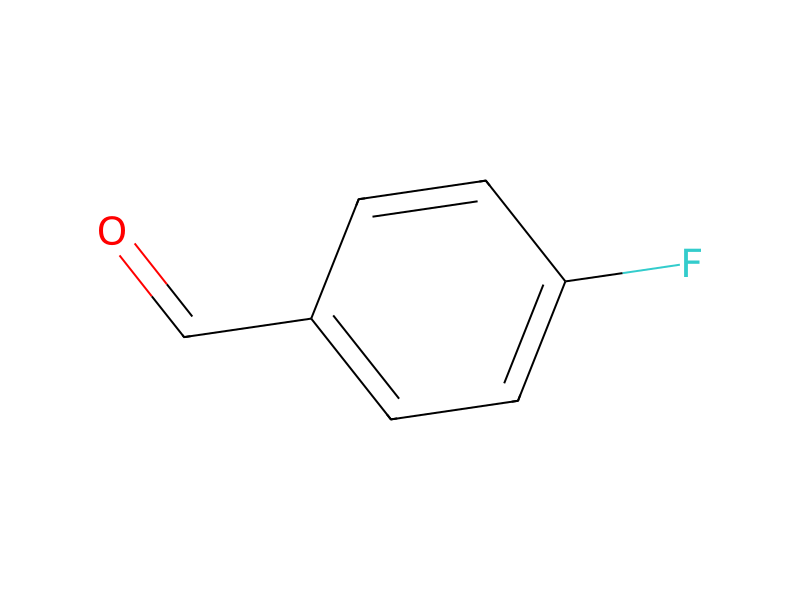
Product 1

Reagents, catalysts & solvents 1

Conditions
- Temperature
- 20 °C
Procedure
500 ml of dimethylacetamide, 304 g of potassium carbonate, 248 g of 4-fluorobenzaldehyde and 290 g of 2,2,3,3-tetrafluoropropanol are heated for 22.5 hours at 140° C. The reaction mixture is subsequently cooled to 20° C. and filtered. The salt mixture is washed using 300 ml of dimethylacetamide. After the filtrate has been distilled in vacuo at 3 mbar, a bottom temperature of 135° C. and a head temperature of 109° C. to 110° C., 387.95 g of 4-(2,2,3,3-tetrafluoropropoxy) benzaldehyde with a purity (GC) of 98% to 99% are obtained.
Workup
- filtrationfiltered
- washThe salt mixture is washed
- distillationAfter the filtrate has been distilled in vacuo at 3 mbar
Sources & evidence
- ORD record
- ord-c8b4cc51506c44c3872695cf77886574
- Source dataset
- uspto-grants-1996_10
- Patent number
- US05569776
Reaction notes
Loading…