1,3-Dibromopropane → 2-(3-Bromopropoxy)-1H-isoindole-1,3(2H)-dione
Reaction equation

[OH:1][N:2]1[C:6](=[O:7])[C:5]2=[CH:8][CH:9]=[CH:10][CH:11]=[C:4]2[C:3]1=[O:12].[Br:13][CH2:14][CH2:15][CH2:16]Br.C(N(C(C)C)CC)(C)C>CC#N>[Br:13][CH2:14][CH2:15][CH2:16][O:1][N:2]1[C:3](=[O:12])[C:4]2=[CH:11][CH:10]=[CH:9][CH:8]=[C:5]2[C:6]1=[O:7]Participants
5
Reactant 3

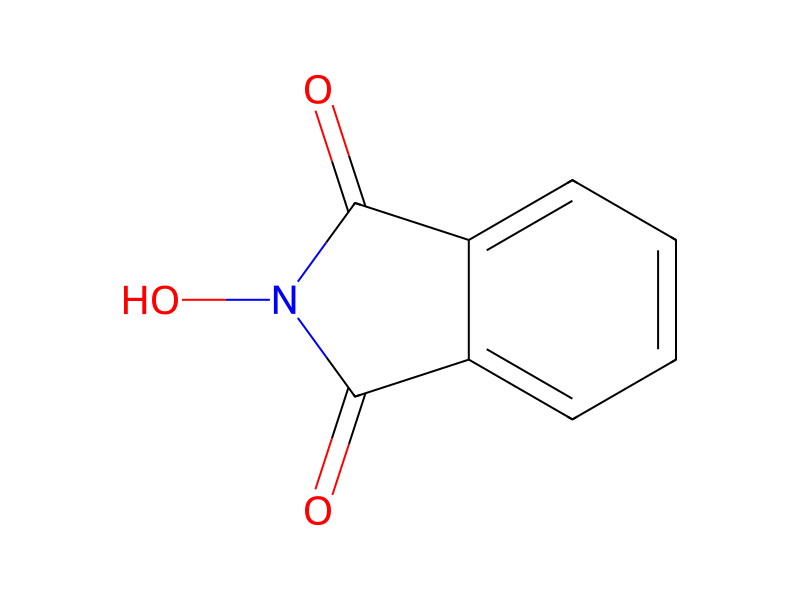

Product 1

Reagents, catalysts & solvents 1

Procedure
To a solution of N-hydroxyphthalimide (2.0 g) and 1,3-dibromopropane (2.49 ml) in 50 ml of dry CH3CN was added diisopropylethylamine (4.27 ml). The mixture was stirred at room temperature. After 4 hours the volatiles were removed in vacuo. The residue was triturated with Et2O to provide 2.53 g of while solid, homogeneous by TLC.
Workup
- customAfter 4 hours the volatiles were removed in vacuo
- customThe residue was triturated with Et2O
- customto provide 2.53 g of while solid
Sources & evidence
- ORD record
- ord-5a566a0ee464489bbbda7849ac50b7d0
- Source dataset
- uspto-grants-1988_10
- Patent number
- US04780466
Reaction notes
Loading…