Triethylamine → 4-nitrophenyl (2S)-1,1,1-trifluoropropan-2-yl carbonate
Reaction equation

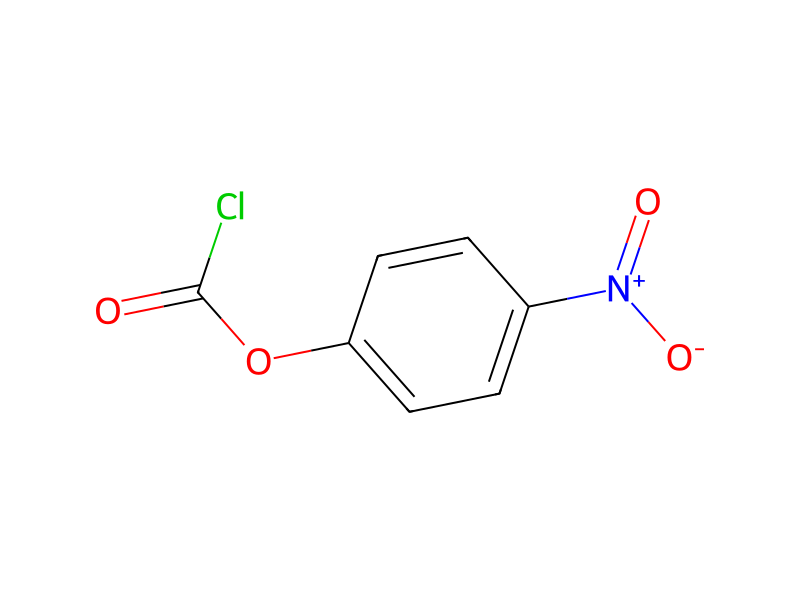
C(N(CC)CC)C.[F:8][C:9]([F:14])([F:13])[C@@H:10]([OH:12])[CH3:11].Cl[C:16]([O:18][C:19]1[CH:24]=[CH:23][C:22]([N+:25]([O-:27])=[O:26])=[CH:21][CH:20]=1)=[O:17]>CN(C)C1C=CN=CC=1.ClCCl>[F:8][C:9]([F:14])([F:13])[C@@H:10]([O:12][C:16](=[O:17])[O:18][C:19]1[CH:20]=[CH:21][C:22]([N+:25]([O-:27])=[O:26])=[CH:23][CH:24]=1)[CH3:11]Participants
6





Procedure
Triethylamine (2.3 mL) is added to a solution of 4-dimethylaminopyridine (13 mg), (S)-1,1,1-trifluoro-propan-2-ol (75% in tert-butyl methyl ether; 2.00 g), and 4-nitrophenyl chloroformate (2.90 g) in dichloromethane (80 mL) chilled in an ice bath. The solution is stirred in the cooling bath for 30 min and then at room temperature overnight. The solution is washed with 10% aqueous K2CO3 solution and water and dried (MgSO4). The solvent is evaporated and the residue is chromatographed on silica gel (dichloromethane) to give the title compound.
Workup
- temperaturechilled in an ice bath
- customat room temperature
- customovernight
- washThe solution is washed with 10% aqueous K2CO3 solution and water
- dry with materialdried (MgSO4)
- customThe solvent is evaporated
- customthe residue is chromatographed on silica gel (dichloromethane)
Sources & evidence
- ORD record
- ord-caff9032d4db43b69739e4b24baae42a
- Source dataset
- uspto-grants-2015_03
- Patent number
- US08975277B2
Reaction notes
Loading…