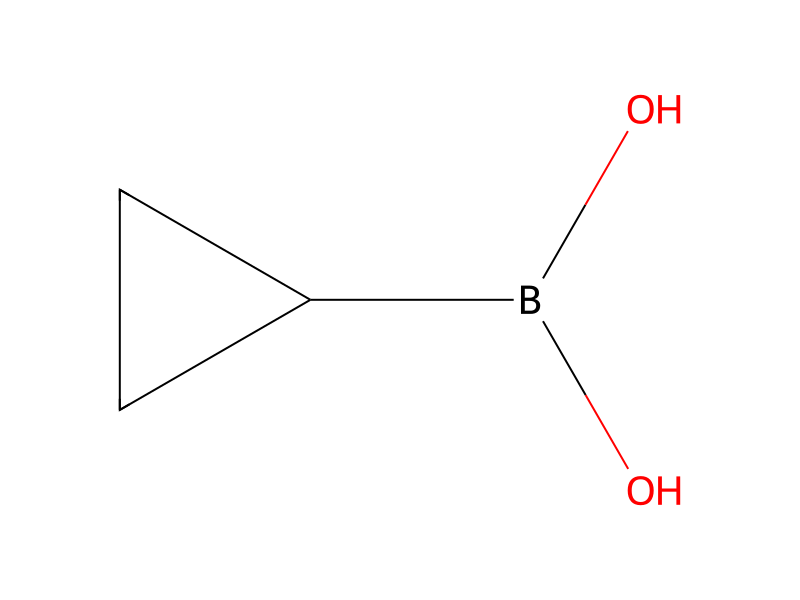
Cyclopropylboronic acid → 3-Cyclopropyl-4-fluoroaniline
Reaction equation

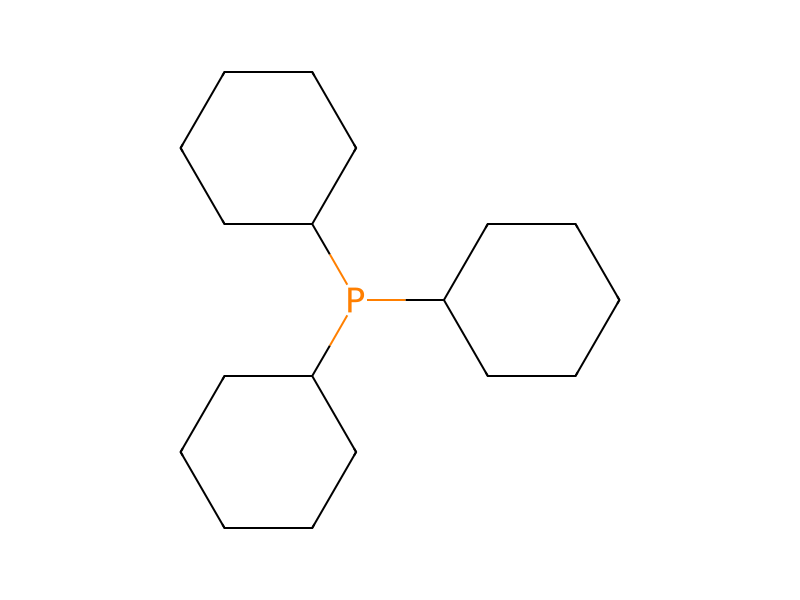
[CH:1]1(B(O)O)[CH2:3][CH2:2]1.P(=O)([O-])[O-].[K+].[K+].Br[C:14]1[CH:15]=[C:16]([CH:18]=[CH:19][C:20]=1[F:21])[NH2:17]>O.C1(C)C=CC=CC=1.C([O-])(=O)C.C([O-])(=O)C.[Pd+2].C1(P(C2CCCCC2)C2CCCCC2)CCCCC1>[CH:1]1([C:14]2[CH:15]=[C:16]([CH:18]=[CH:19][C:20]=2[F:21])[NH2:17])[CH2:3][CH2:2]1Participants
Reactant 3


Product 1

Reagents, catalysts & solvents 4



Conditions
- Temperature
- 100 °C
Procedure
558 mg of cyclopropylboronic acid, 3.7 g of tribasic potassium phosphonate, 70 mg of tricyclohexylphosphane and 56 mg of palladium(2+) diacetate in 1.5 ml of water are added to a solution of 950 mg of 3-bromo-4-fluoroaniline in 20 ml of toluene, with stirring and under argon. The mixture is degassed and then heated to a temperature of 100° C. After 15 hours, the reaction medium is cooled to a temperature in the region of 20° C., run into 100 ml of water, and then extracted with four times 60 ml of diethyl ether. The combined organic phases are dried over anhydrous magnesium sulphate, filtered and concentrated under reduced pressure. The residue is purified on a silica column, eluent: 7030 cyclohexaneethyl acetate. 494 mg of 3-cyclopropyl-4-fluoroaniline are obtained in the form of a brown oil, the characteristics of which are the following:
Workup
- customThe mixture is degassed
- temperaturethe reaction medium is cooled to a temperature in the region of 20° C.
- extractionextracted with four times 60 ml of diethyl ether
- dry with materialThe combined organic phases are dried over anhydrous magnesium sulphate
- filtrationfiltered
- concentrationconcentrated under reduced pressure
- customThe residue is purified on a silica column, eluent
Sources & evidence
- ORD record
- ord-af0b169222ca4ed9bbeb016d1134a47c
- Source dataset
- uspto-grants-2015_03
- Patent number
- US08993565B2
Reaction notes
Loading…