Hydrochloric Acid → [3-(4-Bromo-2-formyl-phenoxy)-phenyl]-acetic acid methyl ester
Reaction equation

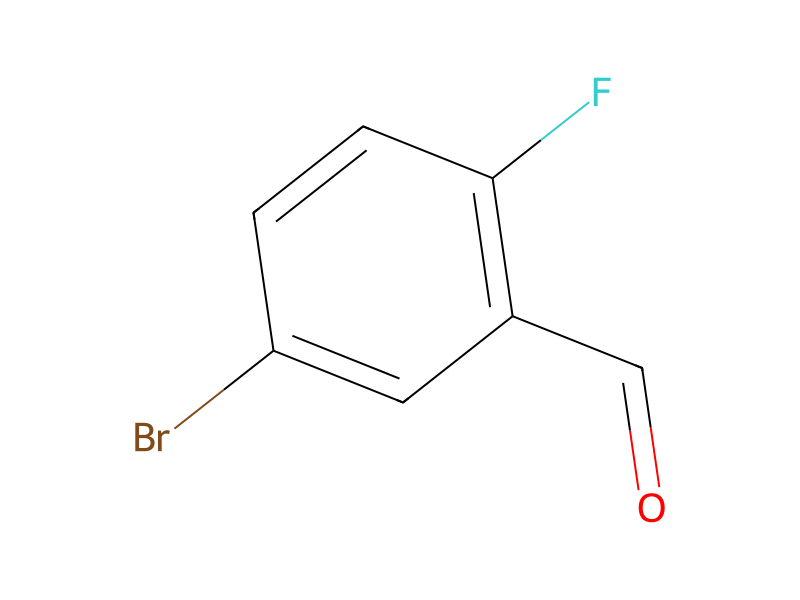
[CH3:1][O:2][C:3](=[O:12])[CH2:4][C:5]1[CH:10]=[CH:9][CH:8]=[C:7]([OH:11])[CH:6]=1.[Br:13][C:14]1[CH:15]=[CH:16][C:17](F)=[C:18]([CH:21]=1)[CH:19]=[O:20].C(=O)([O-])[O-].[K+].[K+].Cl>O1CCOCC1.CCOC(C)=O>[CH3:1][O:2][C:3](=[O:12])[CH2:4][C:5]1[CH:10]=[CH:9][CH:8]=[C:7]([O:11][C:17]2[CH:16]=[CH:15][C:14]([Br:13])=[CH:21][C:18]=2[CH:19]=[O:20])[CH:6]=1Participants
7
Reactant 4



Product 1

Reagents, catalysts & solvents 2


Conditions
- Temperature
- 120 °C
Procedure
(3-Hydroxy-phenyl)-acetic acid methyl ester (5 g, 30.1 mmol), 5-bromo-2-fluorobenzaldehyde (3.6 mL, 30.1 mmol), and potassium carbonate (8.3 g, 60.2 mmol) were combined in 1,4-dioxane (40 mL) and stirred at 120° C. for 16 hours. Once no starting material was seen by analytical LCMS and tlc, the mixture was worked-up with 10% aqueous HCl and EtOAc, and the crude material was purified by silica gel chromatography to give the desired product as a colorless oil (5 g).
Workup
- customthe crude material was purified by silica gel chromatography
Sources & evidence
- ORD record
- ord-30e2306542ba461ba6ec61fc28243fcb
- Source dataset
- uspto-grants-2012_08
- Patent number
- US08242145B2
Reaction notes
Loading…