Diisopropylamine → Methyl 3-bromo-5-(prop-1-en-2-yl)benzoate
Reaction equation

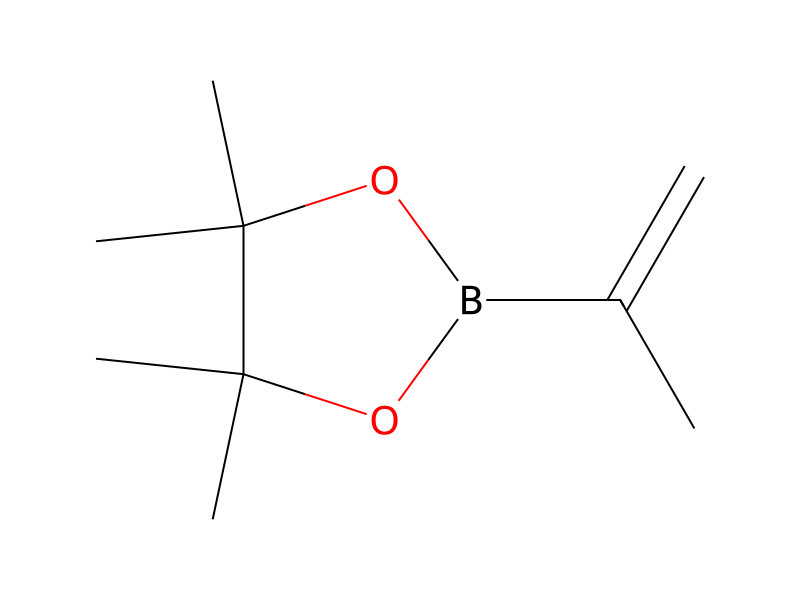
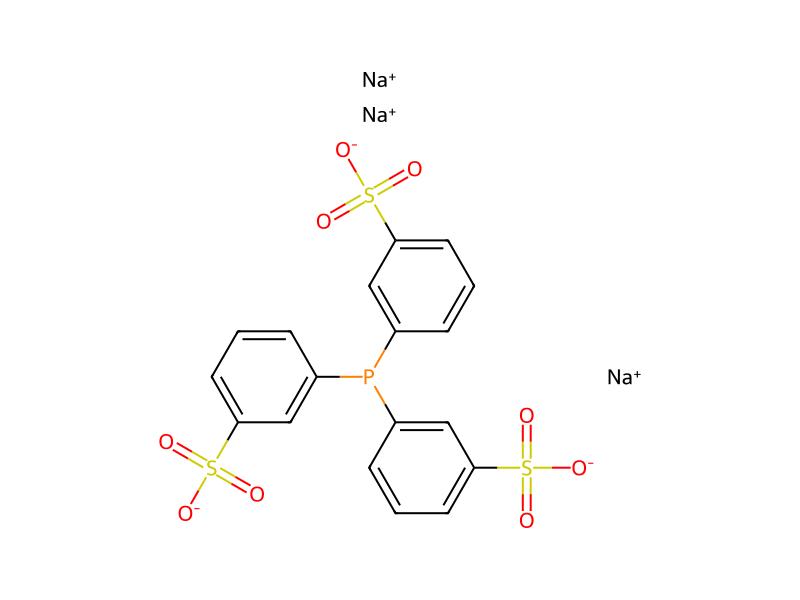
[Br:1][C:2]1[CH:3]=[C:4]([CH:9]=[C:10](I)[CH:11]=1)[C:5]([O:7][CH3:8])=[O:6].[C:13](B1OC(C)(C)C(C)(C)O1)([CH3:15])=[CH2:14].C(NC(C)C)(C)C.C(=O)(O)[O-].[Na+]>C(#N)C.O.C([O-])(=O)C.[Pd+2].C([O-])(=O)C.C1C=C(S([O-])(=O)=O)C=C(P(C2C=CC=C(S([O-])(=O)=O)C=2)C2C=CC=C(S([O-])(=O)=O)C=2)C=1.[Na+].[Na+].[Na+]>[Br:1][C:2]1[CH:3]=[C:4]([CH:9]=[C:10]([C:13]([CH3:15])=[CH2:14])[CH:11]=1)[C:5]([O:7][CH3:8])=[O:6]Participants
Reactant 4



Product 1

Reagents, catalysts & solvents 4



Conditions
- Temperature
- 80 °C
Procedure
To a solution of methyl 3-bromo-5-iodobenzoate (2.50 g, 7.33 mmol) in acetonitrile (22.0 mL) and water (7.33 mL) was 2-isopropenyl-4,4,5,5-tetramethyl-1,3,2-dioxaborolane (1.378 mL, 7.33 mmol), palladium(II) acetate (41.0 mg, 0.183 mmol), 3,3′3″-phosphinidynetris(benzenesulfonic acid)trisodium salt (313 mg, 0.550 mmol) and diisopropylamine (2.61 mL, 18.33 mmol) and the mixture was heated to 80° C. After 2.5 h, the reaction was allowed to cool to ambient temperature and saturated aqueous sodium bicarbonate was added. The mixture was extracted with ethyl acetate (3×). The combined organic extracts were washed with brine, dried over magnesium sulfate, filtered and concentrated. Purification by silica gel chromatography (100% hexanes→80% hexanes/ethyl acetate) gave the title compound (1.71 g).
Workup
- temperatureto cool to ambient temperature
- extractionThe mixture was extracted with ethyl acetate (3×)
- washThe combined organic extracts were washed with brine
- dry with materialdried over magnesium sulfate
- filtrationfiltered
- concentrationconcentrated
- customPurification by silica gel chromatography (100% hexanes→80% hexanes/ethyl acetate)
Sources & evidence
- ORD record
- ord-4a17ddc0f48f40c898e60ba4ea6e8829
- Source dataset
- uspto-grants-2012_08
- Patent number
- US08247401B2
Reaction notes
Loading…