Diisopropylethylamine → 6-Chloro-2-methyl-N4-(tetrahydro-2H-pyran-4-yl)-4,5-pyrimidinediamine
Reaction equation

Cl[C:2]1[C:7]([NH2:8])=[C:6]([Cl:9])[N:5]=[C:4]([CH3:10])[N:3]=1.[NH2:11][CH:12]1[CH2:17][CH2:16][O:15][CH2:14][CH2:13]1.C(N(CC)C(C)C)(C)C>CC(O)C.ClCCl>[Cl:9][C:6]1[N:5]=[C:4]([CH3:10])[N:3]=[C:2]([NH:11][CH:12]2[CH2:17][CH2:16][O:15][CH2:14][CH2:13]2)[C:7]=1[NH2:8]Participants
6
Reactant 3

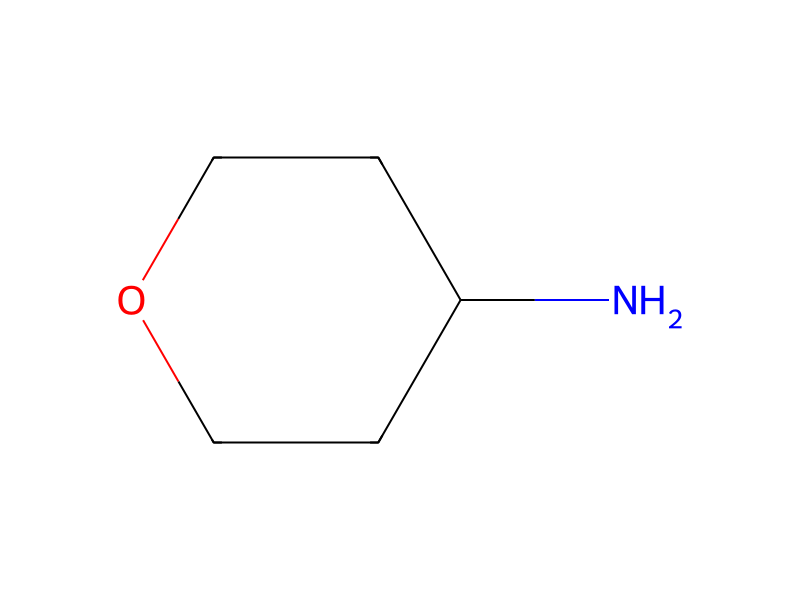

Product 1

Reagents, catalysts & solvents 2


Procedure
Heat a solution of 4,6-Dichloro-2-methyl-pyrimidin-5-ylamine (0.008 mol, 1.5 g, 1.0 equiv.), 4-amino tetrahydropyran (0.012 mol, 1.27 g, 1.5 equiv.), and N,N-diisopropylethylamine (0.0092 mol, 1.1 g, 1.1 equiv.) in 2-propanol (80 mL) at 150° C. in a sealed tube for 16 hours. Cool the reaction mixture to room temperature and remove the 2-propanol under reduced pressure to give the residue. Dissolve the residue in dichloromethane and wash with water and brine. Dry the organic layer over anhydrous sodium sulfate, filter, and concentrate under reduced pressure to give a residue. Purify the residue on silica gel column eluting with dichloromethane: methanol 96:4 to give the title compound. MS (m/z): 243.41 (M+1).
Workup
- customremove the 2-propanol under reduced pressure
- customto give the residue
- washwash with water and brine
- dry with materialDry the organic layer over anhydrous sodium sulfate
- filtrationfilter
- concentrationconcentrate under reduced pressure
- customto give a residue
- customPurify the residue on silica gel column
- washeluting with dichloromethane: methanol 96:4
Sources & evidence
- ORD record
- ord-8e54862c7ce44e13896312ca54ad10a4
- Source dataset
- uspto-grants-2012_08
- Patent number
- US08252798B2
Reaction notes
Loading…