Propylamine → HCID 22692581, compound
Reaction equation

[Cl:1][C:2]1[N:11]=[C:10](Cl)[C:9]2[C:4](=[CH:5][CH:6]=[CH:7][CH:8]=2)[N:3]=1.[CH2:13]([NH2:16])[CH2:14][CH3:15].C(N(CC)CC)C>C(#N)C.C(OCC)(=O)C>[Cl:1][C:2]1[N:11]=[C:10]([NH:16][CH2:13][CH2:14][CH3:15])[C:9]2[C:4](=[CH:5][CH:6]=[CH:7][CH:8]=2)[N:3]=1Participants
6
Reactant 3
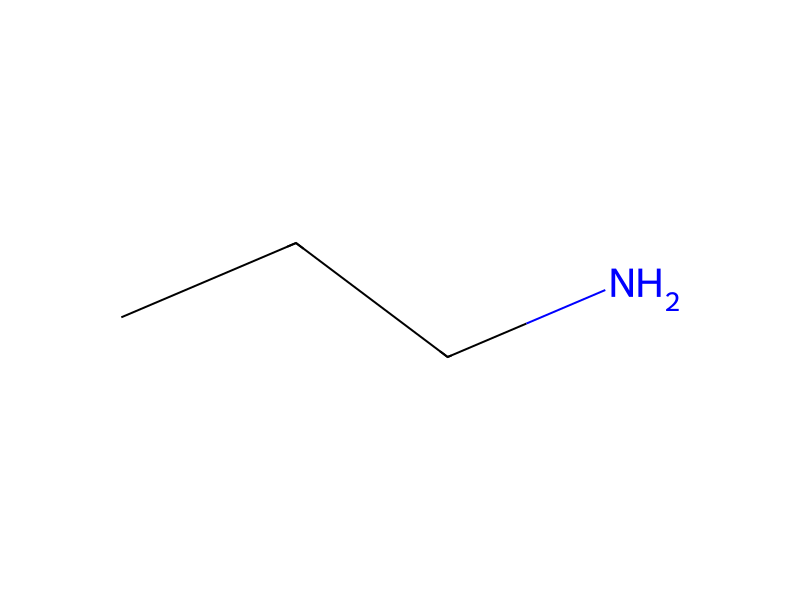


Product 1

Reagents, catalysts & solvents 2


Procedure
2,4-Dichloroquinazoline (600 mg, 3.01 mmol) was dissolved in acetonitrile (10 mL). Propylamine (200 mg, 3.3 mmol) and triethylamine (2.1 mL, 15 mmol) were added. The mixture was stirred at room temperature over-night. Filtration and evaporation of the filtrate gave a yellow solid, which was dissolved in ethyl acetate and washed three times with water. Drying (magnesium sulphate), filtration and evaporation gave (2-chloro-quinazolin-4-yl)-propylamine as a yellow solid.
Workup
- filtrationFiltration and evaporation of the filtrate
- customgave a yellow solid, which
- washwashed three times with water
- customDrying
- filtration(magnesium sulphate), filtration and evaporation
Sources & evidence
- ORD record
- ord-c94d55d543ee48eb902e756201202792
- Source dataset
- uspto-grants-2012_08
- Patent number
- US08252806B2
Reaction notes
Loading…