Orcinol → 3-Methyl-5-(quinolin-2-ylmethoxy)-phenol
Reaction equation

Cl.Cl[CH2:3][C:4]1[CH:13]=[CH:12][C:11]2[C:6](=[CH:7][CH:8]=[CH:9][CH:10]=2)[N:5]=1.[C:14]1([OH:22])[CH:21]=[C:19]([CH3:20])[CH:18]=[C:16]([OH:17])[CH:15]=1.C([O-])([O-])=O.[K+].[K+]>[I-].C([N+](CCCC)(CCCC)CCCC)CCC.CN(C=O)C>[CH3:20][C:19]1[CH:21]=[C:14]([OH:22])[CH:15]=[C:16]([O:17][CH2:3][C:4]2[CH:13]=[CH:12][C:11]3[C:6](=[CH:7][CH:8]=[CH:9][CH:10]=3)[N:5]=2)[CH:18]=1Participants
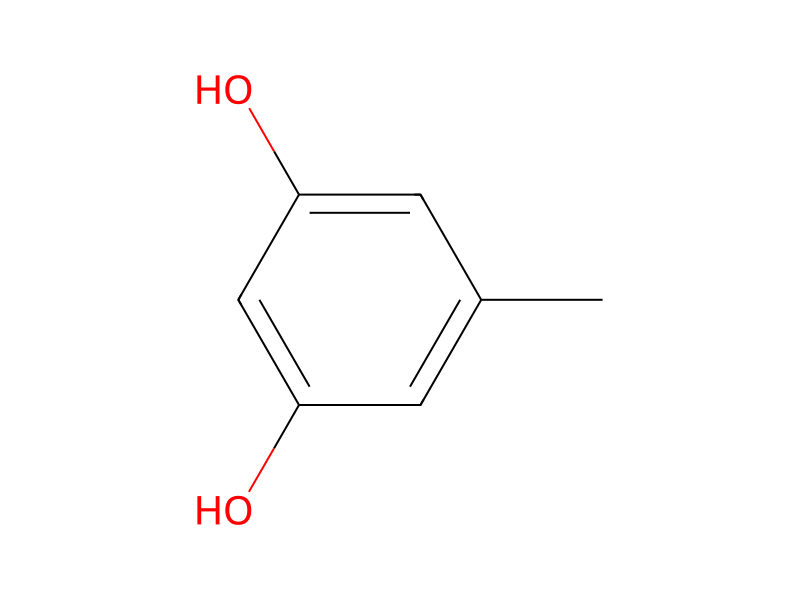




Procedure
2-(Chloromethyl)-quinoline hydrochloride (1.28 g, 6.0 mmol), orcinol (568 mg, 4.0 mmol), K2CO3 (1.68 g, 12.0 mmol) and a catalytic amount of tetrabutylammonium iodide (˜10 mg) are dissolved/suspended in anhyd. DMF (10 mL) and heated at 50° C. overnight. The reaction is cooled to r.t. and partitioned between water (100 mL) and ethyl ether (100 mL). The pH of the aqueous layer is adjusted to ˜5 and further extracted with ethyl ether (100 mL). The organic fractions are pooled and washed with brine (2×100 mL), dried over MgSO4, filtered and preadsorbed onto silica gel. The crude preadsorbed material is purified by flash chromatography (silica, 20% ethyl acetate in hexanes) to give the title compound. This product (approx. 80% purity, remainder is 2-methylquinoline) is used without further purification. MS (ESI) 266 (M+H)+.
Workup
- custompartitioned between water (100 mL) and ethyl ether (100 mL)
- extractionfurther extracted with ethyl ether (100 mL)
- washwashed with brine (2×100 mL)
- dry with materialdried over MgSO4
- filtrationfiltered
- customis purified by flash chromatography (silica, 20% ethyl acetate in hexanes)
Sources & evidence
- ORD record
- ord-5f895907439a410897f8472dcdd60450
- Source dataset
- uspto-grants-2006_02
- Patent number
- US07005440B1
Reaction notes
Loading…