Tetrahydrofuran → HCID 10335345, compound
Reaction equation

[O:1]1[C:5]([C:6]2[CH:7]=[CH:8][C:9]3[N:10]([C:12]([CH:15]([CH3:17])[CH3:16])=[N:13][N:14]=3)[CH:11]=2)=[CH:4][N:3]=[CH:2]1.C[Si]([N-][Si](C)(C)C)(C)C.[Li+].O1CCCC1.[Br:33]N1C(=O)CCC1=O>CN(C)C=O>[Br:33][C:4]1[N:3]=[CH:2][O:1][C:5]=1[C:6]1[CH:7]=[CH:8][C:9]2[N:10]([C:12]([CH:15]([CH3:17])[CH3:16])=[N:13][N:14]=2)[CH:11]=1Participants





Procedure
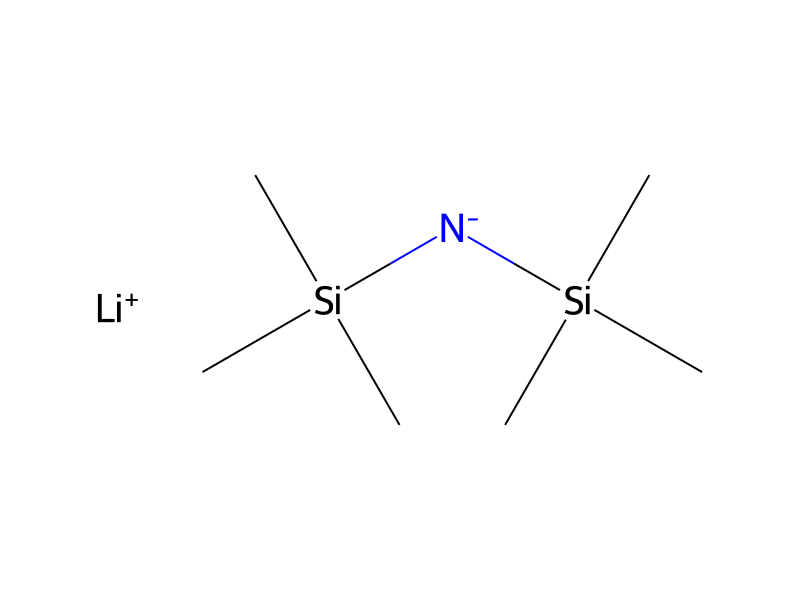
A clean, dry, 1 liter 4 neck round bottom flask equipped with mechanical stirrer, temperature probe, and purged with nitrogen, was charged with 6-[oxazol-5-yl]-3-isopropyl-[1,2,4]triazolo[4,3-a]pyridine (45.2 grams 0.198 moles) and dimethylformamide (271 ml). The pot was cooled below −60° C. with a dry ice/acetone bath. Lithium bis(trimethylsilyl)amide, 1 molar solution in tetrahydrofuran (198 ml 0.198 moles), was added, keeping the temperature below −60° C. After the addition was complete, the pot was further cooled to below −70° C. and stirred for 1 hour. While stirring, a solution of N-bromosuccinimide (35.24 g 0.198 moles) and dimethylformamide (105 ml), were stirred in a separate 500 ml round bottom flask under nitrogen. After the one hour stir at −70° C., the solution of N-bromosuccinimide and dimethylformamide was slowly added to the anion keeping the temperature below −70° C. After the addition, the reaction was continued for one hour below −70° C. The batch was then warmed to room temperature and quenched into methylene chloride (452 ml) and 1N sodium hydroxide (452 ml). The organic layer was then separated. The aqueous layer was extracted a second time with methylene chloride (135 ml). The combined organic phase was washed with 1N sodium hydroxide (452 ml) and saturated brine solution (452 ml). The organic phase was then dried over magnesium sulfate (50 grams) and concentrated/displaced with isopropyl ether (226 ml) to a temperature of 42° C. A thick slurry formed upon cooling. The solids were granulated at 20 to 25° C. for two hours, filtered, washed with isopropyl ether (50 ml), and dried to afford 53.0 grams of light yellow solids, 96.4% purity (HPLC), 87% of theory.
Workup
- customA clean, dry
- custom1 liter 4 neck round bottom flask equipped with mechanical stirrer
- customtemperature probe, and purged with nitrogen
- temperatureThe pot was cooled below −60° C. with a dry ice/acetone bath
- customthe temperature below −60° C
- additionAfter the addition
- temperaturethe pot was further cooled to below −70° C.
- stirringWhile stirring
- stirringAfter the one hour stir at −70° C.
- customthe temperature below −70° C
- additionAfter the addition
- waitthe reaction was continued for one hour below −70° C
- customquenched into methylene chloride (452 ml) and 1N sodium hydroxide (452 ml)
- customThe organic layer was then separated
- extractionThe aqueous layer was extracted a second time with methylene chloride (135 ml)
- washThe combined organic phase was washed with 1N sodium hydroxide (452 ml) and saturated brine solution (452 ml)
- dry with materialThe organic phase was then dried over magnesium sulfate (50 grams) and concentrated/displaced with isopropyl ether (226 ml) to a temperature of 42° C
- customA thick slurry formed
- temperatureupon cooling
- waitThe solids were granulated at 20 to 25° C. for two hours
- filtrationfiltered
- washwashed with isopropyl ether (50 ml)
- customdried
Sources & evidence
- ORD record
- ord-cda2c821ef8244e8a6c36b30c560f03d
- Source dataset
- uspto-grants-2006_02
- Patent number
- US07005523B2
Reaction notes
Loading…