Triethoxysilane → (But-2-enyloxypropyl)triethoxysilane
Reaction equation

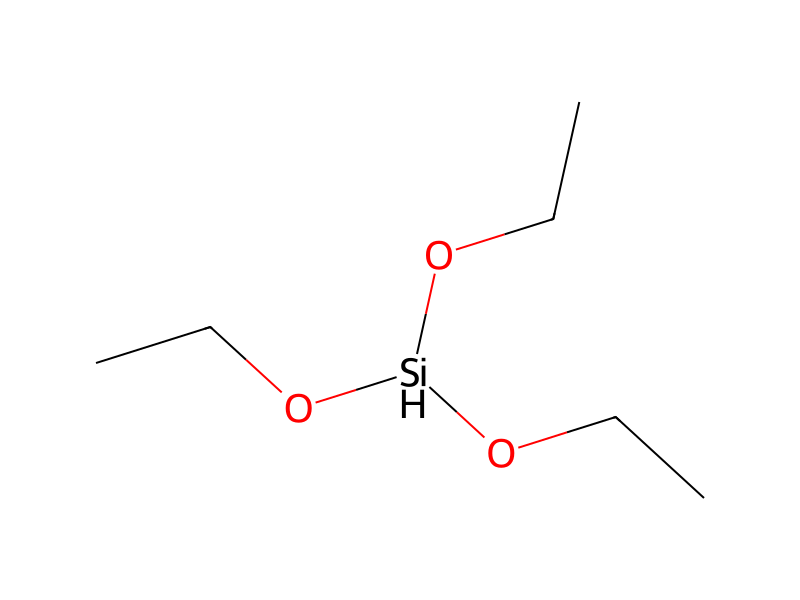
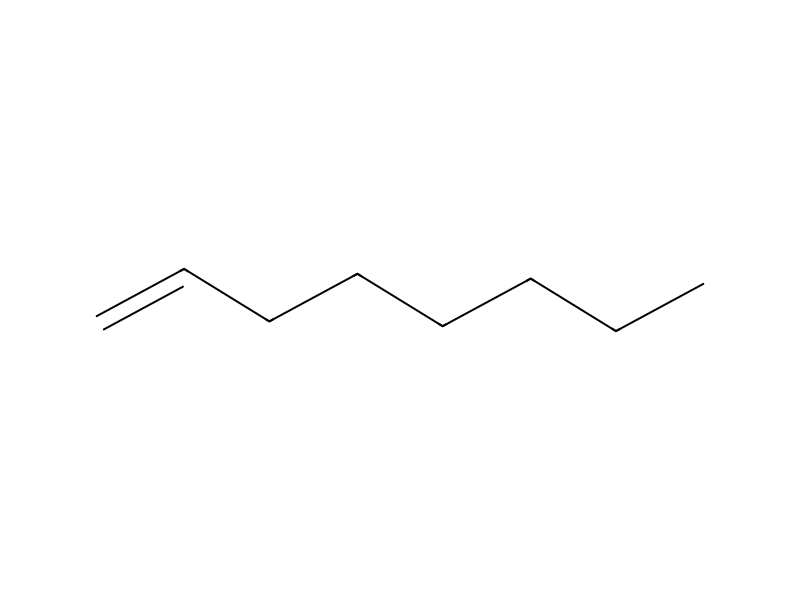
[CH2:1]([O:5][CH2:6][CH:7]=[CH2:8])[CH:2]=[CH:3][CH3:4].[CH2:9]([O:11][SiH:12]([O:16][CH2:17][CH3:18])[O:13][CH2:14][CH3:15])[CH3:10]>[Pt](Cl)(Cl)(Cl)Cl.C=CCCCCCC.[Pt]>[CH2:1]([O:5][CH2:6][CH2:7][CH2:8][Si:12]([O:16][CH2:17][CH3:18])([O:13][CH2:14][CH3:15])[O:11][CH2:9][CH3:10])[CH:2]=[CH:3][CH3:4]Participants
Reactant 2

Product 1

Reagents, catalysts & solvents 3


Conditions
- Temperature
- 120 °C
Procedure
About 84 g of allyl but-2-enyl ether are heated under reflux (about 120° C.) in a three-necked flask fitted with a reflux condenser, stirrer and dropping funnel. To this are added dropwise over a period of two hours a solution containing 82 g of triethoxysilane, in which 2 mg of platinum, calculated as the element, are dissolved in the form of a solution of platinum tetrachloride in 1-octene. After heating for an additional five hours under reflux, more than 99 percent of the Si-bonded hydrogen atoms have been converted. The intermediate obtained in this manner, (but-2-enyloxypropyl)triethoxysilane, is purified by distillation at 104° C. and at 7 hPa (abs.) and contains 5 percent by weight, based on the total weight of the intermediate, of (but-1enyloxypropyl)triethoxysilane.
Workup
- customfitted with a reflux condenser, stirrer
- additionTo this are added dropwise over a period of two hours a solution
- temperatureAfter heating for an additional five hours
- temperatureunder reflux
Sources & evidence
- ORD record
- ord-2328830536554599a615c9a1ccac12ea
- Source dataset
- uspto-grants-1992_06
- Patent number
- US05118772
Reaction notes
Loading…