Hydrochloric Acid → HCID 19790386, compound
Reaction equation

C(N(C(C)C)CC)(C)C.[C:10]([CH2:12][C:13]([O:15][CH3:16])=[O:14])#[N:11].Br[CH2:18][C:19]([C:21]1[CH:26]=[CH:25][C:24]([Cl:27])=[CH:23][CH:22]=1)=[O:20].Cl>O1CCCC1>[Cl:27][C:24]1[CH:25]=[CH:26][C:21]([C:19]([CH2:18][CH:12]([C:10]#[N:11])[C:13]([O:15][CH3:16])=[O:14])=[O:20])=[CH:22][CH:23]=1Participants
Reactant 4

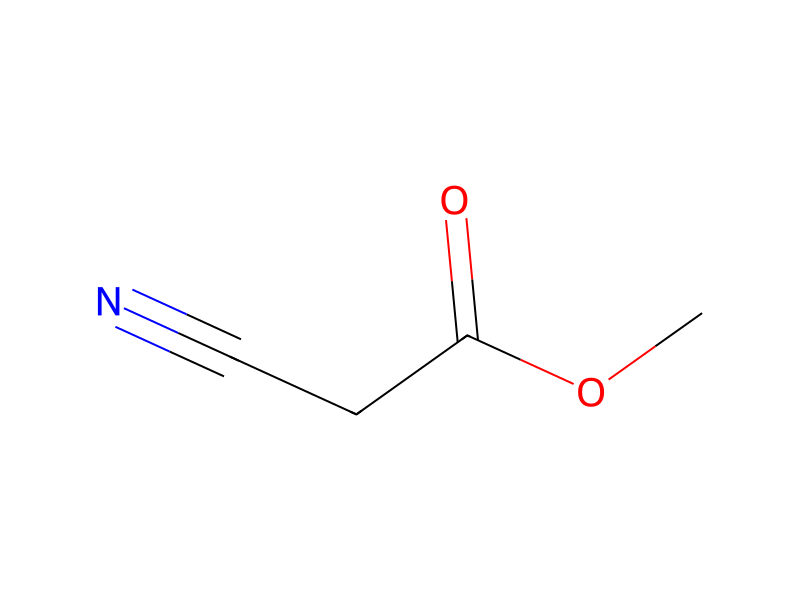


Product 1

Reagents, catalysts & solvents 1

Conditions
- Temperature
- 50 °C
Procedure
Diisopropylethyl amine (15.5 g, 0.12 mol) is added to dry tetrahydrofuran (60 mL) followed by a solution of methyl cyanoacetate (5.4 g, 0.055 mol) in tetrahydrofuran (10 mL). Finally, a solution of α-bromo-p-chloroacetophenone (11.0 g, 0.05 mol) in tetrahydrofuran (50 mL) is added. After three hours at room temperature, TLC (75/25 hexanes/ethyl acetate) indicates very little starting material. The reaction mixture is then heated at 50° C. for fifteen minutes, cooled and filtered. The filtrate is concentrated in vacuo to obtain an oil which solidifies when treated with dilute hydrochloric acid. The supernatant is decanted and the residue is taken up in ethyl acetate and dried. Work-up leaves a brown waxy solid (8.0 g, 64% crude yield) which on recrystallization from methanol gives the title compound as a white solid (4.3 g, mp 75°-79° C.).
Workup
- temperaturecooled
- filtrationfiltered
- concentrationThe filtrate is concentrated in vacuo
- customto obtain an oil which
- customThe supernatant is decanted
- customdried
- customWork-up leaves a brown waxy solid (8.0 g, 64% crude yield) which
- customon recrystallization from methanol
Sources & evidence
- ORD record
- ord-ed9ad5dc536044ee9a88d0860aa4797d
- Source dataset
- uspto-grants-1992_06
- Patent number
- US05122615
Reaction notes
Loading…