1-Chloro-4-nitrobenzene → 4-Nitrodiphenylamine
Reaction equation

[N+:1]([C:4]1[CH:9]=[CH:8][C:7](Cl)=[CH:6][CH:5]=1)([O-:3])=[O:2].C([NH:13][C:14]1[CH:19]=[CH:18][CH:17]=[CH:16][CH:15]=1)=O.C(=O)([O-])[O-].[K+].[K+].[OH-].[Na+]>O.C1(C)C(C)=CC=CC=1>[CH:17]1[CH:18]=[CH:19][C:14]([NH:13][C:7]2[CH:8]=[CH:9][C:4]([N+:1]([O-:3])=[O:2])=[CH:5][CH:6]=2)=[CH:15][CH:16]=1Participants
Reactant 4

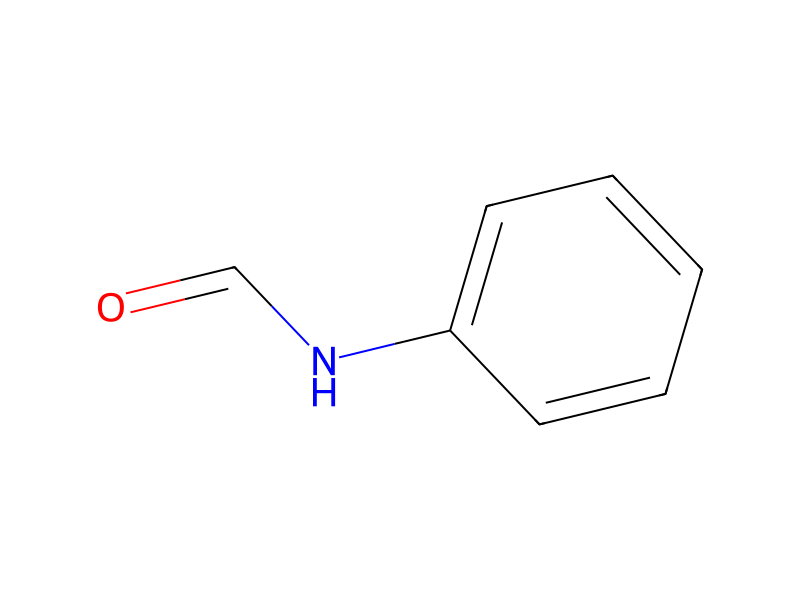


Product 1

Reagents, catalysts & solvents 2


Conditions
- Temperature
- 205 °C
Procedure
To a charge of 157 grams of p-nitrochlorobenzene (1 mole), 169 grams of formanilide (1.4 moles) and 50 grams of xylene at 180° C. is fed over a period of about 4 hours a solution of 58 grams of potassium carbonate (0.42 mole) and 22.5 grams of sodium hydroxide (0.56 mole) in 120 grams of water. Water is removed concurrently from the reaction mixture with the addition of the aforesaid solution. The temperature of the reaction mixture is then raised to 205° C. and heated at such temperature for 11/2 hours. The amounts of 4-nitrodiphenylamine formed and p-nitrochlorobenzene remaining unreacted are then determined, as described in Example 1. The yield of 4-nitrodiphenylamine is 69.3%, and the conversion of the p-nitrochlorobenzene charged is 78.4 or 88.4%.
Workup
- customWater is removed concurrently from the reaction mixture with the addition of the aforesaid solution
- temperatureheated at such temperature for 11/2 hours
Sources & evidence
- ORD record
- ord-2273192416df4d3b84662e11fca288c9
- Source dataset
- uspto-grants-1980_10
- Patent number
- US04228103
Reaction notes
Loading…