Ethyl bromoacetate → Carbamate
Reaction equation

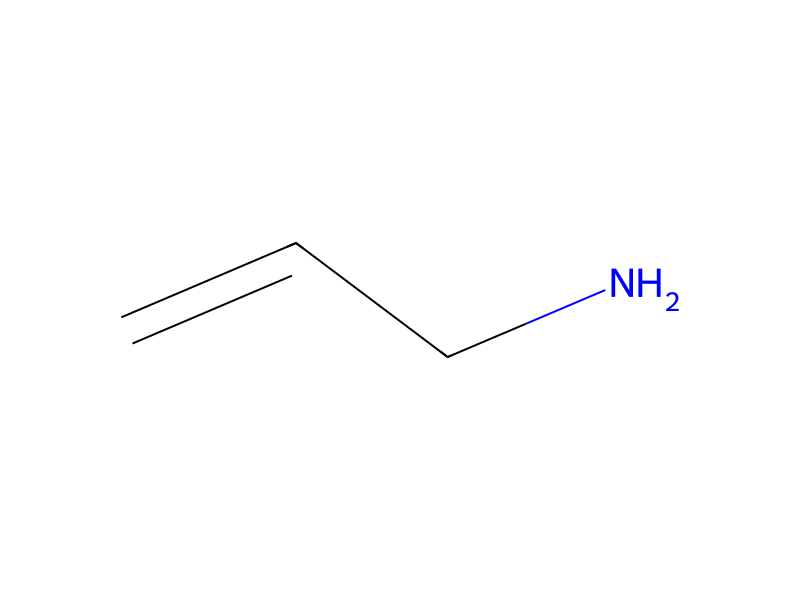
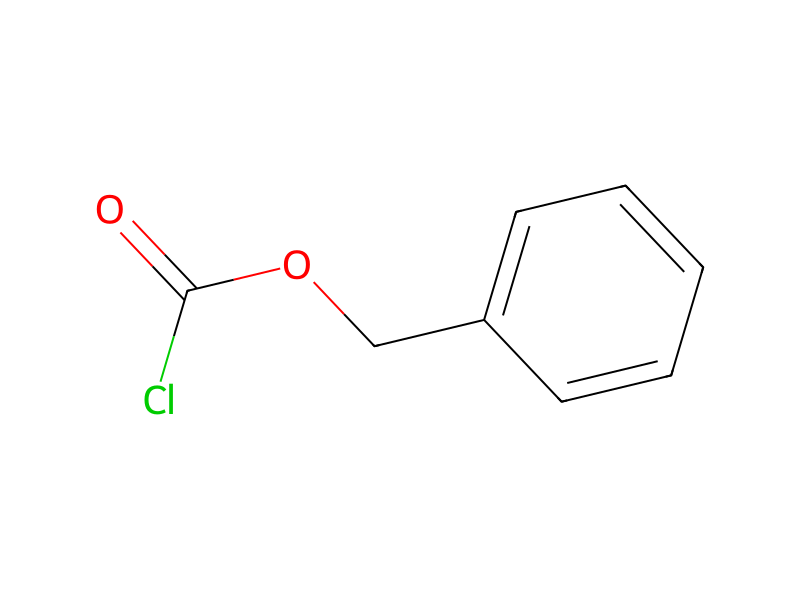
Br[CH2:2][C:3]([O:5][CH2:6][CH3:7])=[O:4].[CH2:8]([NH2:11])[CH:9]=[CH2:10].C([N:14](CC)CC)C.C([O:26][C:27](Cl)=[O:28])C1C=CC=CC=1.[OH-].[Na+]>ClCCl.[Cl-].[Na+].O>[CH2:6]([O:5][C:3](=[O:4])[CH2:2][NH:11][CH2:8][CH:9]=[CH2:10])[CH3:7].[C:27](=[O:28])([O-:26])[NH2:14]Participants
Reactant 5



Product 2


Reagents, catalysts & solvents 2


Conditions
- Temperature
- 0 °C
Procedure
N-Allylglycine ethyl ester 54 was prepared as described above using ethyl bromoacetate (9 g, 53.9 mmol) and allylamine (6.15 g, 107.7 mmol). The crude product (7.054 g) that contained ˜30% of N-allyl-N-bis(2-carboethyoxyethyl)amine as judged by NMR, was dissolved in dichloromethane (50 cm3), cooled to 0° C. and triethylamine (6.53 g, 64.09 mmol) added. Benzylchloroformate (9.25 g, 54.2 mmol) was added dropwise over 10 min resulting in a white precipitate. After 2 h the mixture was stored overnight at 0° C., filtered and the filtrate concentrated in vacuo. The residue was subsequently suspended in dichloromethane, washed with 2M aqueous hydrochloric acid, dried (MgSO4) and the solvent removed to reveal an oil (13.65 g) containing the desired carbamate (70%) and benzyl alcohol (30%) as judged by NMR. This mixture was dissolved in dioxane/methanol (8:3, 110 cm3), 1M aqueous sodium hydroxide (40 cm3, 40 mmol) added and the solution stirred for 2 h at room temperature. Brine (50 cm3) was added and the aqueous layer extracted with diethyl ether. The aqueous layer was acidified with 32% hydrochloric acid and extracted with ethyl acetate. The combined organic layers were dried (MgSO4), concentrated in vacuo, and the residue purified by chromatography (silica gel, hexane:ethyl aceate:acetic acid, 3:1:0.4) to give acid 7 (7.05 g, 52%, 3 steps) as a colourless syrup. Acid 55 existed as a 1:1 mixture of carbamate rotamers: δH (400 MHz; CDCl3; Me4Si) 4.02-4.08 [4H, m, CH2(allyl), C2(Gly)], 5.17-5.24 (4H, m, OCH2Ph, ═CH2), 5.77-5.84 (1H, m, C(H)═CH2), 7.32-7.39 (m, 5H, Ph) and 8.45 (1H, br s, OH); δC (100 MHz; CDCl3) 47.1, 47.7 [CH2, CH2(Gly)], 50.5, 50.7 [CH2, CH2(allyl)], 67.6, 67.7 (CH2, OCH2Ph), 117.8, 118.3 (CH2, ═CH2), 127.7, 127.97, 128.01, 128.4, (CH, Ph), 132.7, 132.8 (CH, C(H)═CH2) 136.1 (quat., Ph), 155.8, 156.5, (quat., NCO2) and 174.7, 174.9 (quat., CO).
Workup
- customresulting in a white precipitate
- filtrationfiltered
- concentrationthe filtrate concentrated in vacuo
- washwashed with 2M aqueous hydrochloric acid
- dry with materialdried (MgSO4)
- customthe solvent removed
- additioncontaining the desired carbamate (70%) and benzyl alcohol (30%)
- dissolutionThis mixture was dissolved in dioxane/methanol (8:3, 110 cm3)
- extractionthe aqueous layer extracted with diethyl ether
- extractionextracted with ethyl acetate
- dry with materialThe combined organic layers were dried (MgSO4)
- concentrationconcentrated in vacuo
- customthe residue purified by chromatography (silica gel, hexane:ethyl aceate:acetic acid, 3:1:0.4)
Sources & evidence
- ORD record
- ord-235cc3e83dfc4484b306b2a3c85369dd
- Source dataset
- uspto-grants-2011_09
- Patent number
- US08013170B2
Reaction notes
Loading…