Ethyl Bromide → HCID 70983236, compound
Reaction equation

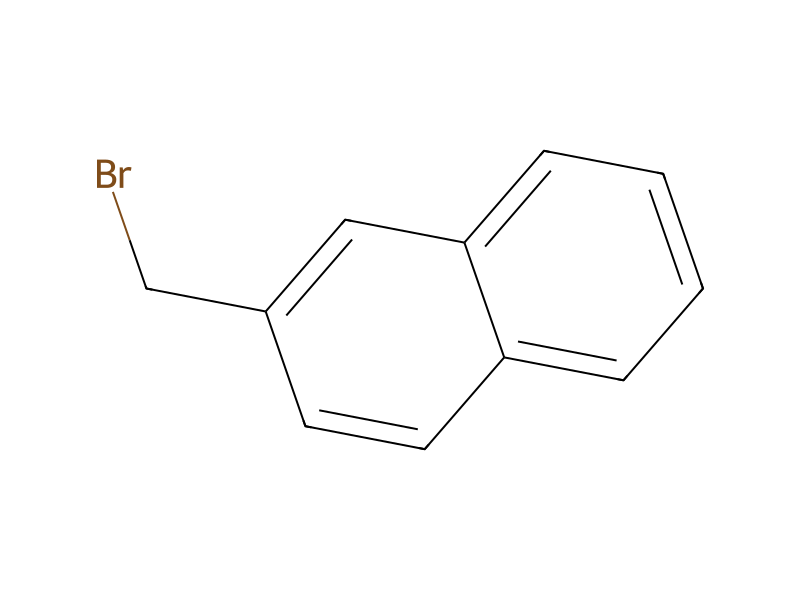
[Cl:1][C:2]1[N:3]=[CH:4][NH:5][C:6]=1[Cl:7].[OH-].[K+].[Br:10][CH2:11][CH3:12].[K+].[Br-].Br[CH2:16][C:17]1[CH:26]=[CH:25][C:24]2[C:19](=[CH:20][CH:21]=[CH:22][CH:23]=2)[CH:18]=1>C(#N)C>[Br-:10].[CH2:11]([C:25]1[C:24]2[C:19](=[CH:20][CH:21]=[CH:22][CH:23]=2)[CH:18]=[C:17]([CH3:16])[C:26]=1[N+:3]1[C:2]([Cl:1])=[C:6]([Cl:7])[NH:5][CH:4]=1)[CH3:12]Participants





Procedure
4,5-Dichloroimidazole (1.23 g, 9 mmol) was dissolved into 27 mL of acetonitrile. Potassium hydroxide (0.61 g, 9.9 mmol) was added and the mixture was allowed to stir for 0.5 h. Bromoethane (0.66 mL, 9 mmol) was added and the solution was allowed to reflux overnight. The solution was filtered hot to remove a white precipitate (presumed to be KBr) and 2-bromomethylnaphthalene (1.98 g, 9 mmol) was added and the mixture was returned to reflux overnight. The mixture was then allowed to cool to room temperature, resulting in a white precipitate (0.3538, 10% yield). 1H NMR (500 MHz, DMSO-d6) 9.62 (1H, s, NCHN), 7.61 (4H, m, Ar), 7.58 (3H, m, Ar),), 5.66 (2H, s, NCH2), 4.27 (2H, q, NCH2), 1.47 (3H, t, CH3). MS: m/z=304.8 (theor for C16H15Cl2N2Br1=386.12).
Workup
- temperatureto reflux overnight
- filtrationThe solution was filtered hot
- additionwas added
- temperatureto reflux overnight
- customresulting in a white precipitate (0.3538, 10% yield)
Sources & evidence
- ORD record
- ord-07ca8676d11340d29a96c95fb01bb329
- Source dataset
- uspto-grants-2016_03
- Patent number
- US09278951B2
Reaction notes
Loading…