Hydrogen Bromide → HCID 86719610, compound
Reaction equation

[Cl:1][C:2]1[N:3]=[CH:4][NH:5][C:6]=1[Cl:7].[OH-].[K+].[Br:10][CH2:11][C:12]([OH:14])=[O:13].Br[CH2:16][C:17]1[CH:26]=[CH:25][C:24]2[C:19](=[CH:20][CH:21]=[CH:22][CH:23]=2)[CH:18]=1.Br>C(#N)C>[Br-:10].[C:12]([CH2:11][N:3]1[C:2]([Cl:1])=[C:6]([Cl:7])[N+:5]([CH2:16][C:17]2[CH:26]=[CH:25][C:24]3[C:19](=[CH:20][CH:21]=[CH:22][CH:23]=3)[CH:18]=2)=[CH:4]1)([OH:14])=[O:13]Participants
7






Procedure
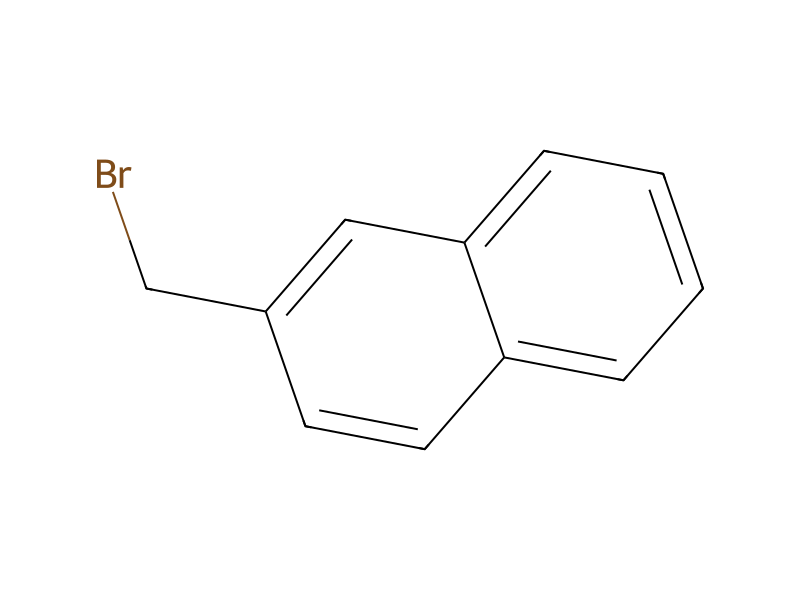
4,5-dichloroimidazole (1.00 g, 7.36 mmol) was dissolved in acetonitrile. Potassium hydroxide (0.828 g, 14.72 mmol) was added to the solution and allowed to reflux for 30 min. 1 equivalent of 2-bromoacetic acid (2.15 g, 15.46 mmol) was added to the solution and refluxed for 2.5 h. Solution was filtered to remove the KBr precipitate and placed back onto reflux. An equivalent of 2-(bromomethyl)naphthalene (1.63 g, 7.36 mmol) was added to solution and refluxed for 2.5 h. The solution was neutralized with 6M HBr, volatiles removed in vacuo, and the resulting white precipitate was collected and analyzed. 1H NMR (300 MHz, DMSO-d6): δ 4.71, 5.75, 7.59, 8.02, 9.81, 12.71.
Workup
- temperatureto reflux for 30 min
- temperaturerefluxed for 2.5 h
- filtrationSolution was filtered
- customto remove the KBr precipitate
- temperatureonto reflux
- temperaturerefluxed for 2.5 h
- customvolatiles removed in vacuo
- customthe resulting white precipitate was collected
Sources & evidence
- ORD record
- ord-3a6ae060f0e441f4b5dc5aa4d2f763a5
- Source dataset
- uspto-grants-2016_03
- Patent number
- US09278951B2
Reaction notes
Loading…