Guanidine Hydrochloride → Hydrochloric Acid
Reaction equation

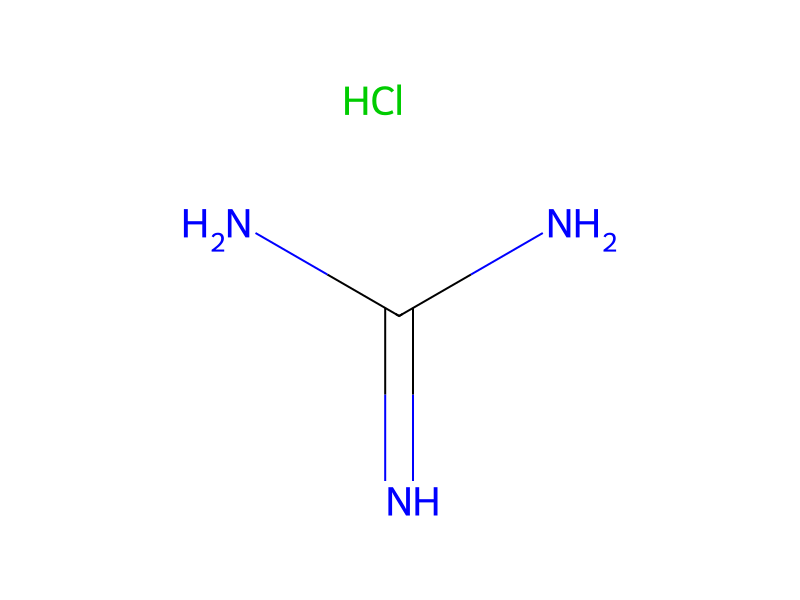
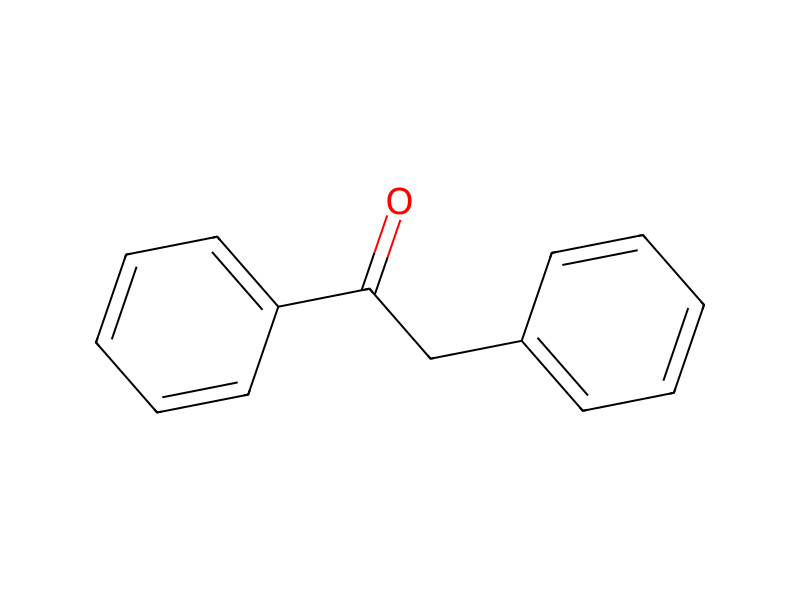
[C:1]1([C:7](=O)[CH2:8][C:9]2[CH:14]=[CH:13][CH:12]=[CH:11][CH:10]=2)[CH:6]=[CH:5][CH:4]=[CH:3][CH:2]=1.[CH2:16]([O:18][C:19]1[CH:20]=[C:21]([CH:24]=[C:25]([N+:28]([O-:30])=[O:29])[C:26]=1[OH:27])[CH:22]=O)[CH3:17].[ClH:31].[NH2:32][C:33]([NH2:35])=[NH:34].C(NC(C)C)(C)C>C(O)C>[CH2:16]([O:18][C:19]1[CH:20]=[C:21]([CH:22]2[C:8]([C:9]3[CH:14]=[CH:13][CH:12]=[CH:11][CH:10]=3)=[C:7]([C:1]3[CH:6]=[CH:5][CH:4]=[CH:3][CH:2]=3)[NH:35][C:33](=[NH:32])[NH:34]2)[CH:24]=[C:25]([N+:28]([O-:30])=[O:29])[C:26]=1[OH:27])[CH3:17].[ClH:31]Participants





Conditions
- Temperature
- 80 °C
Procedure
A mixture of 1,2-diphenylethanone (500 mg, 2.55 mmol), 3-ethoxy-4-hydroxy-5-nitrobenzaldehyde (538.5 mg, 2.55 mmol), guanidine hydrochloride (731 mg, 7.65 mmol), diisopropylamine (1.1 mL) in ethanol (5 mL) was refluxed at 80° C. for 60 h. The mixture was evaporated under reduced pressure and the residue was treated with a mixture of saturated aqueous sodium bisulfite solution (50 mL), dichloromethane (100 mL) and isopropanol (30 mL), and the resulting mixture was stirred at room temperature for 30 min. The organic layer was separated and the aqueous layer was extracted with a mixture of dichloromethane and isopropanol (3:1, 50 mL×2). The combined organic layer was dried over anhydrous sodium sulfate and purified by preparative HPLC. The product containing fractions were treated with HCl/MeOH (2 mL, 2 N) and concentrated in vacuo to give Compound 112 as an HCl salt (280 mg, yield 25.45%). 1H NMR (DMSO-d6 400 MHZ): δ 10.48 (s, 1H), 10.27 (s, 1H), 9.35 (s, 1H), 7.59 (s, 2H), 7.53 (s, 1H), 7.52-7.31 (m, 5H), 7.26 (d, J=2.0 Hz, 1H), 7.12-7.10 (m, 3H), 6.92-6.90 (m, 2H), 5.57 (d, J=3.2 Hz, 1H), 4.1-4.06 (q, J=7.2 Hz, 2H), 1.36-1.32 (t, J=7.2 Hz, 3H); MS (ESI): m/z 431.0 [M+H]+.
Workup
- customThe mixture was evaporated under reduced pressure
- additionthe residue was treated with a mixture of saturated aqueous sodium bisulfite solution (50 mL), dichloromethane (100 mL) and isopropanol (30 mL)
- customThe organic layer was separated
- extractionthe aqueous layer was extracted with a mixture of dichloromethane and isopropanol (3:1, 50 mL×2)
- dry with materialThe combined organic layer was dried over anhydrous sodium sulfate
- custompurified by preparative HPLC
- additionThe product containing fractions
- additionwere treated with HCl/MeOH (2 mL, 2 N)
- concentrationconcentrated in vacuo
Sources & evidence
- ORD record
- ord-1b2c89aceb8f469d94ebf1f564b1012d
- Source dataset
- uspto-grants-2016_03
- Patent number
- US09283229B2
Reaction notes
Loading…