Hydrochloric Acid → HCID 86692840, compound
Reaction equation

[CH3:1][C:2]1([CH3:33])[O:6][C@H:5]2[C@H:7]([NH:12][C:13]3[N:18]4[N:19]=[C:20]([C:22]5[CH:27]=[CH:26][CH:25]=[C:24]([S:28][C:29]([F:32])([F:31])[F:30])[CH:23]=5)[CH:21]=[C:17]4[N:16]=[CH:15][CH:14]=3)[CH2:8][C@H:9]([CH2:10][OH:11])[C@H:4]2[O:3]1.C1(C)C=CC(S([O-])(=O)=O)=CC=1.[NH+]1C=CC=CC=1.[N+]12([S:59]([N-:62][C:63]([O:65][C:66]([CH3:69])([CH3:68])[CH3:67])=[O:64])(=[O:61])=[O:60])CCN(CC1)CC2.N12CCN(CC1)CC2.Cl>C(#N)C.O.C(OCC)(=O)C>[C:66]([O:65][C:63](=[O:64])[NH:62][S:59]([O:11][CH2:10][C@@H:9]1[C@@H:4]2[C@@H:5]([O:6][C:2]([CH3:33])([CH3:1])[O:3]2)[CH:7]([NH:12][C:13]2[N:18]3[N:19]=[C:20]([C:22]4[CH:27]=[CH:26][CH:25]=[C:24]([S:28][C:29]([F:32])([F:30])[F:31])[CH:23]=4)[CH:21]=[C:17]3[N:16]=[CH:15][CH:14]=2)[CH2:8]1)(=[O:61])=[O:60])([CH3:69])([CH3:67])[CH3:68]Participants
Reactant 4



Product 1

Reagents, catalysts & solvents 3



Procedure
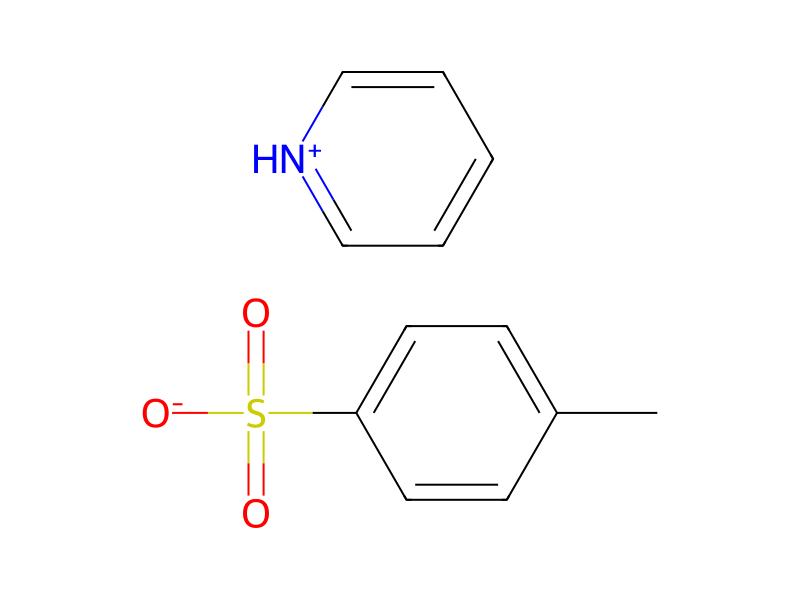
{(3aR,4R,6R,6aS)-2,2-dimethyl-6-[(2-{3-(trifluoromethylthio)phenyl}pyrazolo[1,5-a]pyrimidin-7-yl)amino]tetrahydro-3aH-cyclopenta[d][1,3]dioxol-4-yl}methanol (3.4 g) was dissolved in 2-methyltetrahedrafuran (32.0 mL) and to this solution was added pyridinium p-toluenesulfonate (3.34 g). This formed a precipitate and to this white slurry was added (4-aza-1-azoniabicyclo[2.2.2]oct-1-ylsulfonyl)(tert-butoxycarbonyl)azanide-1,4-diazabicyclo[2.2.2]octane (1:1) hydrochloride (8.19 g). (prepared according to Armitage, I. et. al. U.S. Patent Application Publication US2009/0036678, and Armitage, I. et. al. Org. Lett., 2012, 14 (10), 2626-2629). The mixture was stirred at ambient temperature until the HPLC showed <1% remaining starting material (about 300 minutes). To the reaction was added ethyl acetate (30 mL) and water (30 mL). After stirring for 10 minutes the phases were separated and the aqueous layer was back extracted with ethyl acetate (30 mL). The organic layers were combined and washed with 10% brine (30 mL) and the layers were separated. The organic layer was then concentrated to dryness to give an off-white solid. The solids were transferred back to the reactor with acetonitrile (35 m L) and stirred for 20 minutes. The solids were isolated by filtration and dried in a vacuum oven at full vacuum overnight (40° C., 16 hours) to give tert-butyl-[({(3aR,4R,6aS)-2,2-dimethyl-6-[(2-{3-(trifluoromethylthio)phenyl}pyrazolo[1,5-a]pyrimidin-7-yl)amino]tetrahydro-3aH-cyclopenta[d][1,3]dioxol-4-yl}methoxy)sulfonyl]carbamate (3.87 g, 88%). (LCMS: (FA2) M+1 660).
Workup
- customThis formed a precipitate
- custommaterial (about 300 minutes)
- stirringAfter stirring for 10 minutes the phases
- customwere separated
- extractionthe aqueous layer was back extracted with ethyl acetate (30 mL)
- washwashed with 10% brine (30 mL)
- customthe layers were separated
- concentrationThe organic layer was then concentrated to dryness
- customto give an off-white solid
- stirringstirred for 20 minutes
- customThe solids were isolated by filtration
- customdried in a vacuum oven at full vacuum overnight (40° C., 16 hours)
Sources & evidence
- ORD record
- ord-a1d4c947a08440239cd432fa7bd0c5eb
- Source dataset
- uspto-grants-2016_03
- Patent number
- US09290500B2
Reaction notes
Loading…