Carbon Dioxide → 5-Bromo-2,3,4-trifluorobenzoic acid
Reaction equation

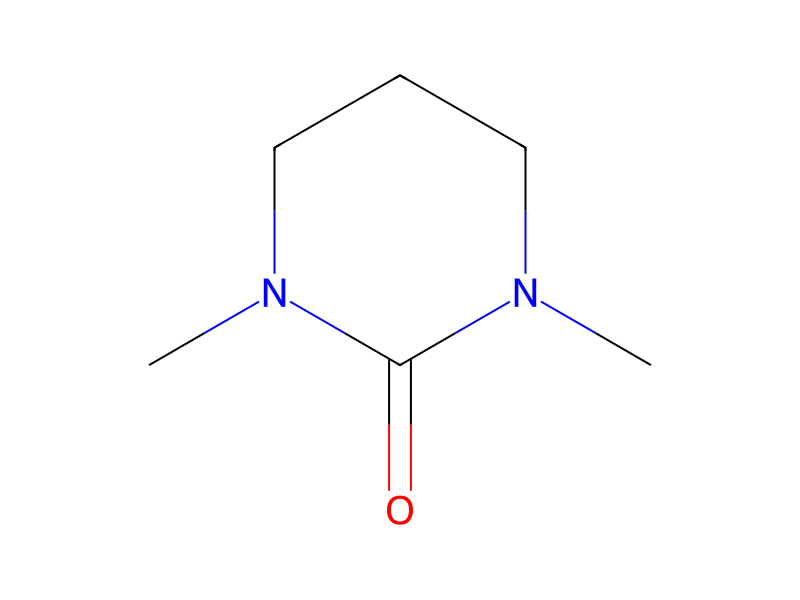
[F:1][C:2]1[C:7]([F:8])=[C:6]([F:9])[CH:5]=[CH:4][C:3]=1[Br:10].S1(CCCC1)(=O)=O.[Li+].CC([N-]C(C)C)C.[Li]CCCC.[C:31](=[O:33])=[O:32]>O1CCOCC1.C(OCC)C.C1COCC1.CN1C(=O)N(C)CCC1.CN(P(N(C)C)(N(C)C)=O)C>[Br:10][C:3]1[C:2]([F:1])=[C:7]([F:8])[C:6]([F:9])=[C:5]([CH:4]=1)[C:31]([OH:33])=[O:32]Participants
Reactant 5




Product 1

Reagents, catalysts & solvents 5




Procedure
To a solution of 2,3,4-trifluorobromobenzene in appropriate solvent (include aliphatic and aromatic hydrocarbon (such as pentane, hexane, heptane, cyclohexane, petroleum ether, petrol, gasoline, benzene, toluene, xylene), ether (such as diethyl ether, dibutyl ether, glycol dimethyl ether, 2-methoxyethyl ether, tetrahydrofuran, dioxane), sulfolane, HMPA, DMPU, prefer anhydrous THF, ethyl ether and dioxane) was added strong base (such as LDA, nBuLi, LiHDMS) at low temperature (−50-−80° C., prefer −78° C.) under nitrogen atmosphere. The reaction is kept stirring for some time (0.5-12 h, prefer 0.5-2 h) and is added dry ice. After several hours (3-12 h, prefer 5-10 h), 5-bromo-2,3,4-trifluorobenzoic acid is obtained after conventional workup.
Workup
- waitAfter several hours (3-12 h, prefer 5-10 h)
Sources & evidence
- ORD record
- ord-80306c00fd1a499da545dfa8a47cdfe5
- Source dataset
- uspto-grants-2016_03
- Patent number
- US09290468B2
Reaction notes
Loading…