Oxalyl chloride → HCID 18660380, compound
Reaction equation

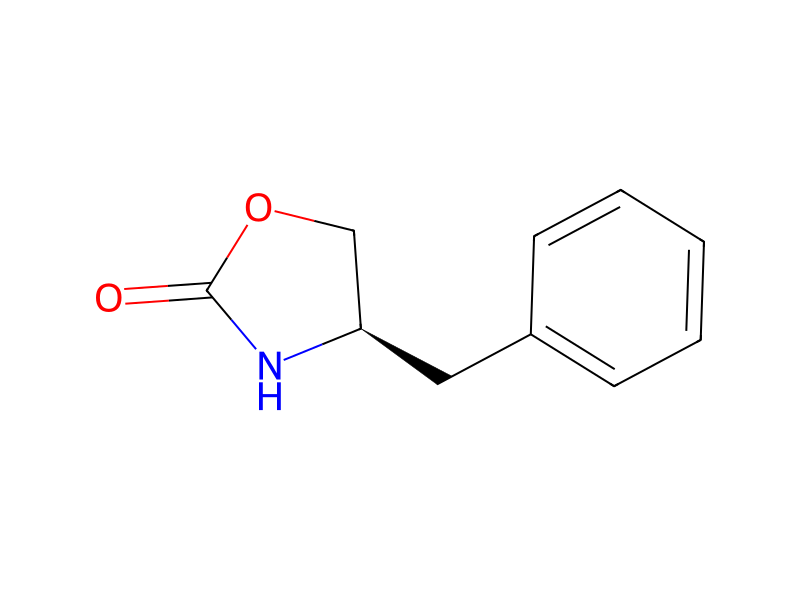
[C:1]([O:5][C:6]([N:8]1[CH2:13][CH2:12][C:11]([CH2:20][O:21][CH:22]([C:26]2[CH:31]=[C:30]([C:32]([F:35])([F:34])[F:33])[CH:29]=[C:28]([C:36]([F:39])([F:38])[F:37])[CH:27]=2)[C:23]([OH:25])=O)([C:14]2[CH:19]=[CH:18][CH:17]=[CH:16][CH:15]=2)[CH2:10][CH2:9]1)=[O:7])([CH3:4])([CH3:3])[CH3:2].C(Cl)(=O)C(Cl)=O.[Li]CCCC.[CH2:51]([C@@H:58]1[CH2:62][O:61][C:60](=[O:63])[NH:59]1)[C:52]1[CH:57]=[CH:56][CH:55]=[CH:54][CH:53]=1>ClCCl.O1CCCC1.CN(C)C=O>[C:1]([O:5][C:6]([N:8]1[CH2:9][CH2:10][C:11]([CH2:20][O:21][CH:22]([C:26]2[CH:31]=[C:30]([C:32]([F:33])([F:35])[F:34])[CH:29]=[C:28]([C:36]([F:39])([F:38])[F:37])[CH:27]=2)[C:23]([N:59]2[C@H:58]([CH2:51][C:52]3[CH:57]=[CH:56][CH:55]=[CH:54][CH:53]=3)[CH2:62][O:61][C:60]2=[O:63])=[O:25])([C:14]2[CH:15]=[CH:16][CH:17]=[CH:18][CH:19]=2)[CH2:12][CH2:13]1)=[O:7])([CH3:2])([CH3:4])[CH3:3]Participants
Reactant 4



Product 1

Reagents, catalysts & solvents 3



Conditions
- Temperature
- 25 °C
Procedure
The compound of step (a) above (1.0 g, 1.7 mmol) was dissolved in anhydrous dichloromethane (50 ml). Dimethylformamide(0.05 ml) was added followed by oxalyl chloride (0.2 ml, 2.3 mmol) dropwise. After stirring at 25° C. for 0.5 hours the solvent was removed in vacuo. The resulting residue was azeotroped with toluene (2×50 ml) then, as a solution in anhydrous toluene (5 ml), added at -78° C. to the lithium anion of (4R)-4-benzyl-2-oxazolidinone (generated by adding n-BuLi (1.1 ml, 1.6M, 1.7 mmol) to a solution of (4R)-(+)-4-benzyl-2-oxazolidinone (0.301 g, 1.7 mmol) in tetrahydrofuran (5 ml) at -78° C.). The resulting colorless solution was stirred at -78° C. for a further 0.75 hours and quenched by addition of saturated ammonium chloride solution (30 ml). The product was extracted into ethyl acetate (2×30 ml) then the organic layer was dried over MgSO4 and filtered. The clear oil obtained after removal of solvent in vacuo was purified by chromatography on silica gel eluting first with 20% ethyl acetate/hexane to obtain the title compound, diastereomer A (0.350 g), and then with 30% ethyl acetate/hexane to obtain the title compound, diastereomer B (0.380 g). Diastereomer A was converted to a mixture (1:2) of diastereomer A and diastereomer B by treating a solution in dichloromethane with anhydrous triethylamine for 16 hours. The solvents were evaporated and the mixture separated by chromatography as described above to obtain diastereomer B: 1H NMR (250 MHz, CDCl3) δ 7.78 (s, 1H), 7.70 (s, 2H), 7.10-7.30 (m, 8H), 6.88 (m, 2H), 5.86 (s, 1H), 4.62 (m, 1H), 4.06-4.12 (m, 2H), 3.68 (m, 2H), 3.54 (d, J=7 Hz, 1 H), 3.22 (d, J=7 Hz, 1 H), 2.96 (m, 3H), 2.54 (dd, J=7, 2 Hz, 1H), 2.1 (m, 2H), 1.8 (m, 2H), 1.34 (s, 9H).
Workup
- customwas removed in vacuo
- customThe resulting residue was azeotroped with toluene (2×50 ml)
- additionas a solution in anhydrous toluene (5 ml), added at -78° C. to the lithium anion of (4R)-4-benzyl-2-oxazolidinone (
- stirringThe resulting colorless solution was stirred at -78° C. for a further 0.75 hours
- customquenched by addition of saturated ammonium chloride solution (30 ml)
- extractionThe product was extracted into ethyl acetate (2×30 ml)
- dry with materialthe organic layer was dried over MgSO4
- filtrationfiltered
- customThe clear oil obtained
- customafter removal of solvent in vacuo
- customwas purified by chromatography on silica gel eluting first with 20% ethyl acetate/hexane
Sources & evidence
- ORD record
- ord-021ec8f30b2e487ca7b60d64032c082d
- Source dataset
- uspto-grants-1998_06
- Patent number
- US05760018
Reaction notes
Loading…