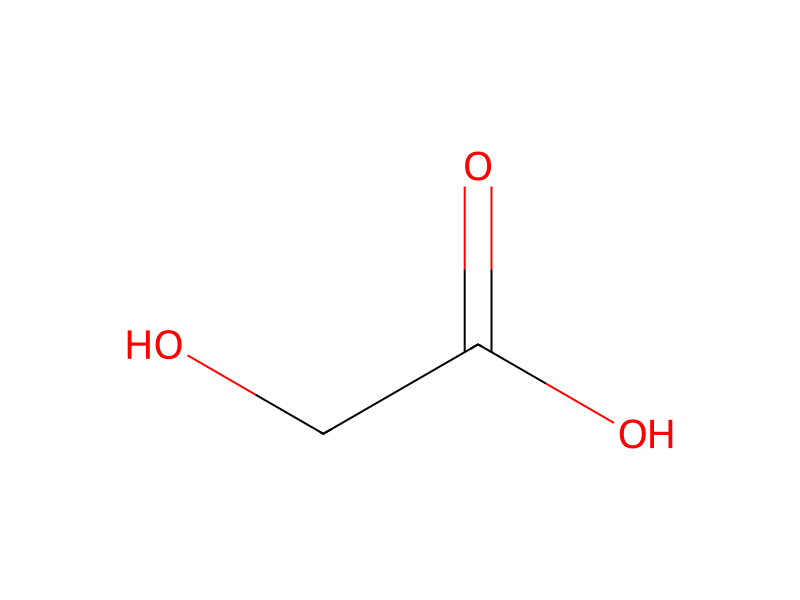
Glycolic Acid → Poliglecaprone
Reaction equation

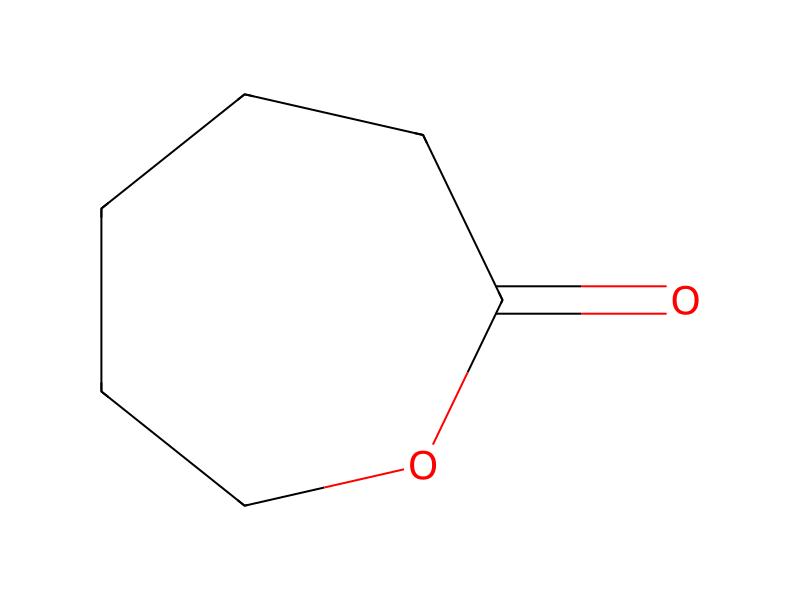
[C:1]1(=[O:8])[O:7][CH2:6][CH2:5][CH2:4][CH2:3][CH2:2]1.[CH2:9]1[O:16][C:14](=[O:15])[CH2:13][O:12][C:10]1=[O:11].C(O)(=O)CO.CCCCC(C([O-])=O)CC.CCCCC(C([O-])=O)CC.[Sn+2]>>[C:1]1(=[O:8])[O:7][CH2:6][CH2:5][CH2:4][CH2:3][CH2:2]1.[CH2:9]1[O:16][C:14](=[O:15])[CH2:13][O:12][C:10]1=[O:11]Participants
5



Conditions
- Temperature
- 180 °C
Procedure
ε-Caprolactone (57.1 g, 0.5 mole), glycolide (1.1 g, 9.5 mmole), glycolic acid (7.6 g, 0.1 mole) and stannous octoate (0.5 ml of 0.1 M solution in toluene, 20 mg, 5×10⁻⁵ mole) were added to a glass reactor. The reactor was purged with dry nitrogen gas. The reactor was heated in an oil bath at 180° C. under nitrogen for 12 hours, while the contents were magnetically stirred. The final composition was determined by 1H NMR is shown to be essentially the same as the theoretical. The Tg is -62° C., and the Tm is 37° C.
Workup
- customThe reactor was purged with dry nitrogen gas
- customis 37° C.
Sources & evidence
- ORD record
- ord-6c0e94f5497e4fabb92e52f8c99d7305
- Source dataset
- uspto-grants-1998_06
- Patent number
- US05773563
Reaction notes
Loading…