Piperazine → Quinazoline
Reaction equation

[N:1]1[C:10]2[C:5](=[CH:6][CH:7]=[CH:8][CH:9]=2)[CH:4]=[N:3][CH:2]=1.N1CCNCC1.C(N)C1C=CC2OCOC=2C=1.[CH:28]1[CH:29]=[N:30][C:31]([NH:34][S:35]([C:38]2[CH:39]=[CH:40][C:41]([NH2:44])=[CH:42][CH:43]=2)(=[O:37])=[O:36])=[N:32][CH:33]=1.[C:45](Cl)([Cl:47])=[S:46]>N1C=CC=CC=1.O1CCOCC1.ClCCl>[N:1]1[C:10]2[C:5](=[CH:6][CH:7]=[CH:8][CH:9]=2)[CH:4]=[N:3][CH:2]=1.[Cl-:47].[N:30]1[CH:29]=[CH:28][CH:33]=[N:32][C:31]=1[NH:34][S:35]([C:38]1[CH:43]=[CH:42][C:41]([NH:44][CH:45]=[S:46])=[CH:40][CH:39]=1)(=[O:37])=[O:36]Participants
Reactant 5


Product 2

Reagents, catalysts & solvents 3
Procedure
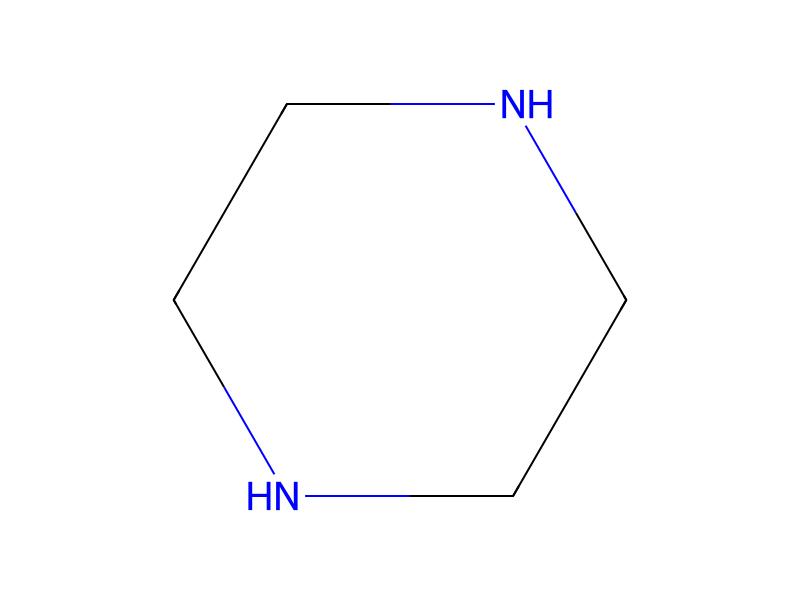
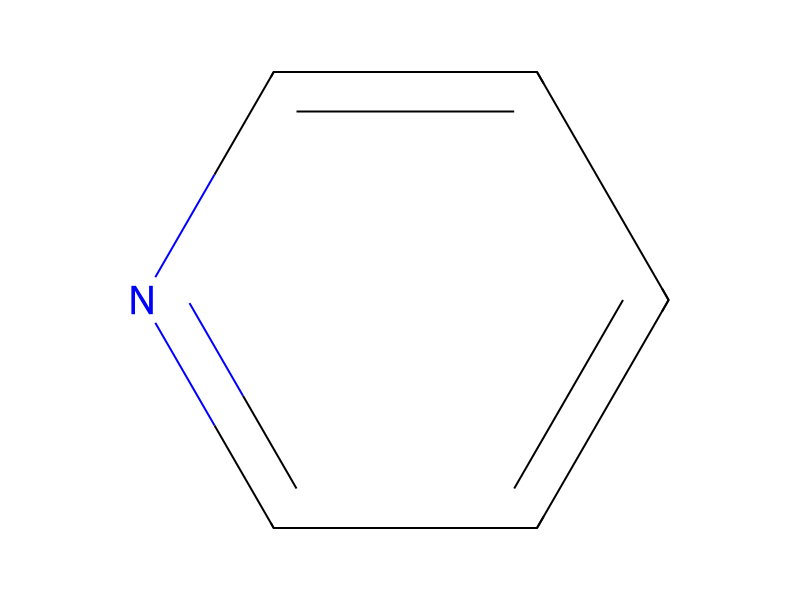
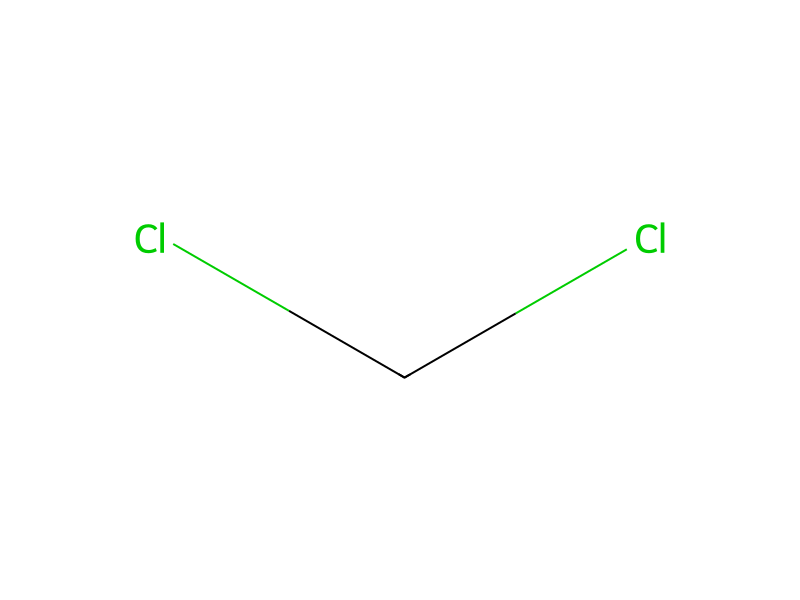
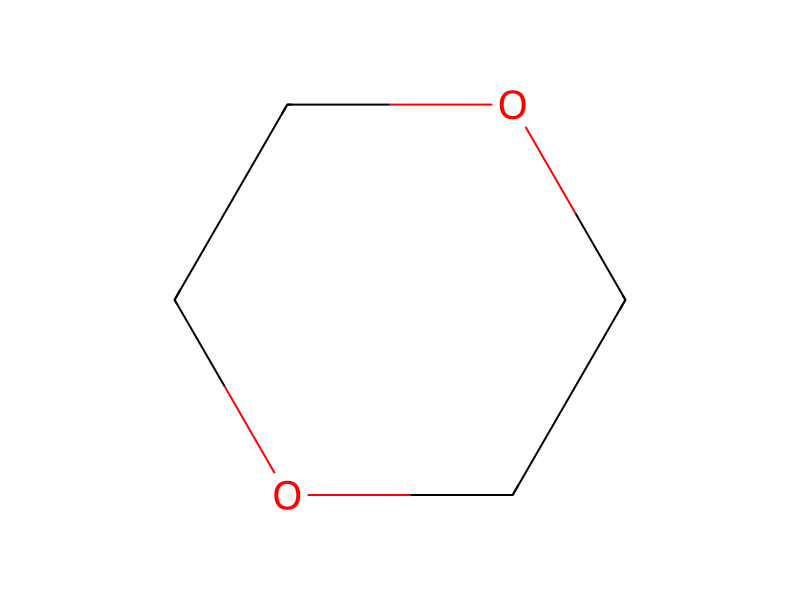
The synthesis of 4-piperazinylpyrimido[4,5-b]indoles (1b), benzofuranopyrimidines (2b), benzothieno[3,2-d]pyrimidines (3b), and quinazoline (4b) derivatives is depicted in FIG. 20. 4-Chloro-tricyclic and quinazoline building blocks (1a-4a) were synthesized using literature methods. (Pandey, A., et al., J. Med. Chem. 2002, 45:3772-93;Matsuno, K., et al., J. Med. Chem. 2002, 45:3057-66;Matsuno, K., et al., J. Med. Chem. 2002, 45:4513-23;and Venugopalan, B., et al., J. Heterocycl. Chem. 1988, 25:1633-39.) These were converted to the corresponding 4-piperazine derivatives by refluxing with piperazine in pyridine or dioxane. Piperonylamine or sulfadiazine were slowly added to a solution of thiophosgene in dichloromethane while cooling with an ice bath. The resulting mixture was stirred for four hours at room temperature, which gave 1c or 1d, as shown in FIG. 21. Compounds 1c or 1d were further reacted with 4-piperazine-substituted tricyclic or quinazoline derivatives in dichloromethane and stirred overnight at room temperature. To quench excess isothiocyanate, methanol was added, and after removal of solvent, the residue was purified by silica gel chromatography to give compounds 1-7 of FIG. 17 in approximately 20-40% yields.
Workup
- temperaturewhile cooling with an ice bath
Sources & evidence
- ORD record
- ord-1fb542469a8d4b6bb831422e27415f40
- Source dataset
- uspto-grants-2007_12
- Patent number
- US07312226B2
Reaction notes
Loading…