Carbon Dioxide → 2-Hydroxy-1-phenyl-1-propanone
Reaction equation

C(=O)(O)[O-:2].[Na+].Br[CH:7]([CH3:16])[C:8]([C:10]1[CH:15]=[CH:14][CH:13]=[CH:12][CH:11]=1)=[O:9].C([O-])=O.[Na+].C(=O)=O>C(#N)C.O>[OH:2][CH:7]([CH3:16])[C:8]([C:10]1[CH:15]=[CH:14][CH:13]=[CH:12][CH:11]=1)=[O:9]Participants
7






Procedure
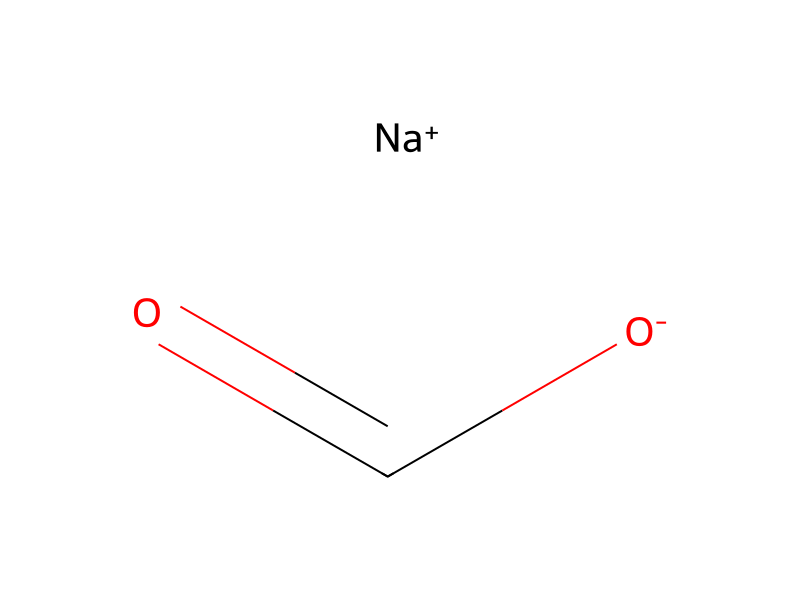
There was added 10.08 parts of sodium bicarbonate and about 60 parts of water to a mixture of 21.3 parts of α-bromopropiophenone, 6.8 parts of sodium formate and about 90 parts of acetonitrile. The resulting mixture was stirred vigorously for 48 hours at 65° C. during which time carbon dioxide evolved. After cooling, the acetonitrile solution was separated from the aqueous layer and evaporated to dryness. The residue was dissolved into chloroform which was extracted once with water, dried over sodium sulfate, and evaporated to produce analytically pure (>98%) α-hydroxypropiophenone. The yield of this isolated product was 77.1%.
Workup
- temperatureAfter cooling
- customthe acetonitrile solution was separated from the aqueous layer
- customevaporated to dryness
- dissolutionThe residue was dissolved into chloroform which
- extractionwas extracted once with water
- dry with materialdried over sodium sulfate
- customevaporated
Sources & evidence
- ORD record
- ord-557c23cb1cef4b379b4694940a2952a5
- Source dataset
- uspto-grants-1979_07
- Patent number
- US04160088
Reaction notes
Loading…