Hydrogen Peroxide → HCID 54285489, compound
Reaction equation

[C:1]([NH:14][CH2:15][CH2:16][CH2:17][CH2:18][CH2:19][C:20]([OH:22])=[O:21])(=[O:13])[CH2:2][CH2:3][CH2:4][CH2:5][CH2:6][CH2:7][CH2:8][CH2:9][CH2:10][CH2:11][CH3:12].CS(O)(=O)=[O:25].OO>C(OCC)(=O)C>[C:1]([NH:14][CH2:15][CH2:16][CH2:17][CH2:18][CH2:19][C:20]([O:22][OH:25])=[O:21])(=[O:13])[CH2:2][CH2:3][CH2:4][CH2:5][CH2:6][CH2:7][CH2:8][CH2:9][CH2:10][CH2:11][CH3:12]Participants
Reactant 3

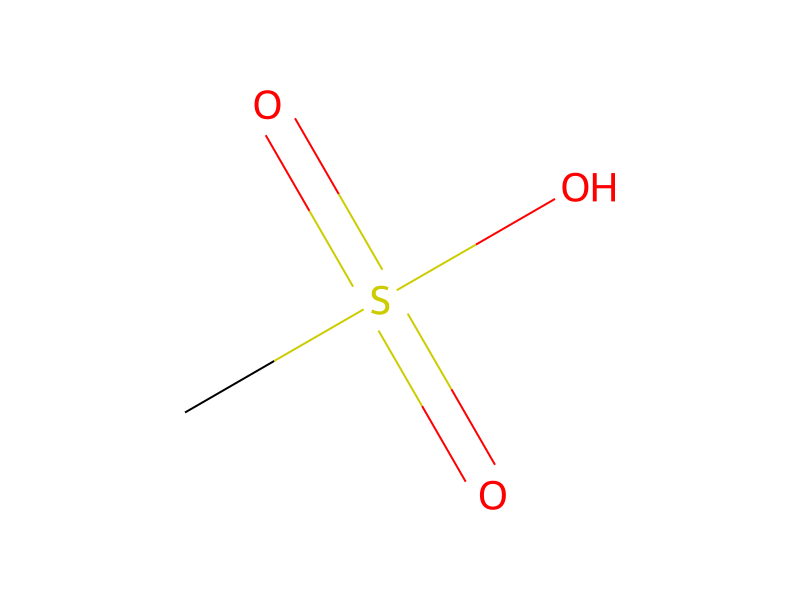

Product 1

Reagents, catalysts & solvents 1

Conditions
- Temperature
- -15 °C
Procedure
A 250 mL beaker was charged with 35.0 g (0.112 mol) of N-lauroyl-6-aminocaproic acid and 70 mL of 98% methanesulfonic acid. The resulting solution was cooled in an ice bath and, with stirring, 21.2 g of 90% hydrogen peroxide (19.0 g, 0.559 mol of hydrogen peroxide) was added dropwise at a rate so that the temperature of the reaction mixture did not rise above 20° C. (required 15 min.). The resulting solution was stirred at room temperature for 3 hrs., cooled to -15° C., and poured over ice. Ethyl acetate (150 mL) was added, the mixture was warmed to 60° C. in a water bath, and the water layer separated. An additional 100 mL of water was added, the solution again warmed to 60° C. and the water layer separated and discarded. The ethyl acetate solution was cooled to -15° C., and the crystals which formed were removed by filtration and washed with 2×50 mL portions of -15° C. ethyl acetate. The yield of N-lauroyl-6-aminoperoxycaproic acid was 33.1 g; analysis for available oxygen (AvO) indicated 4.31% (theoretical yield=36.9 g having an AvO of 4.86%), mp 70°-75° C.
Workup
- temperatureThe resulting solution was cooled in an ice bath
- customdid not rise above 20° C.
- custom15 min.
- stirringThe resulting solution was stirred at room temperature for 3 hrs
- additionpoured over ice
- temperaturethe mixture was warmed to 60° C. in a water bath
- customthe water layer separated
- additionAn additional 100 mL of water was added
- temperaturethe solution again warmed to 60° C.
- customthe water layer separated
- temperatureThe ethyl acetate solution was cooled to -15° C.
- customthe crystals which formed
- customwere removed by filtration
- washwashed with 2×50 mL portions of -15° C. ethyl acetate
Sources & evidence
- ORD record
- ord-a3608870ffbb4cf88918071b58932266
- Source dataset
- uspto-grants-1987_01
- Patent number
- US04634551
Reaction notes
Loading…