Lithium cyanide → HCID 70433632, compound
Reaction equation

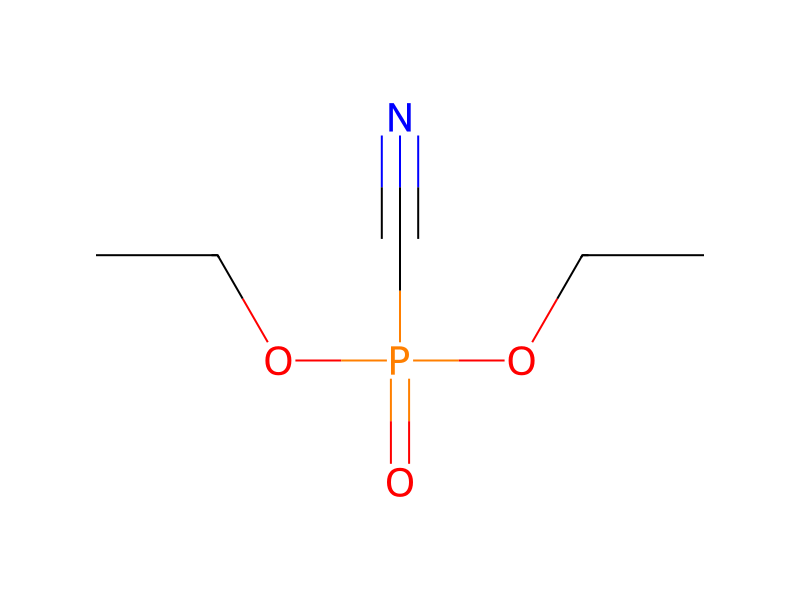
[Cl:1][C:2]1[C:11]([O:12][CH3:13])=[C:10]([Cl:14])[CH:9]=[C:8]2[C:3]=1[CH2:4][CH2:5][CH2:6][C:7]2=O.[C-]#N.[Li+].[C:19](P(=O)(OCC)OCC)#[N:20]>O1CCCC1>[C:19]([CH2:13][O:12][C:11]1[C:2]([Cl:1])=[C:3]2[C:8](=[CH:9][C:10]=1[Cl:14])[CH:7]=[CH:6][CH2:5][CH2:4]2)#[N:20]Participants
5
Reactant 3


Product 1

Reagents, catalysts & solvents 1

Conditions
- Temperature
- -15 °C
Procedure
The product from Example 96 (0.2 g) was dissolved in tetrahydrofuran (15 ml), cooled to -15° C. and treated with lithium cyanide (20 mg) and diethyl cyanophosphonate (0.2 ml). After 30 minutes, the reaction was quenched with water and extracted with ethyl acetate. The organic layer was separated, dried and the solvent evaporated. The residue was dissolved in benzene (30 ml) and a catalytic amount of p-toluenesulfonic acid was added. The reaction was refluxed for 30 minutes, quenched with 5% sodium bicarbonate, and extracted with ether. The organic layer was separated, dried and the solvent evaporated in vacuo affording the desired product in 95% yield.
Workup
- customthe reaction was quenched with water
- extractionextracted with ethyl acetate
- customThe organic layer was separated
- customdried
- customthe solvent evaporated
- dissolutionThe residue was dissolved in benzene (30 ml)
- additiona catalytic amount of p-toluenesulfonic acid was added
- temperatureThe reaction was refluxed for 30 minutes
- customquenched with 5% sodium bicarbonate
- extractionextracted with ether
- customThe organic layer was separated
- customdried
- customthe solvent evaporated in vacuo
Sources & evidence
- ORD record
- ord-6acab39720f24c52907a854d23afe27d
- Source dataset
- uspto-grants-1987_01
- Patent number
- US04634705
Reaction notes
Loading…