Thionyl Chloride → 2-Chloro-4,5-difluorobenzoyl chloride
Reaction equation

S(Cl)(Cl)=O.S(Cl)(Cl)(=O)=O.P(Cl)(Cl)(Cl)(Cl)Cl.P(Cl)(Cl)([Cl:18])=O.[Cl:21][C:22]1[CH:30]=[C:29]([F:31])[C:28]([F:32])=[CH:27][C:23]=1[C:24](O)=[O:25]>O1CCOCC1.CS(C)=O.CN(C=O)C>[Cl:21][C:22]1[CH:30]=[C:29]([F:31])[C:28]([F:32])=[CH:27][C:23]=1[C:24]([Cl:18])=[O:25]Participants
9
Reactant 5

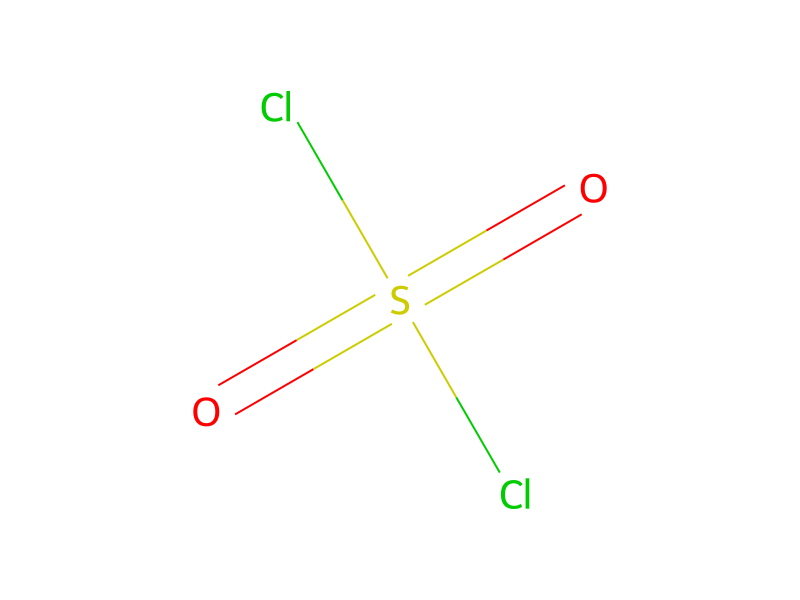



Product 1

Reagents, catalysts & solvents 3



Procedure
In the chlorination of the reaction formula (a), thionyl chloride, sulfuryl chloride, phosphorus pentachloride or phosphorus oxychloride may be used as the chlorinating agents. Among them, thionyl chloride is preferred. The chlorination may be conducted by reacting 2-chloro-4,5-difluorobenzoic acid with the chlorinating agent at a reaction temperature of from 50 ° to 80° C. in an aprotic polar solvent such as DMF, DMSO or dioxane, or without a solvent, followed by isolation by a usual method such as distillation to obtain 2-chloro-4,5-difluorobenzoyl chloride.
Workup
- customof from 50 ° to 80° C.
- distillationwithout a solvent, followed by isolation by a usual method such as distillation
Sources & evidence
- ORD record
- ord-91470b33749242ecbb88d7dd5e1b1cd5
- Source dataset
- uspto-grants-1991_02
- Patent number
- US04994610
Reaction notes
Loading…