Pyridine → Chloride
Reaction equation

[C:1]1(=[O:8])[NH:7][CH2:6][CH2:5][CH2:4][CH2:3][CH2:2]1.[C:9](Cl)(=[O:17])[CH2:10][CH2:11][CH2:12][CH2:13][C:14]([Cl:16])=[O:15].[N:19]1C=CC=[CH:21][CH:20]=1.[O:25]1[CH2:29][CH2:28][CH2:27][CH2:26]1>>[C:9]([CH:20]1[NH:19][C:26](=[O:25])[CH2:27][CH2:28][CH2:29][CH2:21]1)(=[O:17])[CH2:10][CH2:11][CH2:12][CH2:13][C:14]([CH:6]1[NH:7][C:1](=[O:8])[CH2:2][CH2:3][CH2:4][CH2:5]1)=[O:15].[Cl-:16]Participants

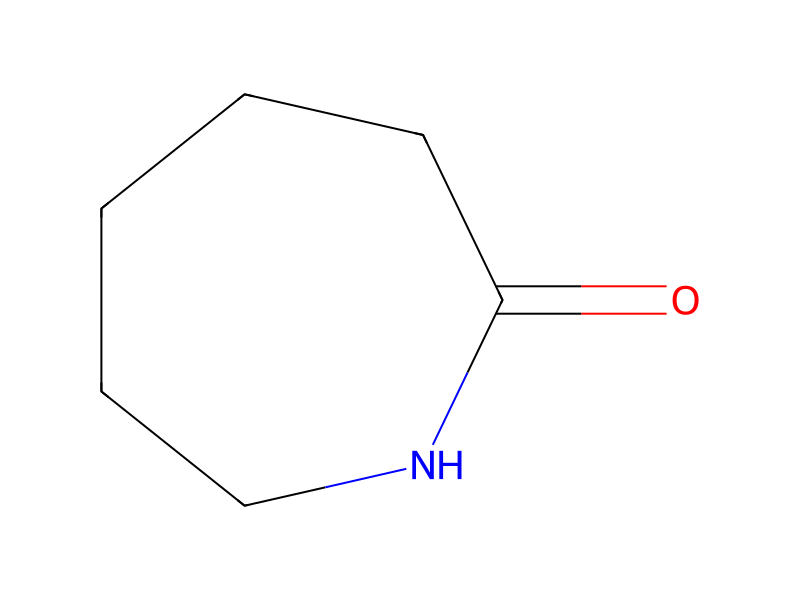



Procedure
The adipoylbiscaprolactam (ABC) chain extender compound used in the following examples was prepared by dissolving 136 grams of caprolactam (1.2 moles) in 500 ml tetrahydrofuran (THF) in a 2 liter Erlenmeyer flask, cooling the resulting solution in an ice bath to below 5° C., and slowly adding 100 grams of adipoyl chloride (0.55 mole) with stirring. The temperature was maintained below 5° C. 200 ml of pyridine was added to the stirred solution to form a precipitate of ABC and pyridinum chloride. The mixture was stirred for ½ hour below 5° C., then heated to boiling for 30 minutes, followed by pouring the hot solution into a 3 gallon (13.5 liter) bucket half filled with a 50/50 mixture of water and ice with vigorous stirring. The ABC precipitates and all other ingredients stay in solution. Solid ABC (155.8 grams) was collected by suction filtration.
Workup
- customwas prepared
- temperaturecooling the resulting solution in an ice bath to below 5° C.
- temperatureThe temperature was maintained below 5° C
Sources & evidence
- ORD record
- ord-97a57f91cdcb46378c5df43db1802c13
- Source dataset
- uspto-grants-2005_03
- Patent number
- US06866930B2
Reaction notes
Loading…