Ethylene Glycol → Piperazine, 1-methyl-4-phenyl-
Reaction equation

[O-]P([O-])([O-])=O.[K+].[K+].[K+].[CH3:9][N:10]1[CH2:15][CH2:14][NH:13][CH2:12][CH2:11]1.I[C:17]1[CH:22]=[CH:21][CH:20]=[CH:19][CH:18]=1.C(O)CO>[Cu]I.CCCCCC.C(OCC)(=O)C.CC(O)C>[C:17]1([N:13]2[CH2:14][CH2:15][N:10]([CH3:9])[CH2:11][CH2:12]2)[CH:22]=[CH:21][CH:20]=[CH:19][CH:18]=1Participants
8
Reactant 4



Product 1

Reagents, catalysts & solvents 3



Procedure
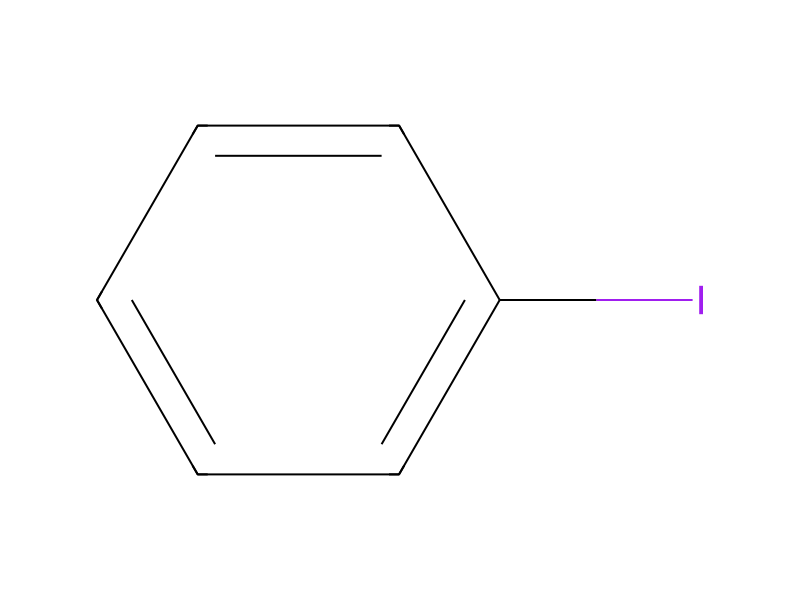
The general procedure under argon was followed using copper(I) iodide (10 mg, 0.05 mmol), K3PO4 (425 mg, 2.00 mmol), N-(methyl)piperazine (166 μL, 1.50 mmol), iodobenzene (112 μL, 1.00 mmol), ethylene glycol (111 μL, 2.00 mmol) and 2-propanol (1.0 mL). Column chromatography using a solvent mixture (hexane/ethyl acetate=20/1, Rf=0.1) afforded N-phenyl-N′-(methyl)piperazine (125 mg, 71% isolated yield) as colorless liquid. The spectral data (1H NMR) matched with the literature references and GC analysis indicated >95% purity.
Sources & evidence
- ORD record
- ord-e8359b70141e4fbf8af165140ed14a9c
- Source dataset
- uspto-grants-2005_03
- Patent number
- US06867298B2
Reaction notes
Loading…