Ethanol → Benzenamine, 4-chloro-N-(4-nitrophenyl)-
Reaction equation

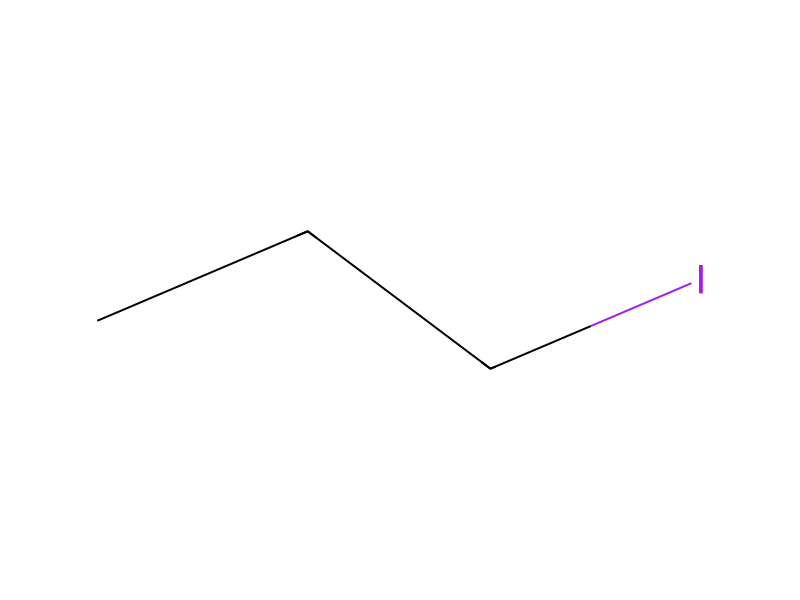
[CH2:1](O)[CH3:2].[C:4](OCC)(=O)C.[N+:10]([C:13]1[CH:18]=[CH:17][C:16]([NH:19][C:20]2[CH:25]=[CH:24][C:23]([Cl:26])=[CH:22][CH:21]=2)=[CH:15][CH:14]=1)([O-:12])=[O:11].[OH-].[K+]>C(I)CC.CN(C)C=O.[N+](C1C=CC=CC=1)([O-])=O>[N+:10]([C:13]1[CH:14]=[CH:15][C:16]([N:19]([C:20]2[CH:25]=[CH:24][C:23]([Cl:26])=[CH:22][CH:21]=2)[CH2:4][CH2:1][CH3:2])=[CH:17][CH:18]=1)([O-:12])=[O:11].[N+:10]([C:13]1[CH:14]=[CH:15][C:16]([NH:19][C:20]2[CH:25]=[CH:24][C:23]([Cl:26])=[CH:22][CH:21]=2)=[CH:17][CH:18]=1)([O-:12])=[O:11]Participants
Reactant 4




Product 2

Reagents, catalysts & solvents 3


Procedure
0.90 g of 2,6-difluorobenzoylisocyanate was added to a solution of 1.27 g of 4-[N-(4-chlorophenyl)-N-propylamino]aniline in 15 ml of dry diethylether while stirring at room temperature. After 1.5 hours at room temperature the formed precipitate was sucked off, washed with acetonitrile and diethylether, and dried. The desired product was obtained in a yield of 1.50 g; melting-point 169°-169.5°C. The starting aniline was obtained from the corresponding nitro compound by reduction with hydrogen under the influence of Raney nickel as a catalyst; a mixture of equal parts by volume of ethanol and ethyl acetate was used as a solvent. 1-Nitro-4-[N-(4-chlorophenyl)-N-propylamino]benzene was prepared by an alkylation of 1-nitro-4-(4-chloroanilino) benzene with propyliodide in dimethylformamide as a solvent under the influence of KOH, 1-Nitro-4-(4-chloroanilino) benzene was formed by a coupling at high temperature of p-chlorobenzeneisocyanate and p-nitrophenyl in nitrobenzene as a solvent. In a corresponding manner, in which, if desired, instead of diethylether acetonitrile was used as a solvent for the urea-formation, the following compounds were prepared; the compound numbers correspond with the numbers given before in the specification:
Sources & evidence
- ORD record
- ord-da8d252eb08c4a4db8e76206101d21f2
- Source dataset
- uspto-grants-1987_12
- Patent number
- US04710516
Reaction notes
Loading…